






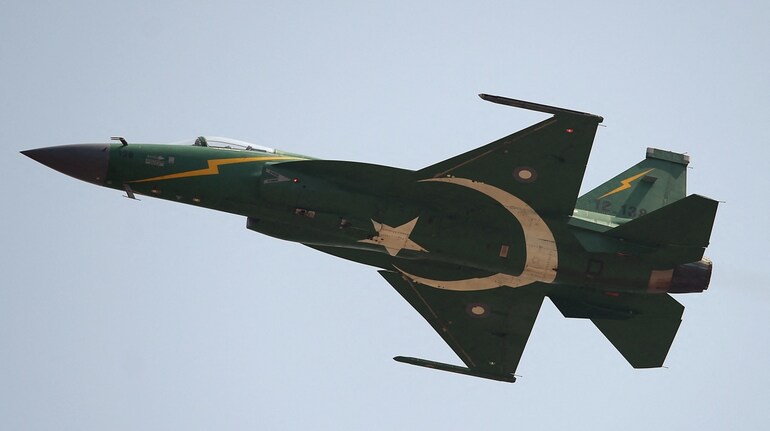

Pakistan is pushing ahead with an aggressive pitch to sell combat aircraft and armed drones to Indonesia, underscoring Islamabad’s increasingly controversial attempt to market military hardware as an economic lifeline for a country weighed down by debt and chronic instability. According to three security officials familiar with the matter quoted by Reuters, Indonesia’s Defence Minister Sjafrie Sjamsoeddin met Pakistan’s Air Chief Marshal Zaheer Ahmed Baber Sidhu in Islamabad to explore a potential deal involving fighter jets and so-called killer drones.
Indonesia’s Defence Ministry confirmed the meeting but struck a cautious tone. Defence ministry spokesperson Brigadier General Rico Ricardo Sirait told Reuters that the talks focused on general defence cooperation, strategic dialogue, and long-term opportunities, stressing that no concrete decisions had yet been taken. Despite this, multiple security sources said discussions were far more advanced than official statements suggest.
According to one source, the talks centred on the sale of JF-17 fighter jets, jointly developed by Pakistan and China, along with armed drones designed for surveillance and strike missions. Two other sources said negotiations were in an advanced stage and involved more than 40 JF-17 aircraft. One source added that Indonesia had also expressed interest in Pakistan’s Shahpar drones. No timelines or delivery schedules were disclosed.
A retired senior officer familiar with Pakistan’s defence export efforts reinforced these claims. “The Indonesia deal is in the pipeline,” retired Air Marshal Asim Suleiman told Reuters, saying the number of jets being discussed was close to 40.
Arms exports as an economic crutch
The outreach to Jakarta fits into a broader and increasingly uncomfortable pattern. Pakistan’s defence industry has been pushing weapons exports with renewed urgency, even as the country struggles with ballooning debt, IMF bailouts, and a fragile economy. As detailed in a recent Moneycontrol report, Islamabad has begun offering military hardware as part of what critics describe as a new economic model, effectively substituting arms sales for hard currency inflows and, in some cases, even loan repayments.
Pakistan is simultaneously negotiating defence deals with Libya’s National Army, Sudan’s military, Azerbaijan, Bangladesh, and Saudi Arabia. Reuters has previously reported that Islamabad is discussing a deal with Riyadh that could be worth between $2 billion and $4 billion, potentially involving the conversion of Saudi loans into military supplies. Rather than addressing structural economic failures, Pakistan appears to be doubling down on militarisation as a stopgap solution.
Indonesia’s cautious calculus
For Indonesia, the talks come as Jakarta looks to modernise and replace its ageing air force fleet. Under President Prabowo Subianto, Indonesia has pursued a diverse procurement strategy. It ordered 42 French Rafale jets worth $8.1 billion in 2022 and last year signed a deal for 48 KAAN fighter jets from Turkey. Jakarta has also explored the purchase of China’s J-10 fighters and remains in talks over US-made F-15EX jets.
Against this backdrop, Pakistan’s JF-17 is one of many options under consideration, and not necessarily the most attractive. Defence analysts note that while Pakistan markets the aircraft as cost-effective, questions remain over performance, reliability, and long-term support. Indonesia’s interest, if it materialises, would likely be driven by pricing and political considerations rather than a clear technological edge.
Rising profile, troubling optics
Pakistan’s military has sought to capitalise on heightened visibility after its jets were deployed in a brief conflict with India last year. Islamabad has portrayed this as proof of combat credibility, but critics argue it has instead highlighted Pakistan’s fixation on military posturing while its economy and governance continue to deteriorate.
The JF-17 has featured prominently in recent export announcements, including a deal with Azerbaijan and a reported $4 billion weapons pact with Libya’s National Army. Pakistan is also courting Bangladesh with offers involving Super Mushshak trainer aircraft and JF-17s as relations with Dhaka warm.
What remains conspicuously absent is transparency. Pakistan’s military public relations wing did not respond to Reuters’ request for comment on the Indonesia talks. This silence has only fuelled scepticism about the true scale, viability, and sustainability of Islamabad’s defence export ambitions.
Selling arms instead of fixing the economy
Taken together, the Indonesia negotiations underline a deeper problem. Pakistan is attempting to project itself as a rising defence exporter while remaining dependent on external bailouts and debt relief. Offering fighter jets and drones to foreign partners may generate headlines, but it does little to address the underlying weaknesses of an economy that struggles to pay for basic imports.
For Indonesia, the talks remain exploratory. For Pakistan, they are part of a risky gamble to substitute arms sales for economic reform. Whether Jakarta ultimately signs on or not, Islamabad’s growing reliance on defence deals as an economic strategy is drawing scrutiny and raising questions about how sustainable or responsible this path really is.
Discover the latest Business News, Sensex, and Nifty updates. Obtain Personal Finance insights, tax queries, and expert opinions on Moneycontrol or download the Moneycontrol App to stay updated!
Find the best of Al News in one place, specially curated for you every weekend.
Stay on top of the latest tech trends and biggest startup news.





