






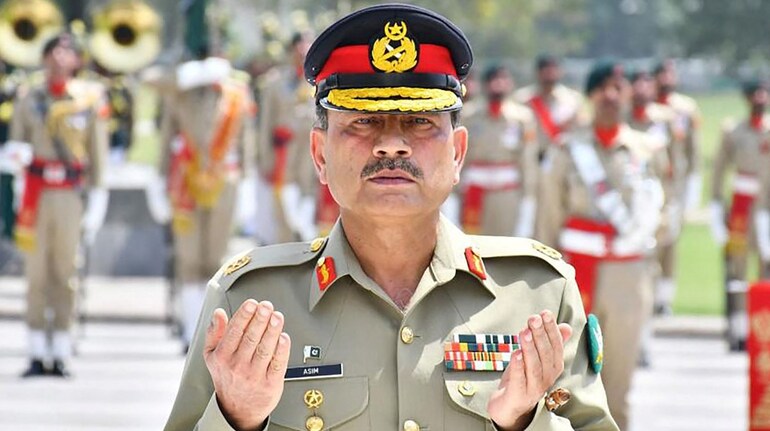

Pakistan Army chief and Chief of Defence Forces Asim Munir has once again underlined where real power in the country lies, this time not through a press conference or military operation, but through a carefully choreographed family wedding.
Munir recently married off his daughter, Mahnoor, to his nephew Captain Abdul Rahman, the son of his brother Qasim Munir. The marriage, conducted within the immediate family, has sparked quiet speculation in security circles that the Pakistan Army’s top leadership is now openly embracing clan consolidation as a governance strategy.
The wedding took place on December 26 in Rawalpindi and was deliberately kept out of public view. No official photographs were released and the event was described as “private.” Yet the guest list told a very different story.
Abdul Rahman previously served as a captain in the Pakistan Army before moving into the civil services. He currently serves as an assistant commissioner under the quota reserved for military officers, a pathway that neatly illustrates how uniforms in Pakistan rarely come off without leaving influence behind.
The ceremonies were not held at a hotel or public venue but inside Munir’s residence near General Headquarters, reinforcing the perception that Rawalpindi’s military zone remains Pakistan’s true seat of power.
Despite the event being described as intimate, it was attended by an extraordinary lineup. Among those present were Mohammed bin Zayed Al Nahyan, Asif Ali Zardari, Shehbaz Sharif, Ishaq Dar, the chief of the Inter-Services Intelligence, and several senior generals.
For a country that insists it is run by civilians, the optics were unmistakable. Pakistan’s entire civilian leadership turning up at the army chief’s family wedding served as a visual reminder that elected offices remain ceremonial, while authority flows strictly from the uniform.
Indian intelligence assessments suggest that hosting every function within military-controlled spaces was no coincidence. It is being read as a deliberate effort by GHQ to formalise bloodline-based trust networks at the top of the army, particularly at a time when Pakistan is grappling with internal dissent, economic distress, and rising criticism of military overreach.
The presence of the political leadership alongside the ISI chief is seen as a reaffirmation that decision-making in Pakistan continues to bypass parliament and flow through Rawalpindi. Indian agencies assess this as a message directed at domestic rivals that the political class remains firmly subordinated to the army chief.
Inviting the UAE president as the chief guest added another layer to the signal. It is being interpreted as Munir’s attempt to showcase continued Gulf backing for Pakistan’s military leadership despite the country’s instability. The outreach is viewed as a bid to reassure Abu Dhabi that while Pakistan’s economy may wobble and its politics may fracture, the army’s grip remains intact and open for business.
In today’s Pakistan, even a wedding serves as a reminder that power is inherited, authority is militarised, and democracy is merely invited as a guest.
Discover the latest Business News, Sensex, and Nifty updates. Obtain Personal Finance insights, tax queries, and expert opinions on Moneycontrol or download the Moneycontrol App to stay updated!
Find the best of Al News in one place, specially curated for you every weekend.
Stay on top of the latest tech trends and biggest startup news.





