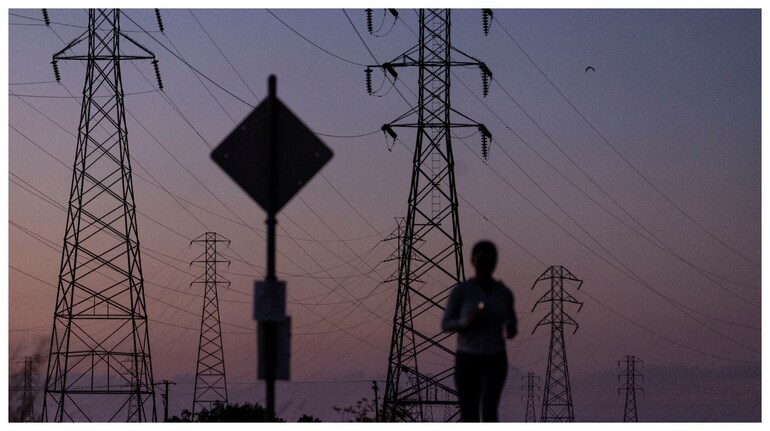
For most Americans, the electricity grid feels like a constant: flip a switch and the lights come on. What is less visible is how inefficient that system often is. Much of the time, the US power grid is running far below its maximum capacity, even as consumers face steadily rising electricity bills.
The reason lies in how the grid is designed—and in how demand is changing, the Washington Post reported.
A system built for the worst days
Utilities design the electricity grid to survive extreme moments: scorching summer afternoons, brutal winter freezes, or sudden equipment failures. Power outages can be dangerous, even deadly, so companies build enough capacity to handle the highest possible demand, even if it occurs only a few days a year.
The result is a system that often looks like an overstaffed restaurant on a quiet afternoon. Most of the time, the grid is operating at roughly half its potential. In some rural areas, utilization can dip to around 30 percent; in denser urban regions, it may reach 60 or 70 percent. But true peak demand might show up for just a handful of days each year.
That unused capacity still costs money. The bulk of electricity prices comes not from fuel, but from the cost of building and maintaining poles, wires, substations and power plants. When those assets sit idle, consumers still pay for them.
Demand is about to surge
For decades, US electricity demand was relatively stable. That is changing fast. Over the next five years, peak demand is expected to rise sharply, driven in part by data centres powering artificial intelligence and cloud computing.
Utilities are already spending heavily to reinforce aging infrastructure and add new generation. In many regions, that investment is showing up directly on customer bills. In places such as Northern Virginia, Ohio and parts of the Midwest, residents are paying more as utilities rush to accommodate new, energy-hungry facilities.
The unused capacity opportunity
Some researchers argue that the grid’s spare capacity could be part of the solution rather than part of the problem.
The idea is simple: add new electricity users, but only when the grid has room to spare. If large customers—such as data centres—are willing to reduce or shut off their demand during peak periods, they could use excess power at other times without forcing utilities to build new infrastructure.
Spreading the fixed costs of the grid across more users, without expanding it, could theoretically lower rates for everyone.
A study from Duke University estimates that the existing US grid could provide roughly 100 gigawatts of additional power for data centres that agree to curtail usage for short periods during peak demand events—amounting to about a week of downtime spread across the year.
Early experiments are under way
Some utilities and technology companies are already testing this approach. GridCARE, a California-based start-up, has worked with Portland General Electric to identify spare capacity that could support new data centres without triggering major upgrades.
Google has announced similar plans in states such as Indiana and Tennessee, saying future data centres would dial back consumption during peak demand windows. In those moments, companies can shift computing tasks to facilities in other regions or rely briefly on on-site backup generators.
For utilities, the appeal is obvious: avoiding new capital investments means avoiding future rate hikes.
Why scepticism remains
Not everyone is convinced this will scale easily. Data centres are multibillion-dollar operations, and electricity costs, while significant, are only one factor in where and how they operate. Small savings on power bills may not be enough to persuade companies to accept constraints on reliability.
Critics also point out that utilities have long had incentives to build more infrastructure, since they earn regulated returns on capital investments but not on operating efficiency. That can tilt decision-making toward expansion rather than optimisation.
Any system that relies on large customers voluntarily reducing demand will likely need strict contracts and enforcement mechanisms to ensure commitments are honoured during critical moments.
A partial fix, not a silver bullet
Even supporters acknowledge that smarter use of spare grid capacity will not solve all problems. It will not eliminate the need for new generation, nor will it resolve deeper issues around energy affordability and decarbonisation.
But as electricity demand climbs and prices rise, the idea is gaining attention because it works with what already exists. Instead of constantly building more, it asks whether the system can be used better.
The grid’s emptiness for much of the year has long been treated as an unavoidable cost of reliability. Now, it is being reframed as a potential asset. Whether that asset can be unlocked—and who ultimately benefits—may help determine how expensive electricity becomes in the AI-driven decade ahead.
Discover the latest Business News, Sensex, and Nifty updates. Obtain Personal Finance insights, tax queries, and expert opinions on Moneycontrol or download the Moneycontrol App to stay updated!
Find the best of Al News in one place, specially curated for you every weekend.
Stay on top of the latest tech trends and biggest startup news.