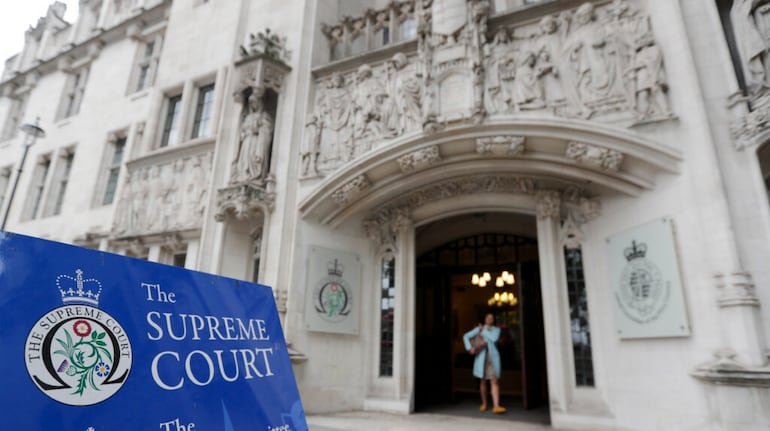
Less than two weeks after the US Supreme Court allowed the Trump administration to invoke the controversial 18th-century Alien Enemies Act, events took a dramatic turn. In a rare overnight order, the Supreme Court blocked the deportation of a group of immigrants in Texas, halting the administration’s move just hours before it was set to proceed.
In a brief order, the court directed the Trump administration not to remove Venezuelans held in the Bluebonnet Detention Center “until further order of this court.” Justices Clarence Thomas and Samuel Alito dissented.
Let us take a closer look at what has happened so far, what the Alien Enemies Act is, and why the Supreme Court's rare midnight order has suddenly halted the Trump administration's latest deportation push.Alien Enemies Act: Here's a timelineIn a rare late-night move, the US Supreme Court temporarily blocked the Trump administration from deporting Venezuelan detainees held in Texas under the controversial 18th-century Alien Enemies Act. The court also directed the Department of Justice to respond quickly to an emergency petition filed by the ACLU, which argued that the deportations were proceeding without due process.
By Saturday evening, Solicitor General D. John Sauer responded, stating the government had agreed not to deport any detainees who filed habeas corpus claims. He urged the court to lift the block and allow lower courts to address the issue first.
The ACLU raised alarms that Venezuelan migrants were being accused of gang ties and rushed onto buses without legal hearings, potentially facing dangerous conditions if deported to El Salvador. Despite the urgency, two federal judges and the 5th Circuit Court of Appeals declined to step in, even though one judge acknowledged the legal concerns were legitimate.
Earlier in April, the Supreme Court had ruled that deportations under the Alien Enemies Act could only proceed if detainees were given notice and a fair chance to argue their case in court. The ACLU welcomed the latest temporary order, with lawyer Lee Gelernt saying the individuals faced the risk of life in brutal prisons without ever being granted due process.
What is Alien Enemies Act?The Trump administration invoked a law passed in 1798, during a time when the US anticipated war with France. Congress had enacted a series of laws at that time to expand the federal government's powers.
The law allows the president to target immigrants based solely on their country of origin or citizenship, without a hearing. Originally designed to prevent espionage and sabotage during wartime, it has been used against immigrants who have committed no wrongdoing, shown no signs of disloyalty, and are lawfully residing in the U.S.
Since the law has been used just three times: during the War of 1812 and the two world wars.
The law was also used during World War II to justify the mass internment of individuals in the US with German, Italian, and particularly Japanese ancestry. Approximately 120,000 people of Japanese descent, including U.S. citizens, were forcibly detained.
The law is meant to be used when the US is at war with another country, or if a foreign nation attacks or threatens to attack the US.
To use the Act, the president must officially declare the event that triggered its use. The law stays active until the president ends it.
Can a wartime law used when US is not a war?The president can use the Alien Enemies Act during a declared war or when a foreign threat, like an 'invasion', is imminent. While Congress must declare war, the president can act without approval if there’s a threat of attack, deciding when action is needed to protect the country.
For years, Trump and his allies have argued that the U.S. is facing an “invasion” of people arriving in the country illegally.
Discover the latest Business News, Sensex, and Nifty updates. Obtain Personal Finance insights, tax queries, and expert opinions on Moneycontrol or download the Moneycontrol App to stay updated!
Find the best of Al News in one place, specially curated for you every weekend.
Stay on top of the latest tech trends and biggest startup news.