






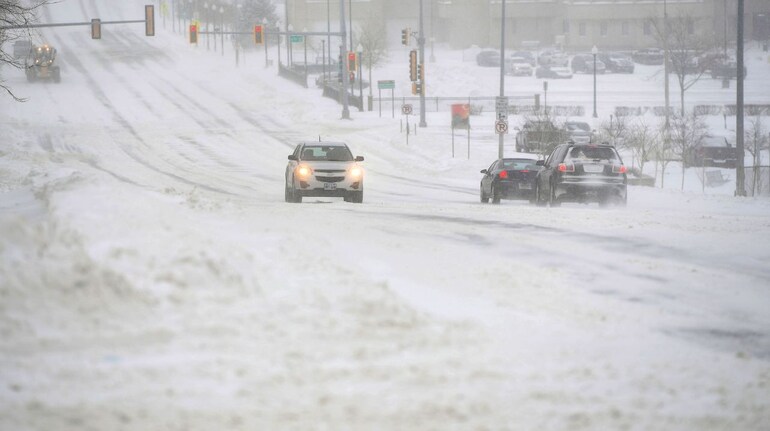

A powerful winter storm is shaping up to be the most disruptive of the season so far, with forecasters warning that a vast stretch of the United States could be hit by heavy snow, crippling ice and dangerously low temperatures over the next few days.
According to the National Weather Service, the storm is expected to spread across nearly 2,000 miles, from the Southern Plains and Southwest all the way to the East Coast. Winter storm watches already extend from eastern Arizona through parts of the Midwest and into the Mid-Atlantic, and are likely to be expanded further north and east.
Snow, ice and a messy mix in between
The storm is forecast to develop on Friday and intensify through the weekend. Computer models now broadly agree that the heaviest snow band has shifted slightly north, raising the risk of significant accumulation across parts of Oklahoma, Kansas, the Tennessee Valley, the Midwest and the Mid-Atlantic.
Forecasters say a foot of snow is possible in some areas, with cities such as Kansas City, St. Louis, Louisville and even Washington, D.C. facing the prospect of their biggest snowfall in years. In the nation’s capital, six to twelve inches is increasingly seen as a realistic outcome.
South of the main snow band, the bigger concern is ice. A corridor stretching from parts of Texas through Arkansas, Mississippi, Georgia and the Carolinas could see dangerous freezing rain. In some places, ice accretion could reach close to an inch, enough to snap tree limbs and bring down power lines.
Between these zones, many communities are likely to experience a frustrating and hazardous mix of snow, sleet and freezing rain.
Travel disruption and power outage risks
As the storm spreads east, travel conditions are expected to deteriorate quickly. Major highways, including long stretches of Interstates 40, 70 and 95, could become treacherous or impassable at times, especially during the storm’s peak on Sunday.
The Washington Post reported that forecasters are particularly concerned about prolonged power outages in areas hit hardest by ice. With temperatures set to plunge after the storm passes, loss of electricity could become life-threatening, especially in parts of the South that are less accustomed to extended cold spells.
Bitter cold follows close behind
Perhaps the most alarming aspect of this system is the cold air trailing it. A surge of Arctic air, driven south by a lobe of the polar vortex, is expected to push temperatures well below normal across much of the country.
More than 100 million people could experience subzero temperatures early next week, with some regions seeing readings below minus 10 or even minus 20 degrees. Forecasters say several long-standing temperature records could be tied or broken.
Why this storm stands out
Large winter storms are not unusual in January, but meteorologists say the combination of widespread snow, severe icing and prolonged, intense cold makes this system especially dangerous.
For now, officials are urging people in the storm’s path to prepare early, limit travel where possible, and be ready for power disruptions. The coming days, they warn, could test infrastructure and communities across a large part of the country.
Discover the latest Business News, Sensex, and Nifty updates. Obtain Personal Finance insights, tax queries, and expert opinions on Moneycontrol or download the Moneycontrol App to stay updated!
Find the best of Al News in one place, specially curated for you every weekend.
Stay on top of the latest tech trends and biggest startup news.





