






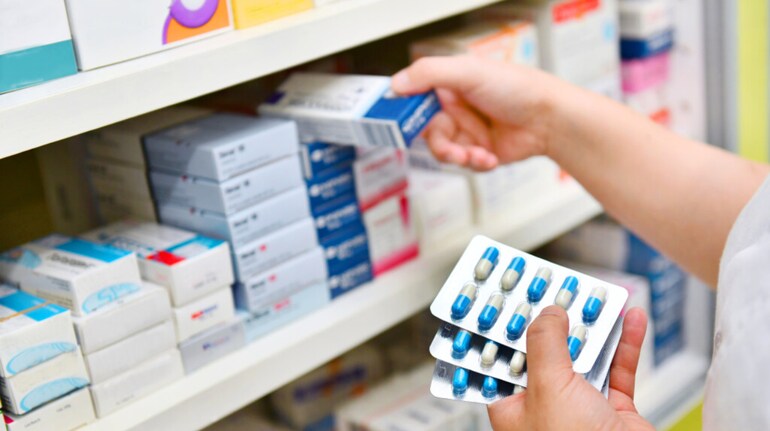

A small purchase at a neighbourhood pharmacy in Afghanistan has captured a much bigger regional shift. As Pakistan’s pharmaceutical exports lose ground amid political tensions and quality concerns, Indian medicines are quietly filling the gap. What began as an anecdote shared by an Afghan blogger now reflects a wider realignment in Afghanistan’s healthcare supply chain, one that has pushed Pakistan out and positioned India as a more reliable alternative.
The shift comes at a sensitive moment for Afghanistan, a country heavily dependent on imports for basic medicines. While Pakistan once dominated this space, border closures, repeated clashes and a Taliban-imposed ban have badly disrupted supplies. India, by contrast, has stepped in with cheaper, trusted medicines and emergency aid, steadily expanding its footprint.
A blogger’s experience goes viral
An Afghan blogger who goes by the name Fazal Afghan on X described his recent experience of buying painkillers at a local pharmacy. He said he initially asked for Parol, a paracetamol brand commonly sold in Pakistan and Turkey, because he trusted its quality.
“…It costs 40 Afghanis for a pack of 10 tablets. Then he (the shopkeeper) showed me another option, paracetamol made in India. It was the same quantity, but only 10 Afghanis. He also told me that Indian medicines give better results than the others they sell,” Fazal wrote.
He said he bought the Indian tablets immediately and that they cleared his headache quickly. He added, “Indian medicines are gradually replacing Pakistani ones in Afghanistan.”
Pakistan pushed out of Afghanistan’s pharma market
For decades, Pakistan was Afghanistan’s primary supplier of medicines, benefiting from geography and land routes via Torkham and Chaman. Afghanistan produces very few medicines domestically and imports an estimated 85 to 96 percent of its pharmaceutical needs.
According to UN Comtrade data cited by Trading Economics, Pakistan exported $186.69 million worth of pharmaceuticals to Afghanistan in 2024. Business Recorder put Pakistan’s pharma exports to Afghanistan at $112.8 million in 2023. Taliban official Noorullah Noori had said that over 70 percent of medicines used in Afghanistan came from Pakistan before November 2025.
That dominance collapsed after repeated border clashes and closures. Following fresh tensions in October and November 2025, Afghanistan’s Deputy Prime Minister Abdul Ghani Baradar announced a ban on Pakistani medicines, citing poor quality. Traders were urged to source alternatives from India, Iran and Central Asia.
The ban triggered shortages. A report by Deutsche Welle noted that antibiotics, insulin and heart medicines became scarce, with prices soaring and counterfeit drugs entering the market. Pakistan’s loss of access left Afghan patients paying the price.
India steps in with supplies and scale
As shortages deepened, S Jaishankar announced in November 2025 that India was airlifting 73 tonnes of life-saving medical supplies to Kabul. It followed earlier shipments, including vaccines for rabies and hepatitis B, ambulances, a CT scanner, and emergency aid after Afghanistan’s 2022 earthquake.
In total, India has sent around 327 tonnes of medical supplies to Afghanistan over the past four years. It has also committed to building five maternity and health clinics in Paktia, Khost and Paktika, a 30-bed hospital in Kabul, and specialised facilities including oncology, trauma and diagnostic centres. India is also processing requests for radiotherapy equipment and additional medicines.
These commitments were reinforced after talks between Union Health Minister JP Nadda and Afghanistan’s Public Health Minister Mawlawi Noor Jalal Jalali in December 2025. India is now planning to send senior doctors to Afghanistan for medical camps and training, building on a June medical camp where 75 prosthetic limbs were fitted.
Indian pharma fills the vacuum
Indian pharmaceutical exports to Afghanistan surged as Pakistan’s supplies dried up. India exported medicines worth $108 million in FY 2024-25, with estimates suggesting another $100 million worth sent during the rest of 2025.
According to Afghan daily Hasht-e Subh, India now holds 12 to 15 percent of Afghanistan’s pharmaceutical market, while Pakistan previously controlled 35 to 40 percent. With Pakistani sales collapsing, India could potentially double exports to $200 million.
In November 2025, Zydus Lifesciences signed a $100 million MoU with Afghanistan’s Rofi’s International Group in Dubai. The deal covers exports, technology transfer, a Zydus representative office in Afghanistan and eventually local manufacturing to reduce import dependence. Taliban officials are also in talks with India’s pharma export body Pharmexcil over joint investments and production facilities.
A telling shift
What started with one Afghan choosing a cheaper Indian painkiller over a familiar Pakistani brand now reflects a deeper change. Pakistan’s political brinkmanship, quality issues and border closures have cost it a market it once dominated. India, through price, supply reliability and sustained medical support, has stepped into that space.
For Afghanistan’s patients, Indian medicines have become easier to find and easier to afford. For Pakistan, the message is sharper. Losing trust can mean losing markets, and regaining them may not be easy.
Discover the latest Business News, Sensex, and Nifty updates. Obtain Personal Finance insights, tax queries, and expert opinions on Moneycontrol or download the Moneycontrol App to stay updated!
Find the best of Al News in one place, specially curated for you every weekend.
Stay on top of the latest tech trends and biggest startup news.





