






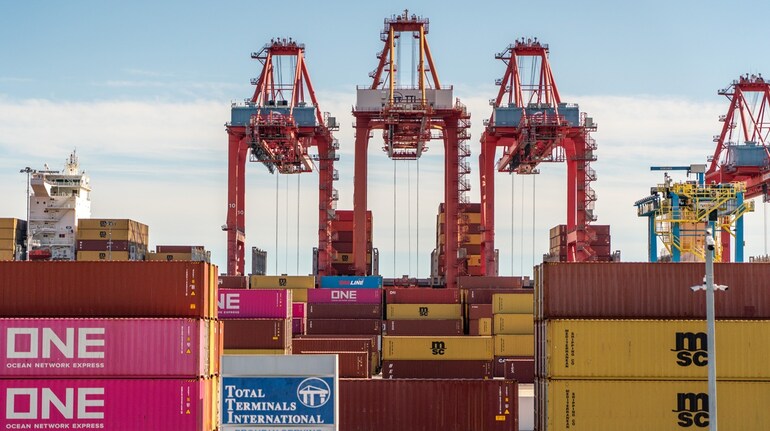

As the US Supreme Court struck down President Donald Trump's global tariffs, most of the cost had already been borne by American consumers. Now, the question that stands in limbo, and carries a potentially lucrative answer, is whether businesses, and perhaps even consumers, will get any money back.
Refunds worth billions of dollars tied to tariffs imposed under Donald Trump remain uncertain after the Supreme Court of the United States struck down a key portion of the president’s tariff programme, with no clear roadmap on how affected businesses might recover the money, NBC News reported.
The Supreme Court’s decision declaring several of President Trump’s tariffs unlawful is expected to trigger a process involving potential refunds worth billions of dollars, possibly up to $175 billion, according to Reuters.
Before the tariffs were struck down, Trump had claimed American trade tariffs significantly reduced the country’s trade deficit and suggested that the United States could post its first trade surplus in decades by 2026.
In a post on Truth Social, he wrote, “The United States trade deficit has been reduced by 78% because of the tariffs being charged to other companies and countries. It will go into positive territory during this year, for the first time in many decades. Thank you for your attention to this matter!”
Who beared maximum cost of tariffs?
While the tariffs remained in force, the bulk of the financial burden was borne by American consumers rather than foreign exporters. With consumers shouldering most of the cost, uncertainty persists over whether businesses, and, more significantly, consumers, will recover any of the estimated $175 billion collected through the duties.
A recent analysis by the Federal Reserve Bank of New York found that U.S. households and importing firms absorbed nearly 90% of the tariff impact in 2025, with overseas exporters bearing only a minimal share.
The study further noted that during the first eight months of 2025, roughly 94% of the tariffs were passed through into domestic prices, indicating that the overwhelming majority of the costs were reflected in what American companies and consumers ultimately paid.
How will the refund be paid back?
In his dissent, Justice Brett Kavanaugh warned that large-scale repayments could carry significant consequences for the U.S. Treasury. Treasury Secretary Scott Bessent told Reuters earlier this year that although refunds would be manageable, the process could prove lengthy and complex.
Kavanaugh said the ruling left major uncertainties. “The Court says nothing today about whether, and if so how, the Government should go about returning the billions of dollars that it has collected from importers,” he wrote, adding that the process was likely to be a “mess”.
According to December data from U.S. Customs and Border Protection, roughly $130 billion has been collected from tariffs imposed under the International Economic Emergency Powers Act.
Economists say the mechanism for issuing refunds remains unclear, according to an NBC report. While companies may seek reimbursement, they were not the only ones affected by the tariffs’ economic impact.
Consumers have paid higher prices as businesses passed on increased costs. A Federal Reserve Bank of New York analysis published last week found that nearly 90% of the “economic burden” of the tariffs fell on U.S. consumers and importers.
Sen. Elizabeth Warren, D-Mass., said in a statement that there is no “legal mechanism for consumers and many small businesses to recoup the money they have already paid.”
“Instead, giant corporations with their armies of lawyers and lobbyists can sue for tariff refunds, then just pocket the money for themselves,” she said. “It’s one more example of how the game is rigged.”
Illinois Gov. JB Pritzker also pressed for repayment, sending a letter to the president seeking $1,700 “for every family in Illinois.” He estimated the total amount owed to residents of the state at more than $8 billion.
Trump criticised the court’s decision during a White House news conference, calling it “defective” and noting that the ruling did not address refunds. He said the issue would likely face prolonged litigation and could remain in court for years.
Advocacy groups and state officials quickly demanded repayment following the decision. The small business coalition We Pay the Tariffs called for “full, fast and automatic refunds,” while California Gov. Gavin Newsom said any unlawfully collected funds should be returned with interest.
Lawmakers Steven Horsford and Janelle Bynum introduced legislation requiring Customs and Border Protection to automatically refund tariffs collected since January 1, 2025.
However, within hours of the court's decision, Trump moved swiftly to replace the invalidated measures with a temporary 10% global import duty for 150 days and ordered new investigations under alternative legal provisions that could allow him to reimpose tariffs. He then went a step further, raising the previously announced 10% worldwide tariff to 15% with immediate effect.
Discover the latest Business News, Sensex, and Nifty updates. Obtain Personal Finance insights, tax queries, and expert opinions on Moneycontrol or download the Moneycontrol App to stay updated!
Find the best of Al News in one place, specially curated for you every weekend.
Stay on top of the latest tech trends and biggest startup news.





