






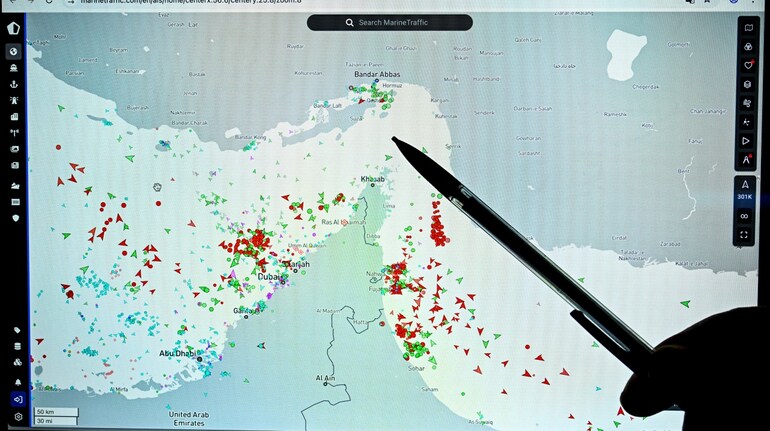

The disruption of shipping through the Strait of Hormuz is beginning to trigger major security and logistical concerns for countries dependent on energy imports from the Gulf. With several commercial vessels stranded near the strategic waterway following the Iran war, India is now considering deploying naval warships to escort its ships through the region.
The move comes amid growing fears that merchant vessels carrying critical oil and gas supplies could be caught in the crossfire of the conflict between Iran, the United States and Israel. Reports indicate that dozens of Indian ships and more than a thousand seafarers remain stuck in waters around the Persian Gulf and the Gulf of Oman.
India weighs naval escort plan
According to a report by The New York Times, the Indian government is examining the possibility of sending naval warships to escort Indian merchant vessels that are currently stranded near the Strait of Hormuz.
The report quoted Captain PC Meena of the Directorate General of Shipping (Crew Branch) as saying that the government was considering the move after requests from Indian shipowners seeking protection for vessels operating in the conflict zone.
Earlier, The Hindu reported that the Indian Navy could provide escort missions for commercial vessels stuck in the Persian Gulf. The newspaper cited senior officials as saying that the government was assessing the situation and a decision on the proposal could be taken soon.
The plan reflects growing concern in New Delhi over the safety of maritime trade routes that are crucial for India’s energy security.
Why the Strait of Hormuz matters for India
The Strait of Hormuz is one of the most important energy shipping routes in the world. Following the outbreak of the Iran war after US and Israeli strikes on February 28, the waterway has effectively been choked, severely disrupting tanker movement.
The Middle East supplies around 55 percent of India’s crude oil, according to brokerage firm Jefferies. A large portion of that oil passes through the Strait of Hormuz.
About 35 percent of India’s oil imports travel through the narrow waterway.
India is also heavily dependent on Gulf countries for liquefied petroleum gas. The country meets nearly two-thirds of its LPG demand through imports, with most supplies coming from the UAE, Qatar, Saudi Arabia and Kuwait.
Approximately 80 percent of India’s LPG imports pass through the Strait of Hormuz, making the waterway critical for India’s domestic energy supply.
Indian ships stranded in the region
The ongoing conflict has left a significant number of Indian vessels unable to move through the strait.
According to a report published by The Times of India on March 4, about 38 Indian-flagged commercial ships carrying more than 1,100 sailors are currently stranded in the Persian Gulf and the Gulf of Oman.
Many of these vessels are oil and PNG tankers that cannot safely cross the strait due to the risk of missile attacks or naval confrontation.
Union Shipping Minister Sarbananda Sonowal has already reviewed the situation and instructed officials to prioritise the safety of Indian sailors and maritime assets.
Officials said the minister directed authorities including the Directorate General of Shipping “to take steps to ensure the safety and welfare of Indian seafarers as well as the security of maritime assets.”
Pakistan launches naval escort operation
While India is still weighing its options, Pakistan has already begun deploying naval escorts for its merchant vessels.
In a Facebook post on Monday, the Directorate General of Public Relations of the Pakistan Navy announced the launch of Operation Muhafiz-ul-Bahr to protect national shipping.
The statement said the operation was aimed at “counter multidimensional threats to national shipping and maritime trade.”
Under the mission, Pakistani warships are escorting merchant ships in coordination with the Pakistan National Shipping Corporation to ensure the continued flow of energy supplies.
According to the announcement, two merchant vessels are already under naval escort, with one of them scheduled to dock at Karachi port.
Pakistan faces energy crisis
Pakistan’s decision to deploy naval escorts reflects the seriousness of the energy situation it faces.
The country imports most of its crude oil and natural gas from Gulf states including Qatar, Saudi Arabia and the United Arab Emirates.
With tanker routes disrupted due to the conflict, Pakistan reportedly has less than two weeks of crude oil reserves and enough liquefied natural gas to last only until the end of the month, according to The New York Times, which cited Pakistan’s oil ministry.
As the conflict enters its second week and the Strait of Hormuz remains effectively blocked, countries that rely heavily on energy shipments through the waterway are being forced to consider extraordinary steps to safeguard their supplies.
For India, the deployment of naval escorts could become a crucial measure to ensure that vital oil and gas shipments continue reaching its shores safely.
Discover the latest Business News, Sensex, and Nifty updates. Obtain Personal Finance insights, tax queries, and expert opinions on Moneycontrol or download the Moneycontrol App to stay updated!
Find the best of Al News in one place, specially curated for you every weekend.
Stay on top of the latest tech trends and biggest startup news.





