






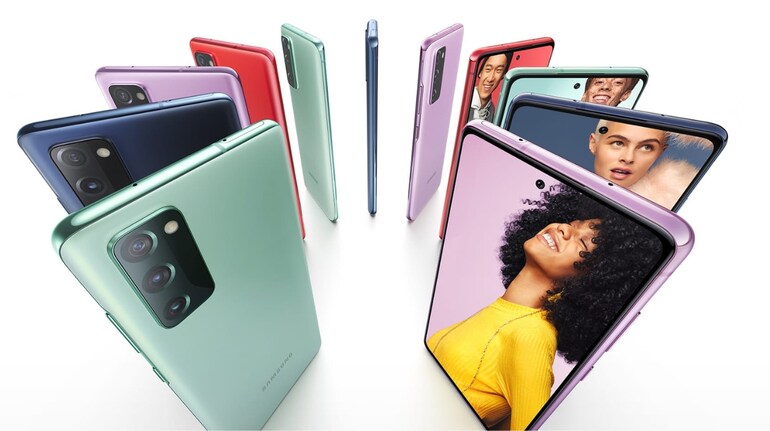

India’s refurbished smartphone market is entering a renewed growth phase as rising prices of new devices push consumers toward certified pre-owned options. Industry executives expect demand to accelerate on the back of sharp price hikes, improving quality controls, and the rapid expansion of direct-to-consumer online and offline channels.
The secondary smartphone market is expected to have grown 7–8 percent in 2025, with momentum likely to strengthen further in 2026, as per estimates from Counterpoint Research and industry executives.
The market underwent a major structural shift in 2025 after Amazon and Flipkart exited large-scale refurbished smartphone sales, citing high return rates and inconsistent quality of externally refurbished devices. The move led to a temporary dip in sales for sellers dependent on these platforms.
In response, companies such as Cashify and ControlZ have doubled down on direct-to-consumer strategies, expanding proprietary online platforms and offline retail networks.
Rising prices to widen arbitrage
Executives expect higher prices for new smartphones to act as a key catalyst for refurbished devices.
“The price arbitrage will become too large to ignore,” Yug Bhatia, co-founder of ControlZ told Moneycontrol.
Bhatia said the full impact of price hikes has yet to be felt, as most brands are still sitting on 60–90 days of inventory. However, a 15–20 percent increase in new-device prices could trigger a sharp surge in refurbished demand—similar to the inflection point seen during the Covid-19 period, when supply-chain disruptions drove up prices and accelerated consumer acceptance of refurbished smartphones.
“Prices for new devices are going up significantly, mainly due to higher memory and chip costs,” said Nakul Kumar, co-founder of Cashify.
“The impact hasn’t fully hit yet, but it will start reflecting from next month. Based on our discussions with OEMs, prices will rise meaningfully across smartphones and laptops,” Kumar told Moneycontrol.
Entry-level price shock may boost demand
The impact is expected to be most pronounced in entry-level smartphones, which form the largest segment of the market. Executives said a handset currently priced at around Rs 10,000 could rise to Rs 15,000 over the next six months—a 50 percent increase.
“Since entry-level phones form the largest segment, this price shock could be significant,” Kumar said. “We’re hopeful this drives demand toward refurbished devices.”
However, higher prices for new phones could also lead users to hold on to devices longer, tightening supply. “That’s the downside,” Kumar said. “But on the positive side, higher prices always make refurbished products a more logical choice.”
Despite improving demand fundamentals, executives said the biggest unresolved issue remains how much of the market can be brought into the organised ecosystem. “The unorganised market has always grown and never really slowed down,” Bhatia said. “The real question is how much of that demand can shift to organised, quality-assured players.”
Based on Cashify estimates, roughly 50 percent of smartphones sold annually are eligible for the refurbished or trade-in market. For example, if 130 million smartphones are sold in a year, around 65 million devices fall into the refurbished ecosystem.
“Of these, only about half are actually traded in,” Kumar said. “The rest remain unused in drawers or are passed on to friends and family. The core issue is lack of awareness—there isn’t enough education around e-waste or the value of selling old devices instead of hoarding them.”
iPhones emerge as the core growth driver
At an overall market level, one trend remains constant: consumers want iPhones.
Apple’s iPhone market share in India has risen from around 2 percent in 2019 to nearly 9 percent currently, according to industry estimates. The growing availability of refurbished iPhones across online channels has made the category commercially significant.
“We were always iPhone-first,” Bhatia said. “Most other players were Android-first, but 2025 was the year when iPhones became the main business for almost everyone.”
Industry estimates suggest iPhones now account for as much as 60 percent of total sales for refurbished players.
“iPhones remain the most aspirational brand in India,” Kumar said. “Their high entry price for new devices makes refurbished iPhones the easiest entry point for first-time Apple users—a trend that’s likely to continue, since Apple doesn’t really have an entry-level model.”
While companies are expanding into Android devices, executives said the focus remains limited to newer models.
“With Android, we work on T-minus one or T-minus two devices,” Bhatia said. “With Apple, even four- or five-year-old devices still perform well.”
Demand exists, but organised channels lag
Industry executives said consumer demand for refurbished devices has steadily built up, but organised supply continues to lag due to gaps in quality assurance and distribution.
“There is clear intent to buy,” said Yug Bhatia, co-founder of Control Z. “The problem is the gap—both in quality and in channels.”
Earlier, e-commerce platforms functioned as quick “shot shops,” while modern trade served as “search shops” for comparison-led purchases. That distinction has blurred. Large-format retailers such as Vijay Sales, Reliance Digital and Croma, along with regional chains, have yet to scale refurbished offerings meaningfully.
As a result, a growing share of demand is being met through the unorganised grey market.
“Adequate supply is the main concern which is stifling sales. Major retailers like Croma, & Vijay Sales are offering exchange schemes and store trade-ins to build volumes and maintain supply in the organized market,” Tarun Pathak, research director at Counterpoint, said.



Discover the latest Business News, Sensex, and Nifty updates. Obtain Personal Finance insights, tax queries, and expert opinions on Moneycontrol or download the Moneycontrol App to stay updated!
Find the best of Al News in one place, specially curated for you every weekend.
Stay on top of the latest tech trends and biggest startup news.







