






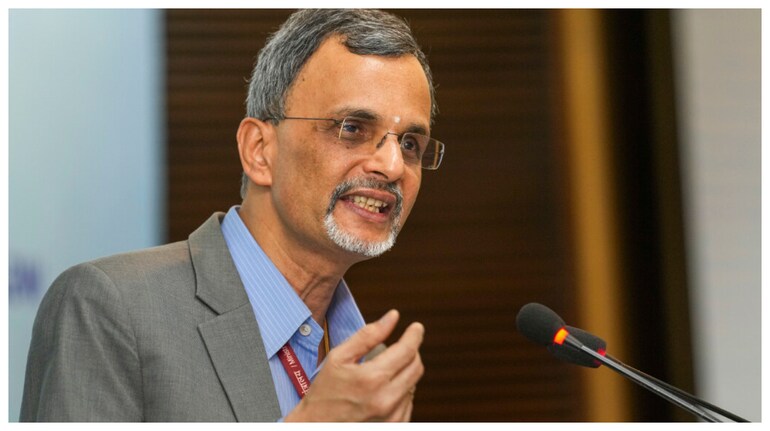

Chief Economic Adviser V Anantha Nageswaran, on February 16, said that India’s transition in the age of artificial intelligence (AI) “will not happen by drift”, calling for urgent policy action, political will, and structural reforms to manage emerging labour-market shifts.
“This will not happen by drift. It will require urgency. It will require political will,” Nageswaran said at the session on ‘The Future of Employability in the age of AI’ at the India AI Impact Summit 2026 held at Bharat Mandapam in New Delhi.
He argued that India nevertheless has a unique opportunity to shape a globally significant outcome in the AI era.
“But the alternative, fortunately, remains within reach. With foresight, institutional discipline, and relentless execution, India can become the first large society to demonstrate that human abundance and machine intelligence can reinforce and not undermine each other,” the Chief Economic Adviser said.
Opportunity window not indefinite
Nageswaran stressed that India’s ability to secure favourable outcomes from AI adoption remains time-sensitive.
“The window is still open, but it is not indefinite. For India, it is a decision about the future of work, social stability, and cohesion,” he said.
Calling for immediate action, he added, “We must act now. The first step begins with a reform of our education and the imparting of our foundational skills, and that is where the path to co-creation and prosperity will be.”
Delays could narrow India’s options
Emphasising the risks of policy inaction, Nageswaran cautioned that postponing reforms would steadily reduce India’s flexibility in responding to technological disruptions.
“Every year of delay narrows our options,” he said. He warned that poorly designed or inadequately sequenced responses could create wider instability.
“If it is not ensured, calibrated, we will create unavoidable social and economic instability,” Nageswaran said.
Education, skills, and services reforms
Outlining the policy priorities required to manage the transition, the Chief Economic Adviser highlighted the need for coordinated reforms across human capital development and regulatory frameworks.
He pointed to measures “such as strengthening the foundation of education, scaling high-quality skills, expanding labour-intensive service sectors, removing the regulatory bottlenecks that hinder the expansion of labour-intensive services”.
The emphasis on labour-intensive services reflects their continued importance in employment generation, particularly in an economy navigating both demographic pressures and technological change.



Discover the latest Business News, Sensex, and Nifty updates. Obtain Personal Finance insights, tax queries, and expert opinions on Moneycontrol or download the Moneycontrol App to stay updated!
Find the best of Al News in one place, specially curated for you every weekend.
Stay on top of the latest tech trends and biggest startup news.







