






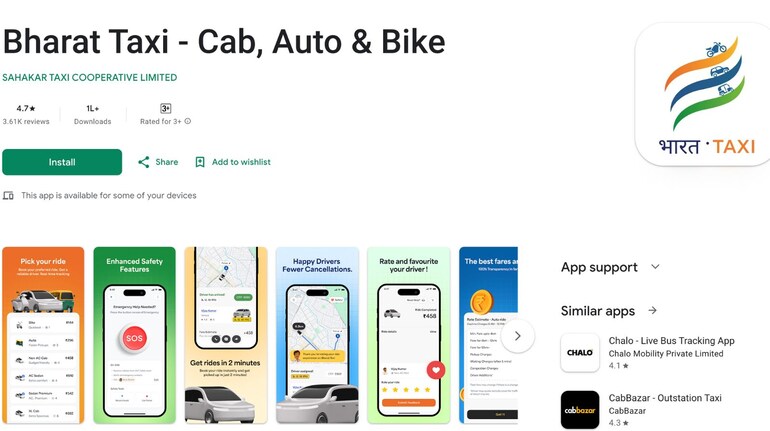

If you live in Delhi and use cab apps regularly, you’ve probably had the same complaints for years: surge pricing when you’re already late, fares that suddenly jump, drivers cancelling at the last minute, and a feeling that the app always wins while everyone else adjusts.
A new app called Bharat Taxi, which launched today, is trying to offer a different model. It calls itself India’s first cooperative ride-hailing platform and positions itself as an alternative to Ola and Uber.
From a user’s perspective, the big question is simple: will this actually make booking a cab easier, cheaper, or more reliable?
What makes Bharat Taxi different?
The biggest difference is who owns the platform.
On apps like Ola and Uber, drivers are partners but the company controls pricing, incentives and commissions. Bharat Taxi works on a cooperative model, where drivers are treated as owners rather than just service providers. Instead of giving the platform a cut from every ride, drivers pay a fixed daily fee to use the app and keep the rest of what they earn.
Why does that matter to users? Because the app is not designed to maximise commission per ride. In theory, that allows fares to stay more stable and predictable.
Will fares really be cheaper?
Bharat Taxi claims it will not use surge pricing, which is one of the biggest pain points for riders. That means no sudden fare spikes during rain, peak office hours or festivals.
Early estimates suggest fares could be noticeably lower than Ola or Uber on some routes, though this will only become clear once people start using it regularly. For users, the key appeal here is not just lower prices, but fewer surprises.
How does the app work for users?
From the outside, Bharat Taxi looks familiar. You download the app, enter your pickup and drop location, see the estimated fare, and book a ride. There’s no complicated learning curve.
You can see driver details before the trip, track the ride, and use standard safety features that most users already expect from a cab app. The experience is meant to feel familiar so that users don’t feel like they are experimenting with something risky.
At launch, the app is focusing on Delhi and the surrounding NCR region, with thousands of vehicles expected to come onboard. Availability and wait times will be one of the biggest things users will judge in the first few weeks.
Why drivers matter to users
It’s easy to think driver issues are separate from user experience, but they’re not. When drivers are unhappy with commissions or incentives, users feel it through cancellations, refusals and long wait times.
Because drivers on Bharat Taxi are owners and not paying a percentage cut on every ride, the hope is that they will be less stressed about chasing incentives or avoiding certain trips. If that holds true, users could see fewer cancellations and more willingness to accept shorter or less profitable rides.
Is this a government app?
Bharat Taxi has been launched with support from cooperative institutions and the Ministry of Cooperation, which gives it a different backing compared to private startups. However, for users, this doesn’t change how the app works day to day.
What it does signal is that the platform is being positioned as a long-term public-interest alternative, rather than a venture focused only on growth and investor returns.
What should users watch out for?
As with any new app, the early phase will matter a lot. Users should watch for:
– How easy it is to actually get a cab during peak hours
– Whether fares stay consistent over time
– How reliable drivers are in accepting and completing rides
– How customer support responds when something goes wrong
Ola and Uber still have massive networks and years of operational experience. Bharat Taxi’s biggest challenge will be matching that reliability while keeping its promises on pricing.
So, should users try it?
If you’re someone who uses cabs daily and is tired of surge pricing and cancellations, Bharat Taxi is worth trying at least once. It may not replace Ola or Uber immediately, but it adds a new option at a time when users have been asking for one.
At the very least, it puts pressure on existing players. And for users, more pressure usually means better prices, better service, or both.



Discover the latest Business News, Sensex, and Nifty updates. Obtain Personal Finance insights, tax queries, and expert opinions on Moneycontrol or download the Moneycontrol App to stay updated!
Find the best of Al News in one place, specially curated for you every weekend.
Stay on top of the latest tech trends and biggest startup news.







