






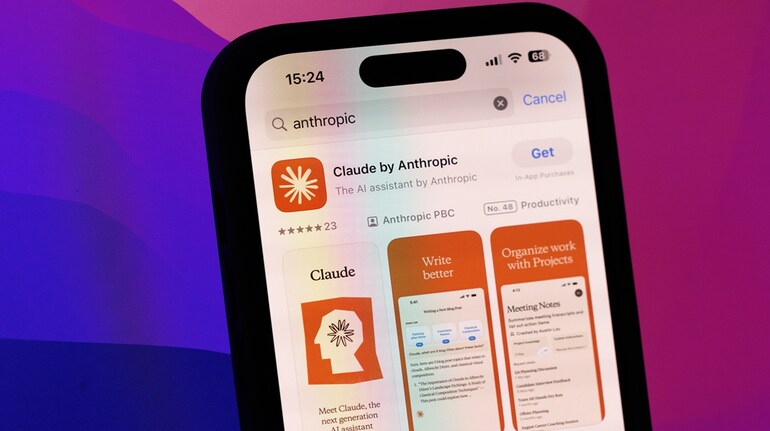

Anthropic has released Claude Opus 4.6, an upgraded version of its most advanced AI model, stepping up pressure on rivals OpenAI and Google as competition among frontier models intensifies.
The new model improves significantly on its predecessor’s coding and reasoning capabilities, with Anthropic positioning Opus 4.6 as better suited for long-running, autonomous tasks across large codebases. For the first time in the Opus line, the model also introduces a 1 million token context window in beta, allowing it to process and retain vastly larger amounts of information in a single session.
Stronger agentic coding, benchmark wins for Claude
Anthropic says Opus 4.6 plans more carefully, sustains agentic workflows for longer, and performs stronger code review and debugging, including catching its own errors. Beyond software development, the model is designed for complex knowledge work such as financial analysis, research, and creating documents, spreadsheets and presentations.
Within Cowork, Anthropic’s autonomous multitasking environment, Opus 4.6 can combine these skills to execute multi-step tasks with minimal oversight.
On benchmarks, Anthropic claims state-of-the-art performance. Opus 4.6 leads Terminal-Bench 2.0, an agentic coding evaluation, and tops Humanity’s Last Exam, a multidisciplinary reasoning test. On GDPval-AA, which measures economically valuable work across finance and legal tasks, the model reportedly outperforms OpenAI’s GPT-5.2 by roughly 144 Elo points and its own predecessor by 190 points.
The model also performs best on BrowseComp, a test focused on finding difficult-to-locate information online. Anthropic argues this reflects a broader improvement in long-context reasoning and retrieval, an area where many models still struggle with so-called “context rot”.
On MRCR v2, a needle-in-a-haystack benchmark using a 1 million token context, Opus 4.6 achieved a 76% score, compared with 18.5% for Claude Sonnet 4.5. Anthropic describes this as a qualitative shift in how effectively large contexts can be used without performance degrading.
Anthropic says these gains do not come at the expense of safety. According to its system card, Opus 4.6 shows low rates of misaligned behaviour such as deception or over-compliance and has fewer unnecessary refusals than previous Claude models. The company also introduced new cybersecurity probes in response to the model’s stronger defensive and offensive security capabilities.
Other key updates
Alongside the model release, Anthropic rolled out several product and API updates. Developers now have finer control over reasoning depth through adaptive thinking and adjustable effort levels, as well as context compaction to allow longer-running agents without hitting token limits. Outputs can now reach 128,000 tokens, and US-only inference is available at a premium.
Anthropic also introduced agent teams in Claude Code, allowing multiple AI agents to work in parallel on tasks such as large codebase reviews. Claude has received upgrades in Excel, and a research preview of Claude in PowerPoint is now available for Max, Team and Enterprise users.
Claude Opus 4.6 is available today on claude.ai, via the API and across major cloud platforms, with pricing unchanged at $5 and $25 per million input and output tokens.


Discover the latest Business News, Sensex, and Nifty updates. Obtain Personal Finance insights, tax queries, and expert opinions on Moneycontrol or download the Moneycontrol App to stay updated!
Find the best of Al News in one place, specially curated for you every weekend.
Stay on top of the latest tech trends and biggest startup news.







