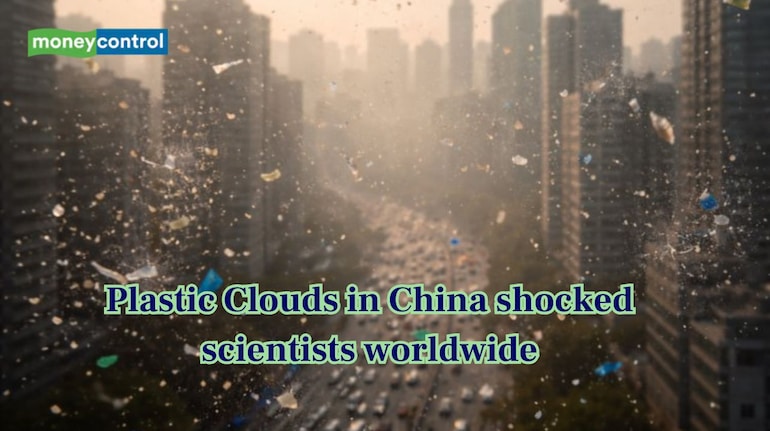

Giant clouds may not always be water or storm-related anymore. They can be of plastic too. Above some Chinese cities, scientists found clouds made entirely of plastics. These “plastic clouds” carry microscopic particles that float invisibly in air. They add a hidden layer to the world’s growing pollution crisis. The discovery reveals an unexpected path for plastics beyond oceans and soil.
Where Are "Plastic Clouds" Found?
Researchers detected them over major Chinese cities, including Guangzhou and Xi’an. Both cities are large urban centers with heavy traffic and industry. Plastic clouds also drift far, reaching rural or remote areas eventually. Meteorological conditions help distribute these particles widely through the atmosphere. The problem is not local, but increasingly global in scale.
What Are these Clouds?
Plastic clouds are clouds formed from airborne microplastics and nanoplastics. These tiny particles act as seeds for water droplets in atmosphere. They behave like dust or aerosols, allowing clouds to form naturally. Scientists call them a new type of pollution never observed before. Plastic clouds illustrate how human activity can reach the skies directly.
How Do Plastics End Up Forming Clouds?
Plastic particles are released from roads, tires and degrading waste materials. They remain suspended in air, forming aerosols in the urban atmosphere. Water droplets condense around these microplastics, creating “plastic clouds” overhead. Rain can carry these particles far from their city of origin. The process shows plastics can travel through air as easily as water.
What Shocked Scientists?
Researchers were stunned by the sheer abundance of airborne microplastics. Levels were 2 to 6 times higher than previous global estimates. They never expected plastics to actively contribute to cloud formation. Scientists realized humans are now polluting not just land and oceans. The discovery challenges assumptions about where plastic pollution can reach.
Can These Plastic Clouds Affect Globally?
Yes, plastic particles can travel long distances via wind currents. Rain and storms carry them from cities to remote areas. They could affect cloud formation, rainfall and weather patterns worldwide. Microplastics may deposit into oceans, soil, and ecosystems far away. This shows plastic pollution is no longer a local environmental problem.
Why Study on Plastic Clouds Matters?
Plastic clouds could influence rainfall, weather patterns and regional climate systems. They raise concerns about human exposure through inhalation and respiratory health. Studying them helps policymakers address atmospheric pollution before it worsens.
Discover the latest Business News, Sensex, and Nifty updates. Obtain Personal Finance insights, tax queries, and expert opinions on Moneycontrol or download the Moneycontrol App to stay updated!
Find the best of Al News in one place, specially curated for you every weekend.
Stay on top of the latest tech trends and biggest startup news.