The Great Lakes owe their origin to an ancient hotspot that existed beneath Pangaea 300 million years ago, researchers have revealed. This discovery sheds light on how Earth's geological history shaped one of the planet's most iconic freshwater systems.
Cape Verde Hotspot's Role in Shaping the Lakes
A study published in Geophysical Research Letters suggests the Cape Verde hotspot, still active in the Central Atlantic, once influenced the Great Lakes region. The hotspot heated and stretched Earth's crust, creating a topographical depression millions of years ago. During the last ice age, glaciers sculpted these lowlands, and their meltwater later formed the Great Lakes.
Read Also: 'Rare Bird species': 12 critically endangered Great Indian Bustard spotted in Rajasthan; see image
The Great Lakes now hold 21% of the world's freshwater. "The hotspot made the first imprint," said Aibing Li, seismologist at the University of Houston and co-author of the study. Hotspots, like those that formed Hawaii and Yellowstone, are plumes of molten material from Earth's mantle that interact with the crust, creating lasting geological features.
Seismic Clues and Ancient Plate Movements
Scientists identified peculiar seismic wave patterns beneath the Great Lakes, known as radial anisotropy. This phenomenon suggested past deformation of the lithosphere, Earth's crust and upper mantle. With the help of plate reconstruction models, researchers linked these anomalies to the Cape Verde hotspot.
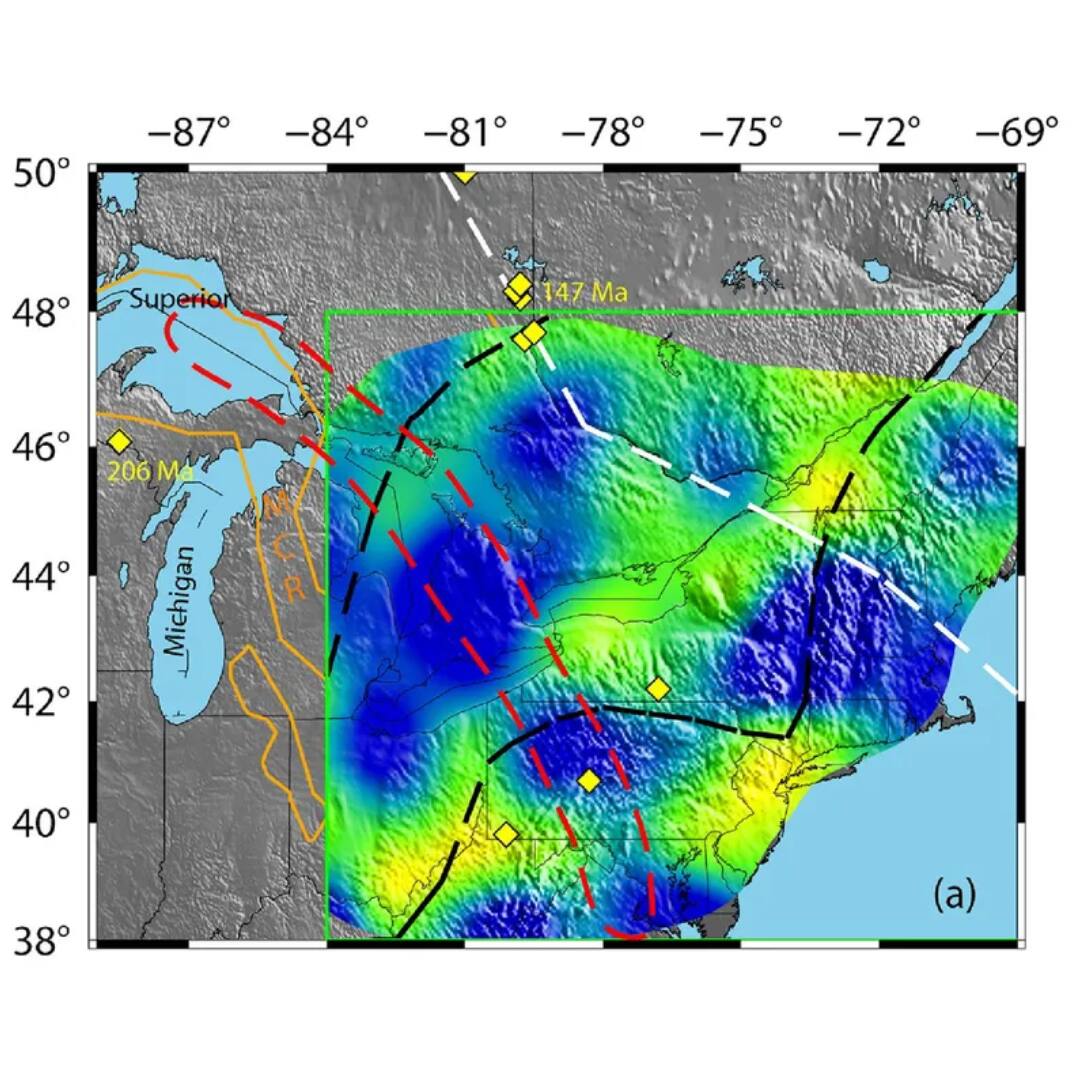 A map displaying the suggested hotspot path in red. (Image: Adapted from Tao et al., 2024, CC BY 4.0)
Read Also: Wolf Moon 2025: When is the next full moon in January this year?
Between 300 million and 170 million years ago, this hotspot travelled beneath regions now known as Lake Superior, Lake Huron, and Lake Erie, leaving lasting effects. Researchers continue to investigate how hotspots might influence the formation of large lakes globally.
"This connection between lakes and hotspots could unlock mysteries," Li said, adding that such findings could reshape our understanding of Earth's geological past.
Discover the latest Business News, Sensex, and Nifty updates. Obtain Personal Finance insights, tax queries, and expert opinions on Moneycontrol or download the Moneycontrol App to stay updated!
Find the best of Al News in one place, specially curated for you every weekend.
Stay on top of the latest tech trends and biggest startup news.