




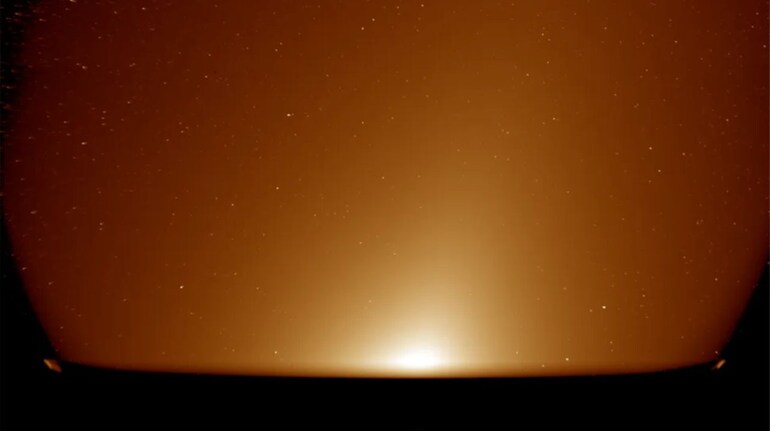
NASA's newest solar mission has produced its first images, a thrilling milestone for the PUNCH mission. The four-satellite mission is a team effort meant to uncover some of the sun's biggest secrets.
The PUNCH Mission: A Team of Satellites on a Single Mission
The PUNCH (Polarimeter to Unify the Corona and Heliosphere) mission, which was launched in March, is an unusual one. Unlike earlier solar observatories, PUNCH is made up of four tiny satellites that function as a single instrument. The satellites are positioned in orbit in such a way that they will examine the solar wind and the solar corona. Their goal is to explore how material from the outer atmosphere of the sun becomes solar wind.
Craig DeForest, a scientist from the Southwest Research Institute in Colorado, expressed excitement over the project’s progress. He said, “All four instruments are functioning as designed. We’re excited to finish the commissioning phase and start full operations.”
The Search for the Sun’s Hidden Secrets
The initial photos taken by PUNCH reveal the zodiacal light, a fuzzy glow in the sky produced by dust particles bouncing sunlight. While the initial pictures are stunning, they are but a beginning. PUNCH's real mission is to observe the solar wind with great precision. The solar wind consists of charged particles flowing away from the sun, filling up the solar system and creating the heliosphere.
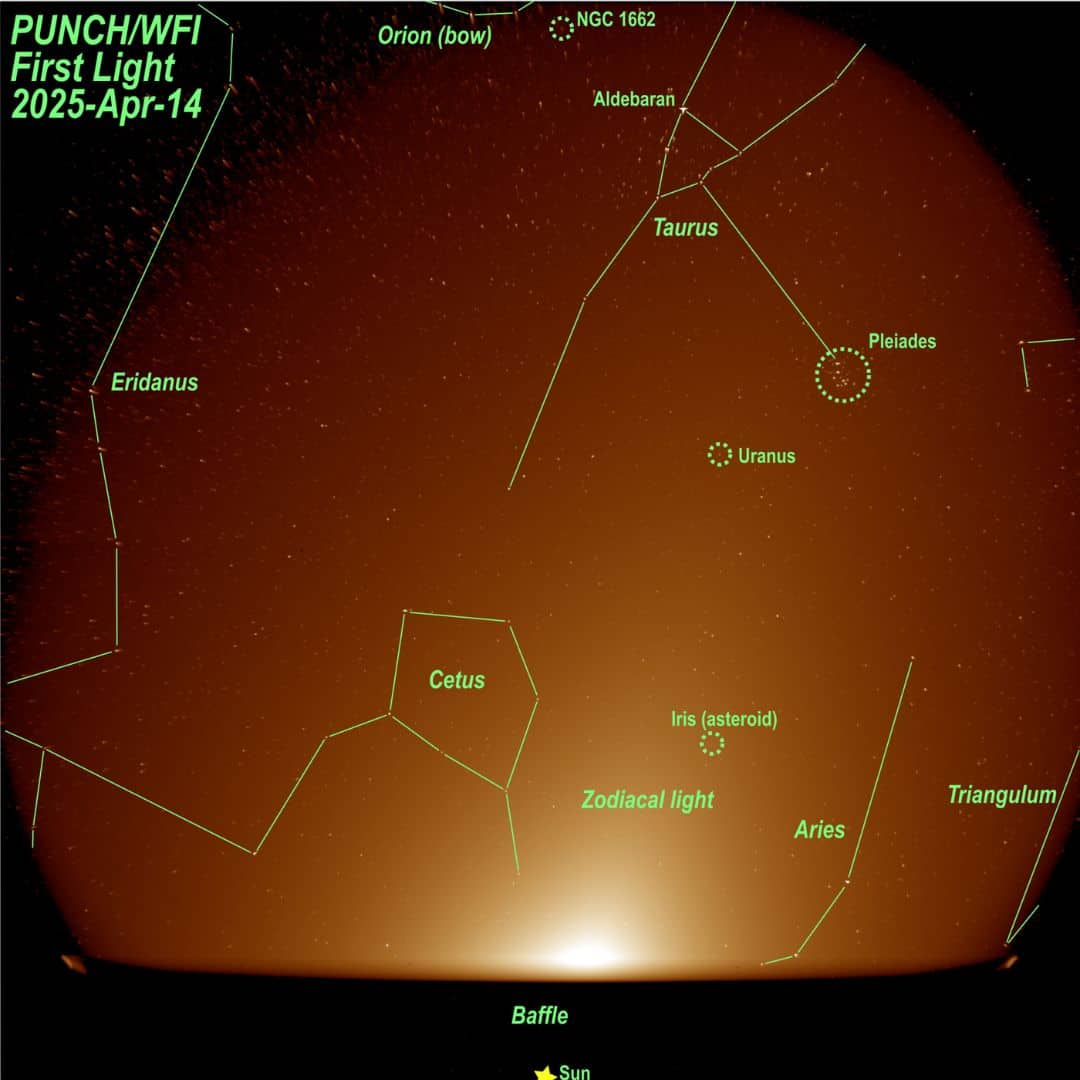 The first light image from the PUNCH Wide Field Imager (WFI) taken on April 14, 2025. This image shows the size of the WFI field using familiar constellations and demonstrates that the camera is in focus, working properly, and able to capture deep-field images. The soft diffuse glow is zodiacal light, composed of microscopic dust particles orbiting the Sun. (Image: NASA)
But analysing this effect involves separating out weak features from the sun's atmosphere. This involves eliminating star and background light interference. DeForest described, "The team is calibrating the data to eliminate 99% of the background light and highlight the solar wind."
PUNCH's Innovative Technology and Future Goals
Aside from its imaging capabilities, PUNCH is also experimenting with advanced propulsion. The mission utilises small water-powered rocket motors that are capable of steering the satellites. They are hydrogen-fuelled and oxygen-fed, which is derived from water, and are safe and non-toxic. They enable the satellites to make multiple course corrections during the mission.
PUNCH's mission is only in its infancy, but scientists hope. Analysis of the data will start in June, and they expect to reveal essential knowledge about the way the material of the sun evolves into solar wind. As the mission goes on, the PUNCH satellites will give us a better view of our sun's intricate behaviour, with insights that may change our view of space weather.
Discover the latest Business News, Sensex, and Nifty updates. Obtain Personal Finance insights, tax queries, and expert opinions on Moneycontrol or download the Moneycontrol App to stay updated!
Find the best of Al News in one place, specially curated for you every weekend.
Stay on top of the latest tech trends and biggest startup news.