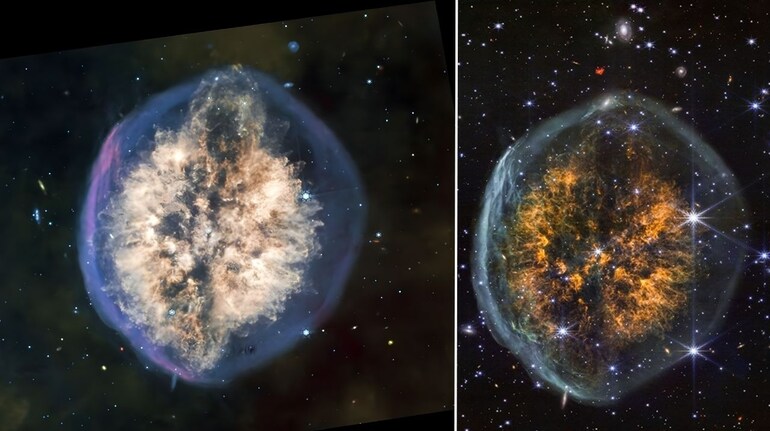

NASA’s James Webb Space Telescope has captured stunning new infrared images. The nebula, officially PMR 1, resembles a human cranium and brain. Astronomers have nicknamed it the "Exposed Cranium" for its eerie shape. This is one of the most detailed views of a dying star.
Nebula PMR 1: A Star Nearing Its Final Days
The nebula PMR 1 is formed from gas ejected by an ageing central star. The star is shedding its outer layers into surrounding space. Infrared imaging reveals both hot and cold gas clouds inside.
The inner region is rich with mixed gases and dust. Meanwhile, the outer shell is mostly hydrogen glowing under Webb’s gaze. Images like these spark curiosity about the universe’s endless mysteries. They remind humans that stars live and die across cosmic time.
NASA's Webb’s Infrared Eyes captured this nebula
Webb’s NIRCam captured near-infrared light, showing detailed star-forming structures.
MIRI, the mid-infrared instrument, revealed cooler, hidden layers of the nebula. These two instruments combined create a three-dimensional cosmic portrait of death. Astronomers study the nebula to understand how stars end their life.
What is the Dark Lane Mystery?
A striking dark lane runs vertically through the nebula’s core. It creates the ‘brain’ appearance that makes the nebula so famous. The Exposed Cranium is a vivid lesson in astronomical evolution.
Researchers believe it may result from jets or outflows of material. The lane may also indicate dense dust blocking some stellar light. Studying this feature could reveal new secrets about stellar evolution processes.
Why are Scientists Studying this Nebula?
Planetary nebulae are critical laboratories for understanding stellar life cycles. They show how stars like our Sun expel elements into space. The expelled gas eventually enriches the galaxy with new star material.
Observations from NASA's Webb revealed the chemical composition and temperature variations in detail. Each image helps scientists to model future behaviour of dying stars.
What is so special about "Exposed Cranium Nebula"?
The Exposed Cranium Nebula provides a rare glimpse of stellar mortality. Its ghostly shape fascinates both scientists and astronomy enthusiasts alike. Webb’s powerful vision continues to uncover previously unseen cosmic wonders.
Astronomers believe further observations will reveal hidden structures and dust filaments. The telescope demonstrates the beauty of stars reaching their final moments.
Discover the latest Business News, Sensex, and Nifty updates. Obtain Personal Finance insights, tax queries, and expert opinions on Moneycontrol or download the Moneycontrol App to stay updated!
Find the best of Al News in one place, specially curated for you every weekend.
Stay on top of the latest tech trends and biggest startup news.