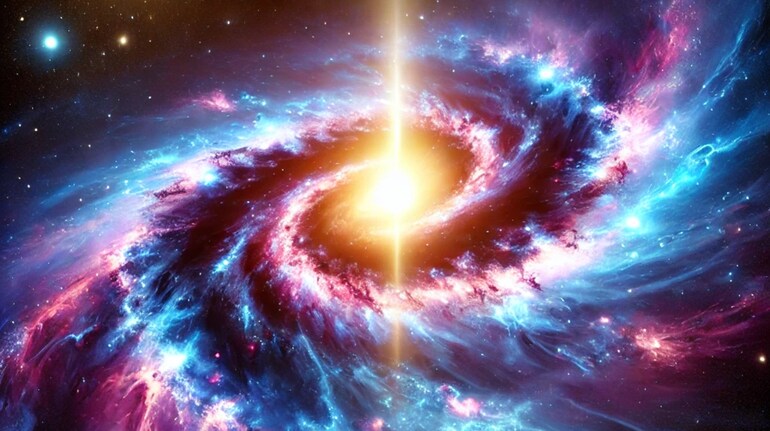
Astronomers have captured light from a galaxy born 13 billion years ago. This discovery offers a glimpse into the universe’s infancy, unlocking secrets of galaxy formation. The ancient galaxy, GHZ2 or GLASS-z12, existed just 400 million years post-Big Bang.
Using advanced telescopes, scientists detected faint signals of hydrogen and oxygen. These findings open new doors to understanding how galaxies first formed.
The Tools Behind the Discovery
The discovery was made using ALMA and the James Webb Telescope. ALMA’s antennas and JWST’s powerful mirror combined for this feat. Astronomers spent hours focusing on seemingly empty sky regions.
Jorge Zavala, a researcher, called it an “effort to glimpse cosmic beginnings.” The emission signals mark the earliest known hydrogen and oxygen observations. These elements, crucial for stars, shine from the galaxy GHZ2.
Read Also: NASA Hubble's most detailed image reveals Andromeda galaxy's hidden history
Insights into a Young Galaxy
GHZ2 offers rare insights into the universe’s early days. Though massive, its stars are densely packed in a compact form. The galaxy’s unique traits suggest rapid and early star formation.
Scientists confirmed GHZ2’s distance with a redshift value of 12.333. The findings support theories about how galaxies grew after the Big Bang. This discovery builds on early James Webb findings from 2022. Researchers believe this is a step towards solving galaxy evolution mysteries. Future studies aim to shed even more light on our cosmic origins.
Discover the latest Business News, Sensex, and Nifty updates. Obtain Personal Finance insights, tax queries, and expert opinions on Moneycontrol or download the Moneycontrol App to stay updated!
Find the best of Al News in one place, specially curated for you every weekend.
Stay on top of the latest tech trends and biggest startup news.