-
My Account









Trending Topics:
- Blood Moon 2025
- Potoo Bird
- Cosmic Butterfly in Space
- Jupiter Juno
Comets, stars, galaxies and more: NASA's stunning astronomy images for December 2025
Each day, we dive into NASA’s newest releases to bring you the most mesmerising sights from across the universe. From glowing comets to distant galaxies, these daily images reveal the beauty, mystery and scale of the cosmos in ways that never fail to amaze us. Stay with us as we explore December’s most breathtaking celestial highlights, one remarkable picture at a time.




1/10

December 1: 3I ATLAS-Tails of an Interstellar Comet; Comet 3I/ATLAS shows familiar chemistry, dust and tails, suggesting our Solar System is typical. The green-coma comet passed the Sun in October and nears Earth in mid-December before leaving forever. (Image: Victor Sabet & Julien De Winter/NASA)
2/10

December 2: M77-Spiral Galaxy with an Active Center; M77, a nearby 47-million-light-year spiral galaxy, hosts a bright active core powered by a supermassive black hole. Hubble reveals its dust-lined arms and young blue star clusters circling the luminous centre. (Image: Canva)
3/10

December 3: Near a Black Hole and Disk, this visualisation shows the sky from a camera falling toward a 4-million-solar-mass black hole. The view captures gravity’s warping effects, with the Milky Way forming a loop above and a stretched image below the horizon. (Image: NASA's GSFC/ J. Schnittman/ B. Powell)
4/10
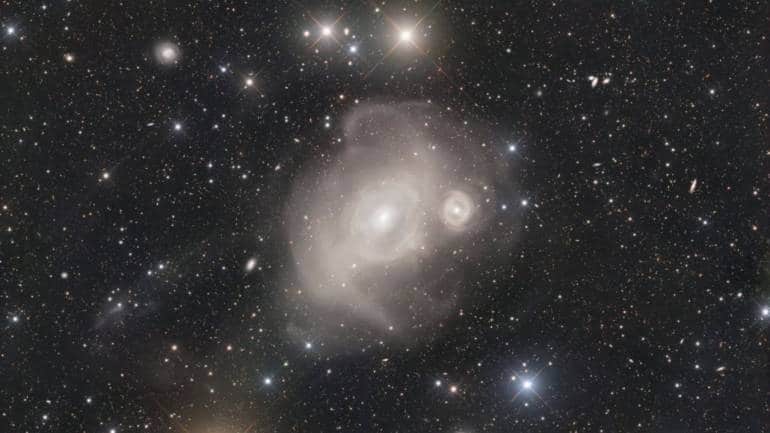
December 4: Galaxies in the Furnace shows massive elliptical NGC 1316 interacting with smaller NGC 1317, forming looping star streams from cosmic collisions. Located in the Fornax cluster, NGC 1316, also called Fornax A, is a bright radio source extending beyond the field-of-view. (Image: Simone Curzi/ShaRA Team)
5/10
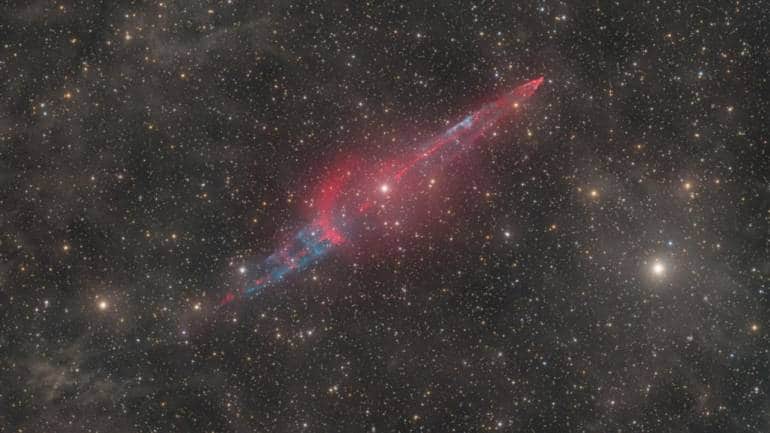
December 5: The Bipolar Jets of KX Andromedae, this image shows a blast lasting from binary star KX Andromedae, stunning 19‑light-year bipolar jets emerge, formed as material from a cool giant transfer to a hot B-type companion. (Image: Tim Schaeffer/Deep Sky Collective)
6/10
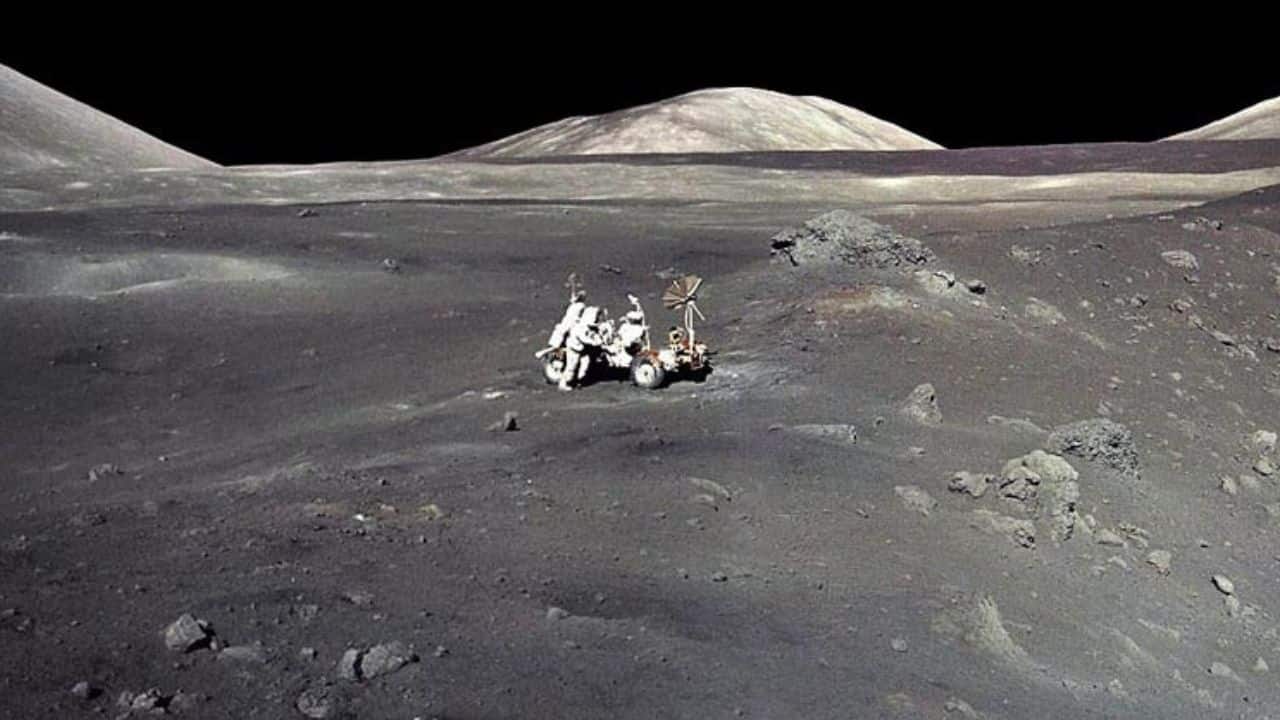
December 6: In December 1972, Apollo 17 astronauts explored Taurus-Littrow, captured lunar rover images, discovered orange soil, collected 110 kg of samples, and remain the last humans on the Moon. (Image: Apollo 17 Crew/NASA)
7/10
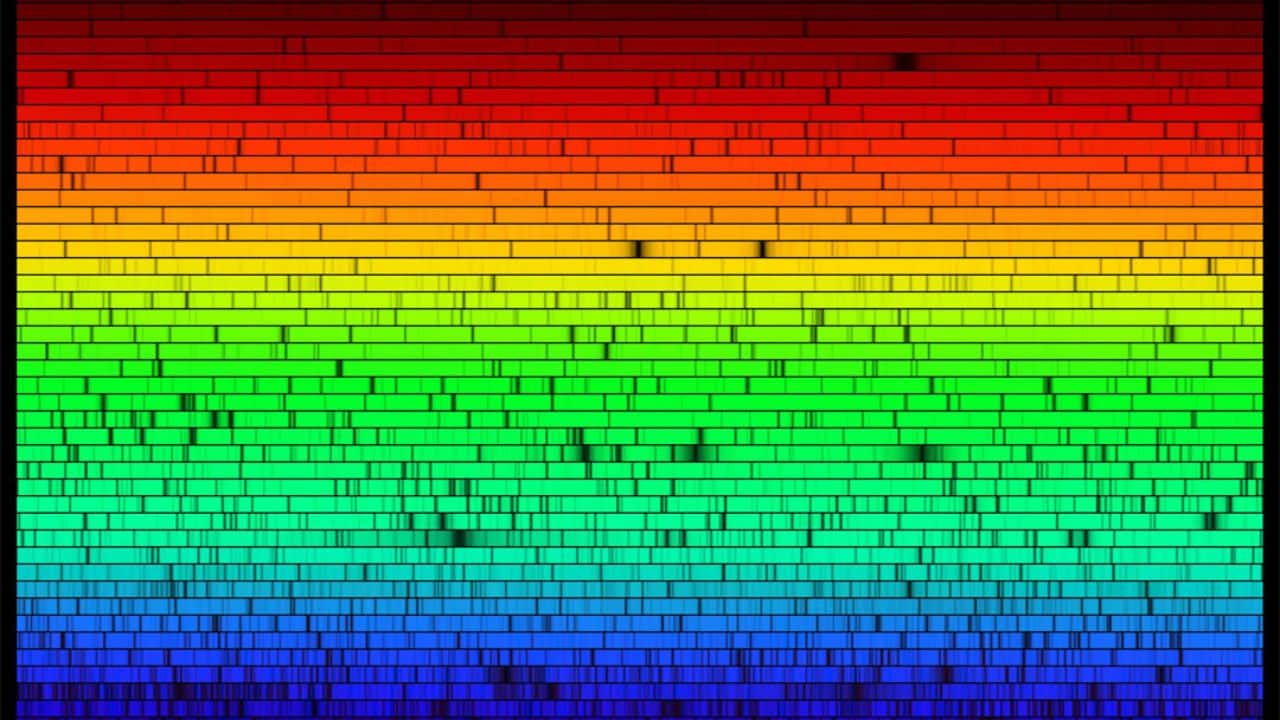
December 7: The Sun emits nearly all colors, brightest in yellow-green. Dark spectral lines reveal gases like helium, showing the Sun’s composition, though some remain unidentified. (Image: Nigel Sharp (NSF)/FTS/ NSO/KPNO/AURA/NSF)
8/10
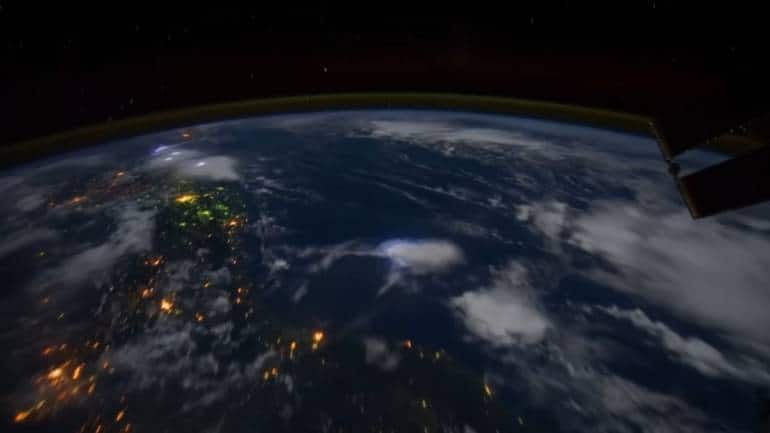
December 8: Flying over Earth at night, astronauts aboard the ISS witness clouds, city lights, lightning, seas, auroras and sunrise every 90 minutes from low Earth orbit. (Image: Gateway to Astronaut Photography/NASA)
9/10

December 9: This close-up of the Soul Nebula shows IC 1871’s dark dust and glowing gas, 25 light-years across, forming stars sculpted by massive stellar winds, 6,500 light-years away in Cassiopeia. (Image: Nicola Bugin)
10/10
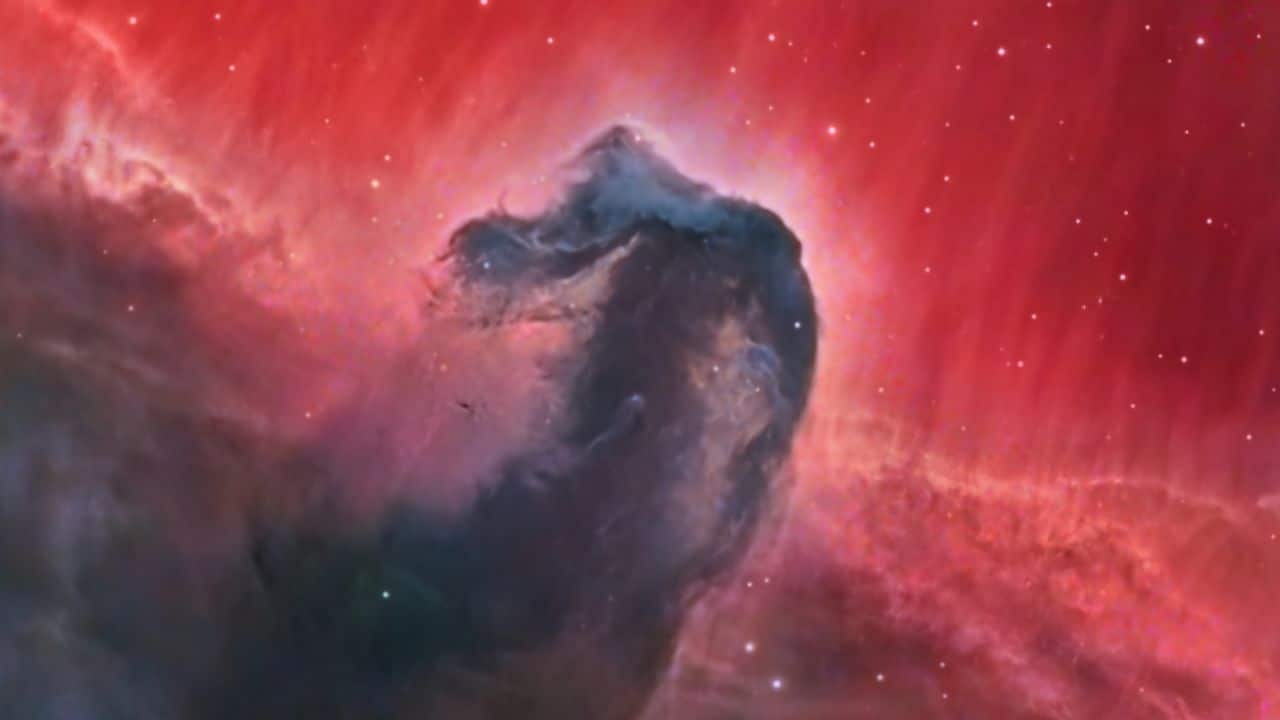
December 10: Sculpted by stellar winds, the Horsehead Nebula is a 1,500-light-year-distant molecular cloud in Orion. Its dusty silhouette hides young stars forming inside, though its iconic shape will slowly change over time. (Image: NASA)
Discover the latest Business News, Budget 2025 News, Sensex, and Nifty updates. Obtain Personal Finance insights, tax queries, and expert opinions on Moneycontrol or download the Moneycontrol App to stay updated!



