




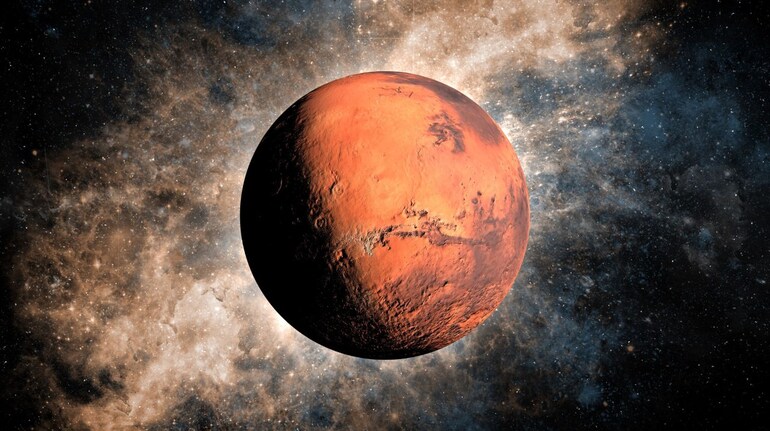
If humans ever hope to establish long-term colonies on Mars, significant changes to the planet's harsh environment will be necessary. Mars, with its frigid climate and inhospitable conditions, is far from ideal for human survival. With average temperatures around minus 64 degrees Celsius (minus 85 degrees Fahrenheit), any plans for terraforming must include strategies to warm the planet.
Innovative Nanorod Solution
Scientists from Northwestern University in the United States, led by electrical engineer Samaneh Ansari, have proposed an innovative method that could significantly increase the feasibility of warming Mars. Their approach involves releasing microscopic metal rods into Mars's atmosphere to create a greenhouse effect, which could raise the planet's temperature. According to geophysicist Edwin Kite of the University of Chicago, this technique is 5,000 times more efficient than previous proposals. While millions of tons of material would still be needed, it is a far more manageable quantity compared to earlier methods.
The Challenge of Mars’s Atmosphere
Mars lacks the natural greenhouse gases found on Earth that trap heat and warm the surface. Previous ideas suggested importing or mining these gases, but both options are costly and challenging. Instead, Ansari's team proposed using materials already abundant on Mars, such as aluminium and iron, found in the planet's surface soil. By dispersing nanoscopic metallic particles into the atmosphere, these nanorods could remain suspended, trapping sunlight and gradually warming the surface.
The Road Ahead: Potential and Challenges
The proposed strategy could potentially raise Mars’s temperature by more than 28 degrees Celsius, making it warm enough to support photosynthetic microbial life—an essential first step toward long-term terraforming. However, several challenges remain. The longevity of these particles in Mars's atmosphere is uncertain, and as the planet warms, the particles might attract water and fall to the surface, limiting their effectiveness. Additionally, Mars’s atmosphere continues to leak into space, and without a global magnetic field, maintaining a stable environment could prove difficult.
Despite these uncertainties, this research represents a significant step toward realising the dream of human settlement on Mars. As Kite notes, further exploration and study are necessary, but the potential to transform Mars into a more habitable world brings us closer to a future where humanity might one day thrive on the Red Planet.
Discover the latest Business News, Sensex, and Nifty updates. Obtain Personal Finance insights, tax queries, and expert opinions on Moneycontrol or download the Moneycontrol App to stay updated!
Find the best of Al News in one place, specially curated for you every weekend.
Stay on top of the latest tech trends and biggest startup news.