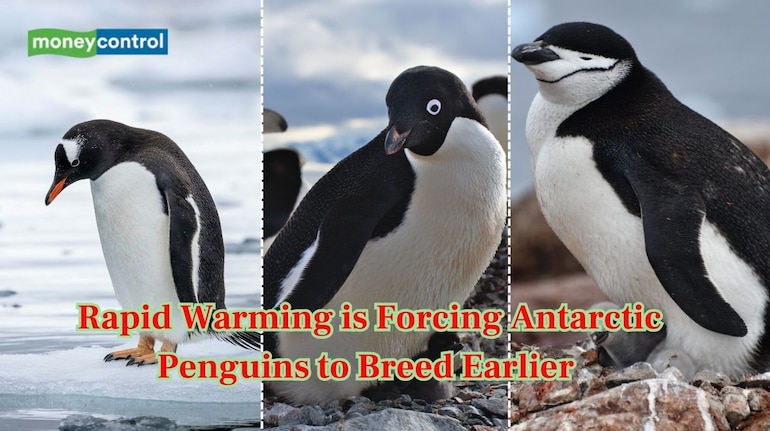

Penguins in Antarctica are changing the way they breed to cope with rapid warming. New research shows that some species are nesting earlier in the year, a behaviour shift unprecedented in the animal kingdom. While this adaptation helps them survive rising temperatures, it comes with hidden costs. Experts warn that mismatches with food supply and increased competition could threaten vulnerable populations.
What Is Happening to Penguins?
Gentoo, Adelie and chinstrap penguins are shifting their breeding calendars. On average, gentoos now start nesting around 13 days earlier, with some colonies moving up almost 24 days. Adelie and chinstrap penguins also begin breeding about 10 days earlier than a decade ago.
But due to some changes, they have changed their calanders. These changes are triggered by rapid warming in the Antarctic Peninsula, which melts ice sooner and alters food availability for chicks.
Who Did This Study?
The research was conducted by scientists from Oxford University and Oxford Brookes University. They have been studying penguin colonies for over a decade, focusing on how these birds respond to environmental change.
The study shows that penguin have shifted their breeding seasons, allowing them to cope with a decade of rapid warming. Ecologist Ignacio Juárez Martínez and his team began monitoring three species of Antarctic penguins from 2012.
How Were Penguins Studied?
The team used 77 time-lapse cameras across 37 penguin colonies on the Antarctic Peninsula and nearby islands. These cameras monitored nesting behaviour, chick hatching and environmental conditions from 2012 to 2022. This long-term monitoring allowed researchers to detect shifts in breeding times across multiple penguin species.
Is This Change in Breeding tells Something?
Yes. Scientists see the earlier breeding as a sign of rapid adaptation, but also a warning. Gentoo penguins have advanced their nesting by 13 days on average, sometimes up to 24 days. Adelie and chinstrap penguins start around 10 days earlier.
These changes suggest that Antarctic wildlife is responding quickly to warming, but the long-term effects could threaten some species if temperatures keep rising.
Why Does This Study Matter?
Penguins rely on timing their breeding to match peak food availability. Changes in breeding calendars may help them cope with warmer temperatures. However, earlier breeding could create mismatches with food supply and increase competition among species. This makes penguins important indicators of climate change impacts on Antarctic ecosystems.
Discover the latest Business News, Sensex, and Nifty updates. Obtain Personal Finance insights, tax queries, and expert opinions on Moneycontrol or download the Moneycontrol App to stay updated!





Find the best of Al News in one place, specially curated for you every weekend.
Stay on top of the latest tech trends and biggest startup news.