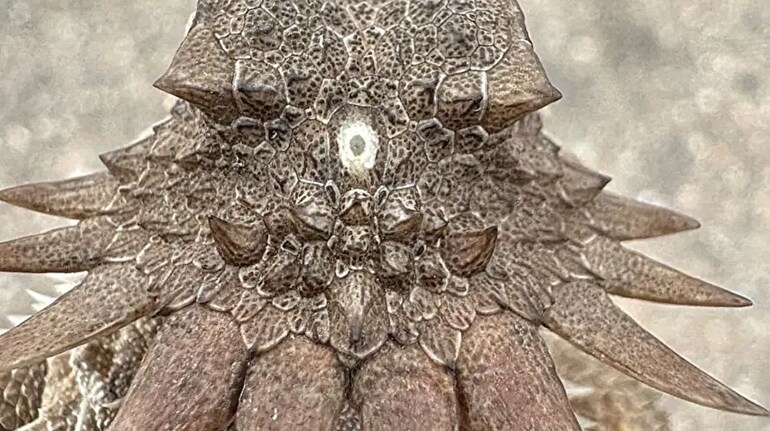

Scientists report that humans and all vertebrates share ancestry with a tiny one eyed creature that lived nearly 600 million years ago, reshaping ideas about how the eye and brain evolved.
Researchers from Lund University and University of Sussex led the investigation. Their findings appear in Current Biology. The team says early vertebrates descended from a cyclops like ancestor. This animal carried a single median eye. That eye sat centrally atop its head.
Professor Dan-E Nilsson described the results as surprising. He said they overturn previous assumptions. Scientists long debated vertebrate eye origins.
Ancient Cyclops Ancestor and Median Eye
The distant ancestor resembled a small worm. It lived almost 600 million years ago. The creature filtered plankton from seawater. It adopted a calm sedentary lifestyle. Earlier ancestors likely possessed paired eyes. Those may have sensed light simply. Over time those paired eyes vanished.
Researchers believe lifestyle changes drove loss. Calm living reduced visual demands greatly. However central light sensitive cells remained. These cells formed a primitive median eye. That eye sensed day and night cycles. It also detected orientation within water.
Millions of years later activity resumed. Swimming life increased visual requirements again. From tissues of the median eye, new paired eyes developed. Scientists say this explains vertebrate differences.
 (Image Credit: Bruno Frías Morales/iNaturalist/Creative Commons)
Pineal Gland and Modern Vertebrate Vision
Vertebrate eyes differ from insects greatly. Our retina develops directly from brain tissue. Insects and squid develop eyes from skin. This unusual pathway shaped vertebrate vision.
Researchers analysed light sensitive cells broadly. They compared structures across animal groups. They examined physiology and cellular placement. The study clarifies neural circuit origins. It explains image processing pathways clearly.
Remnants of the ancient median eye persist. That structure evolved into the pineal gland. The pineal gland remains light sensitive today. It produces the hormone melatonin. Melatonin regulates daily sleep cycles.
Nilsson called the discovery remarkable. He said sleep regulation traces ancient roots. The team believes this resolves longstanding puzzles. Vertebrate eyes evolved through this detour. Scientists say evolutionary history proves complex.
Discover the latest Business News, Sensex, and Nifty updates. Obtain Personal Finance insights, tax queries, and expert opinions on Moneycontrol or download the Moneycontrol App to stay updated!
Find the best of Al News in one place, specially curated for you every weekend.
Stay on top of the latest tech trends and biggest startup news.