-
April 2026 Night Sky: 8 must-see celestial events lighting up the night; Here's what to know
Night skies will light up in April 2026. Do not miss 8 spectacular night sky events, including meteors, comets, planets and the iconic Pink Moon. Find out what to watch, when, and where.
-

The 800-metre "Beaver Dam" in Canada was first spotted from space in 2007; What is this exactly?
A giant 800-metre beaver dam in Canada’s Wood Buffalo National Park was first spotted from space in 2007. Scientists later solved the mystery of how beavers could build such a massive structure, often compared to the Burj Khalifa.
-
Meet Blub: The Goldfish who drove a car for 1 minute and set a World Record in Italy—But how?
Blub, an Italian goldfish, has set a Guinness World Record by driving a motion-sensing vehicle over 40 feet in one minute in Milan. This record was made on a TV show in Milan. The experiment was designed to demonstrate the possibilities of motion-sensing technology.
-
From 40°C heat to storm alerts: IMD confirms 'no heatwave' in April but rain to hit north India
The IMD has confirmed that there will be no heatwave in April, while periodic rainfall is likely across central and northern India. Rain and storms are expected in these Indian states.
-
Countdown begins: Few days for NASA’s Artemis II mission to launch on April 1; Here's what to know
NASA is all set for its Artemis II mission that will launch on 1st April 2026. 4 Astronauts will be sent to space as this is the first crewed Moon mission since Apollo 17. The launch window opens at 6:24 PM EDT from Kennedy Space Center’s Launch.
-
Eggs in Black Colour? What Japanese scientists found 6,200 metres below Pacific amazed everyone!
Mysterious black egg-like cocoons 6,200 metres beneath the Pacific Ocean by Japanese scientists. When opened, scientists found 3 to 7 developing flatworm embryos inside each capsule. Dr Keiichi Kakui of Hokkaido University directed the study.
-
NASA alerts as 2 heavy asteroids will make a close encounter with Earth today; Is there any real danger?
Two asteroids, 2026 FN1 and 2026 FA4, will pass Earth on March 30 at safe distances. NASA confirms no threat, highlighting ongoing efforts to track near-Earth objects.
-
NASA has officially confirmed that Voyager 1 is at "One Light-Day" distance, stunning scientists
NASA scientists confirmed that Voyager 1 is now one light-day from Earth, with signals taking almost 24 hours, as the 1977 spacecraft continues sending data from interstellar space using just 4 watts of power.
-
'Mukhi', India’s first-born Cheetah in turns 3—A turning point for Project Cheetah
Mukhi, India’s first cheetah born in the wild under Project Cheetah, turns 3 and becomes a mother. This marks a major milestone in the country’s wildlife conservation efforts. Mukhi’s growth is being seen as a major boost for Madhya Pradesh.
-
Was this India’s first smart water system? The 1,000-year-old mystery of Anangpur Dam in Delhi
Anangpur Dam, built over 1,000 years ago in the Aravallis, reveals how ancient India mastered water science, using natural systems to store and manage rainwater sustainably.
-
Meet Aiden Andrews: How did a 16-year-old find a rare 6-Inch 'megalodon tooth' in Florida? Watch Here
A 16-year-old diver discovered a rare 6-inch megalodon tooth off Florida’s coast, offering scientists new insights into the prehistoric ocean’s most powerful predator. The tooth is in the custody of the Aiden Andrews who found the tooth.
-
Blood-Red sky in Australia turns day into dusk—What really happened behind the viral “Eerie” phenomenon?
A viral video of a blood-red sky in Australia sparked fear online. Scientists explained it is a natural dust storm effect where particles scatter sunlight, turning the sky eerie crimson.
-
First Sighting in 10 Years: Great Indian Bustard mother and chick seen in Gujarat, sparks concern
A Great Indian Bustard chick born in Gujarat was seen after 10 years. The mother-chick duo was wandering in the field of Gujarat. Scientists use a “jumpstart” approach to revive one of India’s rarest birds.
-
A huge 110-foot asteroid is making a close approach to Earth today, NASA confirms
A fast-moving 2026 FF6 will pass close to Earth, but if it poses no danger, why are scientists still tracking it so closely?
-
Asteroid Alert! A massive 83-foot and fast-moving space rock to come near Earth today, NASA confirms
A fast-moving asteroid, 2026 FR2, will pass Earth at a “close” distance, but if it poses no danger, why are scientists still watching it so carefully?
-
‘Denim-diaper’-wearing kangaroo goes rogue after dramatic escape from Wisconsin petting zoo
A runaway kangaroo in Wisconsin and a missing capybara in the UK spark searches, but where are they hiding and how long can they stay unseen?
-
Hidden for 70 million years, hundreds of dinosaur eggs unearthed in one ancient nesting ground
More than 100 dinosaur eggs discovered in Mèze reveal a hidden nesting ground, but why did multiple species return here, and what secrets remain buried beneath the surface?
-
Not Again! House-sized Asteroid 2026 FA3 buzzes Earth—What are scientists saying?
A 53-foot asteroid will pass Earth on March 27, followed by two more flybys a day later. NASA confirms all are safe, but why are asteroids suddenly so frequent?
-
World’s expensive honey costs €10,000 per kg — What makes this honey from Turkey scientifically unique?
Harvested from a hidden Turkish cave, this rare Centauri Honey costs €10,000 per kilogram. This variety of honey is dark, slightly bitter and packed with magnesium and potassium. It is harvested at around 2,500 meters above sea level.
-
A 30-year underwater friendship: This Japanese diver reunites with fish he once saved
For 30 years, Hiroyuki Arakawa has met the same wild fish underwater, but can a fish truly recognise a human, or is there another hidden explanation?
-
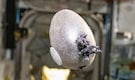
Purple ‘Alien’ on ISS? NASA debunks the mystery that no one expected
A strange purple object aboard the ISS sparked alien fears online, but NASA revealed it was a potato experiment. It shows how microgravity can turn ordinary plants into bizarre shapes.
-
Thousands of crows darken skies over Tel Aviv — Is this a bad omen or science at work?
Thousands of crows darkened Tel Aviv’s sky, sparking fear and omen theories online. Scientists reveal the viral spectacle is a natural migration phenomenon not a supernatural warning.
-
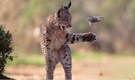
This hunting Lynx’s dramatic mid-hunt moment wins top prize at Wildlife Photographer of the Year
A rare Iberian lynx mid-hunt wins top photography award, but what made this dramatic moment so unusual that it captivated thousands of voters worldwide?
-
Man’s Best Friend: Why this 15,000-year-old dog fossil from England got scientists "puzzled"?
A 15,000-year-old jawbone from England reveals dogs lived with humans far earlier than believed, reshaping the history of domestication. It indicates that the early dogs probably assisted humans in hunting and securing camps in Ice Age era.
-
India's Bharatiya Antariksh Station will let astronauts live in orbit —This is what ISRO made!
ISRO is building India’s first space station, BAS, a home-grown orbital lab. Union Cabinet approved development and launch of first module of Bharatiya Antariksh Station (BAS-01) by 2028.
-
NASA confirms, a 54-foot-wide asteroid set to pass Earth today—Here's what you need to know!
A house-sized asteroid will pass Earth on March 26 at a safe distance. Scientists explain its path, speed and how NASA is tracking this near-Earth object.
-
81% of migratory fishes have vanished since 1970—A global food crisis may be unfolding
A new global report reveals an 81% decline in migratory freshwater fish since 1970, raising serious concerns about food security, river ecosystems and biodiversity loss. Experts observed nearly 93% of rivers worldwide are now fragmented.
-
7 dogs gone missing—What this tiny "Corgi" did next made it an internet sensation! Watch Here
Seven dogs that were allegedly stolen in China escaped and walked 17 kilometres back home together. A tiny corgi leading the group has now gone viral. All the 7 dogs survived and safely returned to their owners.
-
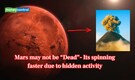
Mars is changing and a hidden volcano could be driving it—Here's what scientists found
Mars is spinning slightly faster each year, and scientists believe solar system's largest vocano Olympus Mons is speeding it up. Scientists believe that hot magma could still be slowly rising beneath this region.
-
10 Kilometres antimatter truck drive shocks physicists—World’s first antimatter transport succeeded at CERN
CERN scientists have transported antimatter by truck for the first time. This breakthrough transformed physics research and help solve the mystery of the universe’s existence.
-
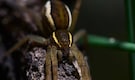
They’re Back! 10,000 hand-sized Fen raft spider made a huge comeback in the United Kingdom
After nearly disappearing, a hand-sized spider namely Fen raft spider is making a powerful comeback in the wild. 10,000 breeding females were recorded by scientists. This marks one of the most successful recoveries for a spider species.
-
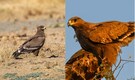
“Not Good News,” scientists warn as rare 2,000 Steppe Eagles recorded flocking to Rajasthan!
Western Rajasthan is emerging as a key refuge for endangered Steppe Eagles. In a recent survey 2,000 eagles were recorded by Region’s Jorbeer Conservation Reserve and Desert National Park. Experts warn this growing presence may signal a deeper global crisis.
-
NASA spots hidden bubble in 2,000-year-old supernova—scientists say it’s “bouncing back”
A supernova witnessed nearly 2,000 years ago is back in focus as NASA’s powerful X-ray telescope uncovers a hidden cosmic “bubble” that changed how the explosion evolved.
-
A car-sized asteroid, 2026 FM3, will pass closer than the Moon today, NASA confirms
A car-sized asteroid, 2026 FM3, will pass closer than the Moon on March 25, 2026. Scientists confirm the flyby poses no threat to Earth. Tracking such an asteroid like 2026 FM3 is necessary for planetary defence system.
-
NASA to spend $20 billion on moon base, cancel orbiting lunar station
Jared Isaacman, who was sworn in at the agency in December, made the announcement at the opening of a day-long event at NASA's Washington headquarters
-
Rhino in the Arctic? A 23-million-year-old fossil at Haughton Crater stuns scientists—Turns out to be a new species!
Scientists have discovered a 23-million-year-old rhino species in the Arctic, revealing that these animals once lived far north and reshaping what scientists know about their evolution and migration.
-
He watched his country disappear from space: Meet astronaut Sergei Krikalev, who returned to a country that no longer existed
Sergei Krikalev went to space for months, but returned to a country that no longer existed, how did he survive nearly a year orbiting a collapsing world?
-
Slack off at work? This octopus would punch you—just like it does fish who gest lazy
Scientists have discovered that octopuses punch fish during cooperative hunts, possibly to punish freeloaders. The bizarre behavior reveals surprising intelligence and social control in the ocean.
-
NASA's Artemis II crew to wear "smart bands" on Moon mission—But is this a good idea?
NASA will send smartbands with Artemis II astronauts to track their physical and mental state. But whether this helps or complicates deep-space survival remains an open question.
-
‘This Is Really Intolerable’: Astronomers protest Elonk Musk's SpaceX million AI satellites and giant mirror project, here's why
Plans by SpaceX and Reflect Orbital could brighten the night sky forever, but how might millions of satellites change what we see above?
-
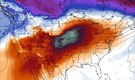
March turns 'deadly-hot' in United States—44°C spike leaves scientists alarmed worldwide!
Temperatures touching 44°C in March in United States. Scientists warn this extreme heatwave may signal a dangerous shift, as climate patterns grow unstable and seasonal boundaries begin collapsing worldwide faster than expected.
-
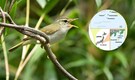
New Bird in Japan: Tokara Leaf Warbler becomes Japan’s first new bird species since 1982
Scientists have identified the Tokara Leaf Warbler in Japan, the country’s first new bird species since 1982. DNA and song studies revealed it was hidden in plain sight.
-
Bus-Sized asteroid ‘2026 FQ2’ to zip past Earth on March 24 — Is this a 'danger' to Earth?
Asteroid 2026 FQ2, about the size of a bus, will fly past Earth on March 24. Earth is totally safe as this asteroid does not qualify as a hazardous encounter. Scientists are keeping track on this asteroid.
-
China’s 12,000-mirror solar plant runs after sunset—Here’s how the solar tower in Dunhuang works!
A 100 MW solar plant in Dunhuang, China uses 12,000 mirrors and molten salt to store energy and generate electricity even after sunset. Scientists believe that this is a step towards creating renewable energy and regulating electricity adequately.
-
6,500-Year-old grave with 1.5 Kg Gold stuns scientists—World's oldest gold relic found in Bulgaria
Archaeologists discover the world’s oldest gold in a 6,500-year-old grave in Bulgaria. There are almost 300 ancient graves on the site, but Grave 43 hold over 1.5 kilograms of gold. Scientists believe that humans had already developed advanced metallurgy during the Copper Age.
-
8 out of 12 kingfisher species reside in Bhitarkanika National Park— What makes this Odisha habitat so unique?
Bhitarkanika National Park in Odisha hosts 8 kingfisher species, making it a rare bird habitat. Latest census shows rising numbers, but pollution and habitat loss remain threats. Recent findings indicate that Bhitarkanika acts as a significant kingfisher diversity in India.
-
Re-Introduced after 43 Years: Uganda reintroduces 2 Southern White Rhinos to the wild in major conservation push!
Uganda has successfully reintroduced Rhinos to Kidepo Valley National Park after 43 years of extinction. This marks a hopeful step in conservation. Ranger patrols, continuous monitoring systems and managed habitats within the park will be determined by authorities.
-
World Bear Day 2026: The endangered Himalayan Brown Bear can grow up to 2.2 metres in length
This 2.2-metre Himalayan brown bear is rarely seen but critically important. On World Bear Day, experts highlight threats, habitat loss and efforts to protect this elusive species. Know why conservation efforts are becoming increasingly urgent.
-
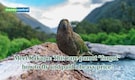
World’s heaviest parrot: Kakapo is the flightless bird lives on the ground, but why did it stop flying?
The Kakapo is the most famous species among parrots. This is the world’s heaviest parrot that cannot fly. Discover how evolution shaped this rare bird and why it is now one of the most endangered species.
-
Meet Boyan Slat: This 16-year-old built a 'trash-eating robot' to clean the world’s oceans
Dutch inventor Boyan Slat has developed a system that uses ocean currents to collect plastic waste. Experts consider this approach a promising large-scale solution, first and foremost because it is focused on efficiency.