






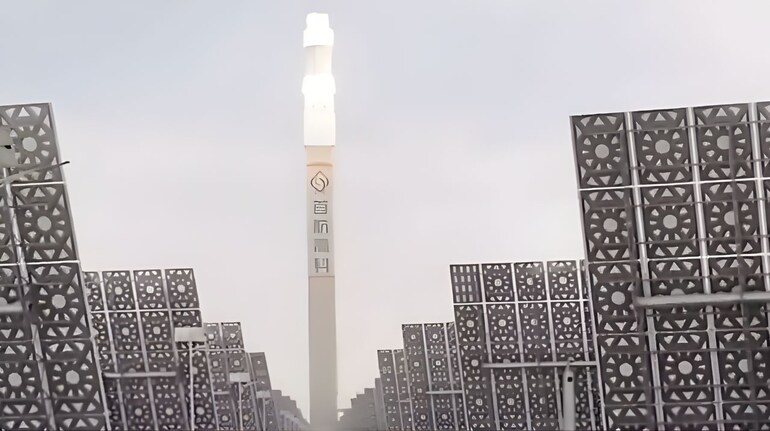

The solar power plant of 100 MW installed in the deserts of Dunhuang achieves something that most solar plants fail to achieve. It produces electricity even when the sun sets down. It has approximately 12,000 mirrors instead of the normal solar panels that concentrate the sun rays.
This plant demonstrates that the future of energy does not only lie in the process of capturing the sunrays, but also in availing it when needed.
What happens to the 12,000 mirrors?
These mirrors are referred to as heliostats and track the sun and reflect the sunlight onto a high tower. In the top of the tower, the concentrated rays of sunlight produce extremely hot air or fluid. This heat is so warm that it would make the generators of the power plant run.
This is a 100 MW solar plant in Dunhuang, China, which uses about 12,000 mirrors to direct sunlight onto a central tower.This heats molten salt, which stores the energy and helps produce electricity even after sunset. pic.twitter.com/R6VPGg6eUq — Weather Monitor (@WeatherMonitors) March 23, 2026
Where is the solar plant located?
The location of the plant is in Dunhuang, a desert city at the northwest of China. Large solar projects are favourable due to the presence of the wide-open land and potent sunshine. It is capable of generating 100 megawatts, and it is based on nearly 12,000 mirrors scattered in the desert.
How does it still work after sunset?
The difference between this plant is that it is able to continue generating power even with the sun not being above. The mirrors which are placed down are thousands in number and funnel the sundown to a tower in the centre. Heat fuses a kind of special salt known as molten salt. This salt retains the heat as a battery.
The heat collected even after the sun goes down converts water into steam and this drives turbines to keep the plant in power.
Did this Change anything in science?
Yes. The technology addresses one of the biggest issues with solar power. The problem is that this is sun dependent. The power is then made more stable as it is stored and can be operational 24/7.
It is able to reduce the usage of fossil fuels and enable electricity grids to remain balanced. Scientifically, this is a step towards not only creating renewable energy but also keeping and regulating it adequately.
Discover the latest Business News, Sensex, and Nifty updates. Obtain Personal Finance insights, tax queries, and expert opinions on Moneycontrol or download the Moneycontrol App to stay updated!
Find the best of Al News in one place, specially curated for you every weekend.
Stay on top of the latest tech trends and biggest startup news.










