






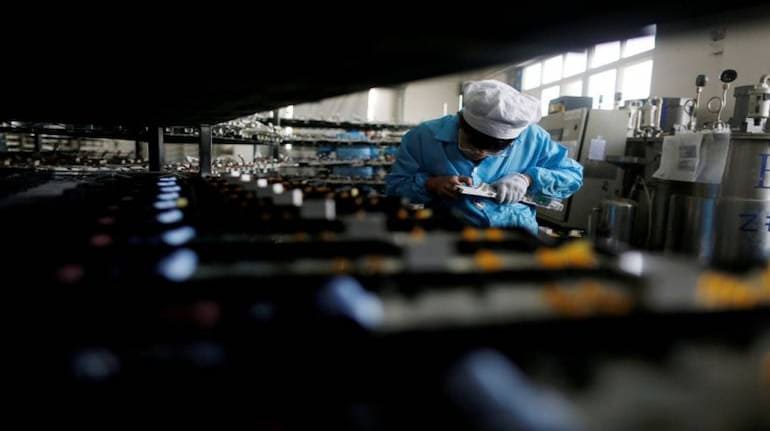
Shi Xiaomin, who used to export suits and blazers by the thousands to South Korea, the Netherlands and the United States, was luckier than many other Chinese factory owners.
When his factory in the eastern city of Wenzhou reopened last month after an extended shutdown due to the coronavirus outbreak, the local government sent a bus to a nearby province to ferry back more than 20 of his stranded workers. Staff with cars volunteered to fetch colleagues.
Shi's optimism was short-lived.
In the past week, requests to cancel orders or delay shipments from his European and U.S. clients have flooded in.
Early in the outbreak, China imposed tough travel restrictions and factory suspensions to curb the spread of the virus, squeezing labour supplies and sending exporters scrambling to fulfil orders.
Now, the reverse is happening - overseas orders are being scrapped as the pandemic ravages the economies of China's trading partners.
"The unprecedented shutdown of normal economic activity across Europe, the U.S. and a growing number of emerging markets is certain to cause a dramatic contraction in Chinese exports, probably in the range of a 20-45% year-on-year drop in the second quarter," said Thomas Gatley, senior analyst at research firm Gavekal Dragonomics.
Shi said his fabric supplier in hard-hit Italy suspended operations on Sunday, meaning no fresh raw materials from May. His stockpile of fabric will last until the end of April.
Shi said he would slow production and might suspend all output soon if business does not improve.
He also told the 50-odd workers who have yet to return from Hubei province, the epicentre of the outbreak in China, to find jobs elsewhere.
"We know this year is bad and next year would be better, but the question is how many factories can make it to next year?" Shi said.
SLUMPING EXPORTS
Economists had initially anticipated a V-shaped recovery for China's economy, similar to that seen after the SARS epidemic in 2003. But analysts have since slashed their forecasts to levels not seen since the Cultural Revolution ended in 1976.
China's net exports accounted for 11% of economic growth last year.
"The last overseas orders we received were for April," said Zhu Hongping, chairman of Hangzhou Hongli Food, a supplier of precooked food to restaurants in Japan, South Korea, Australia and New Zealand.
Normally, at this time of the year, orders can stretch to June and July, Zhu said, adding he may have to suspend production in three months.
Even when they do have orders, exporters are worried about constantly changing restrictions countries have adopted to curb the spread of the virus.
"Even if we finish the products, we don't know if the countries we are shipping to will be locked down," said Yi-Cheng Sung, who helps manage a factory that produces makeup brushes and accessories in Shenzhen.
On Tuesday, state-owned Securities Times reported Good Will Watch Case Manufacturing, a supplier to the U.S. watch brand Fossil, would put its more than 600 workers on leave for at least three months.
UNEMPLOYMENT
China's manufacturing sector, accounting for about 40% of gross domestic product and over 20% of jobs, was already suffering from the U.S.-China trade war.
More big layoffs would be a concern for the ruling Communist Party and its focus on social cohesion and economic stability, particularly in a year when Beijing aims to double GDP and disposable incomes from a decade ago.
China's urban jobless rate hit 6.2% in February, up one percentage point from the end of 2019, and a record since the statistics bureau started publishing the data in early 2018.
Dan Wang, an analyst with the Economist Intelligence Unit (EIU), said the jobless rate could go up by another 5 percentage points this year, which corresponds to an additional 22 million in urban unemployment, on top of an estimated 5 million jobs lost in January-February.
Another 103 million workers could be affected by salary cuts of 30%-50%, Wang said.
A 23-year-old salesman at a mirror factory in Yiwu in Zhejiang province said U.S. clients cancelled over $500,000 of orders on Saturday alone.
Some of the factory's more than 1,000 workers have since been suspended while others are given more days off per week, the salesman said, declining to be named.
"I think the company will start to lay off people soon," he said.
Discover the latest Business News, Sensex, and Nifty updates. Obtain Personal Finance insights, tax queries, and expert opinions on Moneycontrol or download the Moneycontrol App to stay updated!
Find the best of Al News in one place, specially curated for you every weekend.
Stay on top of the latest tech trends and biggest startup news.




