





Of all the cities that dot the central Indian landscape, Gwalior evokes a sense of romance and melody more than most. At once, it conjures images of royalty and grandeur, history and heritage, and above all else, music and lyricism. And with reason, since it is home to such musical legends as Tansen from Akbar’s court and Baiju Bawra. Indeed, the Gwalior Gharana is among the oldest styles of Hindustani music.
Beyond this, however, Gwalior is home to majestic structures, stories of bravery and valour and a rich culture that exerted influence over a wide area. The city’s history abounds in legends and myths, and supposedly goes back to the 8th century, when a chieftain called Suran Sen was cured of an ailment by a saint-hermit Gwalipa and named the city Gwalior to honour him. Over the centuries, the city has birthed or hosted several powerful dynasties, none as impactful as the Sindhias.
But irrespective of whoever was in power, creative arts in general and music in particular, thrived and grew and is a tradition that continues unabated to this day. Documented history indicates that many rulers were accomplished musicians themselves. Besides, the city has birthed many acclaimed names and provided patronage several others who came to learn from the city’s masters. Which is probably the reason why the UNESCO has added the city to its Creative Cities Network under music category.
Being a royal city historically, wandering around Gwalior inevitably invokes a sense of not just its grandeur but a sense of musicality hangs in the air and seems to suffuse everything. If you have a day and a half in the city, don’t miss out on these things.
Day 1
Morning
After a hefty breakfast, set out for a packed day. There’s only one place to start in Gwalior — at the imposing fort. Standing on a plateau that rises almost 300 feet and stretches for more than 2km, the fortress made of sandstone has a history of over 1,500 years and enjoyed strategic importance owing to its location and position. It changed hands several times between Hindu and Muslim rulers and was even captured by the British but exchanged for Jhansi. Vestiges of its once grandeur are still evident today, through the presence of not just the beautiful sheer walls of the fortress but also several palaces and temples, several tanks and a motley set of buildings. The most prominent structures include the Teli-ka-Mandir, Gujari Mahal (museum), atrium of the Great Sas-Bahu Temple and many more. Beneath the fort’s walls are also 60ft high rock-cut Jain statues that are over 500 years old.
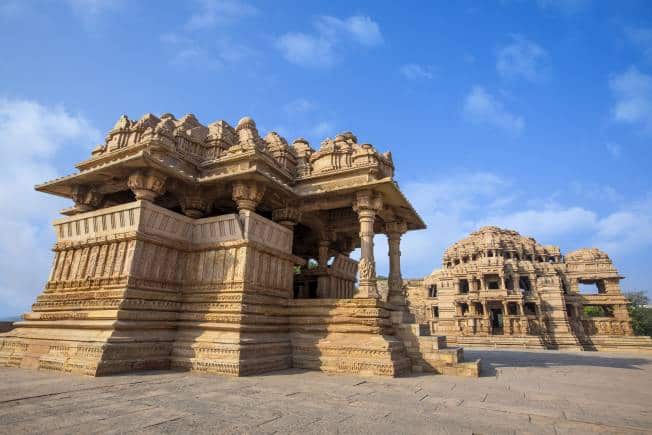 Sas-Bahu Temple, Gwalior. (Photo courtesy MP Tourism)
Afternoon
After wandering around the fort the whole morning, sit down for a local meal at one of the restaurants near the fort such as Raj Bhog, which is a no-frills eatery. Take refuge from the afternoon sun and head to Jai Vilas Palace, a breathtaking palace and premises spread over more than a million square feet. It is a beautiful blend of multiple architectural styles with stunning Corinthian and Tuscan columns. Belonging to the Scindia royal lineage, more than 25 opulent rooms are open to the public which exhibit magnificent chandeliers, gilt ceilings, rich tapestries and Persian rugs, antique furniture, silver chariot, arms and ammunition, and even a miniature silver train to serve drinks to royal guests.
 Jai Vilas Palace, Gwalior, Madhya Pradesh. (Photo via Wikimedia Commons)
Evening
Head back to the fort in the evening for a sound and light show, but do check ahead since there are different shows in Hindi and English and the timings change during summer and winter. After the hectic day, kick back and end with a sumptuous meal at one of the restaurants that hark back to Gwalior’s royal past such as Usha Kiran Palace or Deo Bagh.
Day 2
 Ghaus Mohammed ka Maqbara, Gwalior, Madhya Pradesh. (Photo courtesy MP Tourism)
Dedicate this day to music and what the city is famous for. Start at Tansen’s tomb which is close to that of Mohammad Ghaus’ as well. Among the many people that Tansen trained under was the sufi saint Ghaus, under whom the Gwalior Gharana took shape; tombs to both are located together, built in typical Mughal architectural style with beautiful pillars, minarets, carvings and embellishments. Around December, this is also the place where the annual Tansen Samaroh, music festival, is held so time your visit to coincide with it if possible to hear performances from some of the greatest living legends of the country. There is also a quirky nugget associated with Tansen’s memorial. According to legend, the musical genius had planted a tamarind tree during his time in the 16th century and people plucked leaves and ate from it in the belief that they would be blessed with a melodious voice. The tree eventually died but the administration has apparently kept the tradition alive. Try to visit Sarod Ghar, a museum of music housing musical instruments, documents and photographs related to musical greats, before heading out of the city.
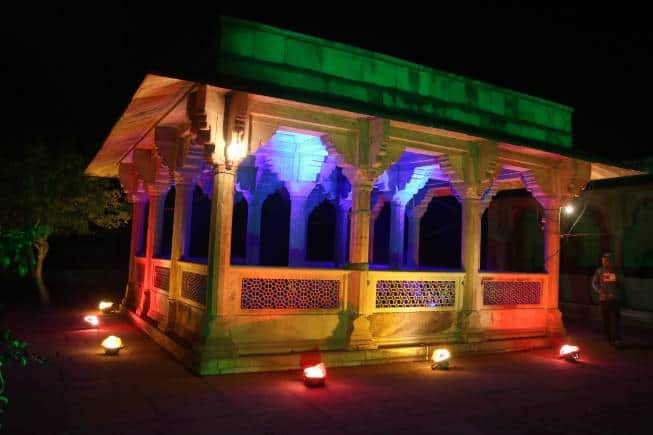 Tansen Tomb, Gwalior, Madhya Pradesh. (Photo courtesy MP Tourism)
Discover the latest Business News, Sensex, and Nifty updates. Obtain Personal Finance insights, tax queries, and expert opinions on Moneycontrol or download the Moneycontrol App to stay updated!
Find the best of Al News in one place, specially curated for you every weekend.
Stay on top of the latest tech trends and biggest startup news.