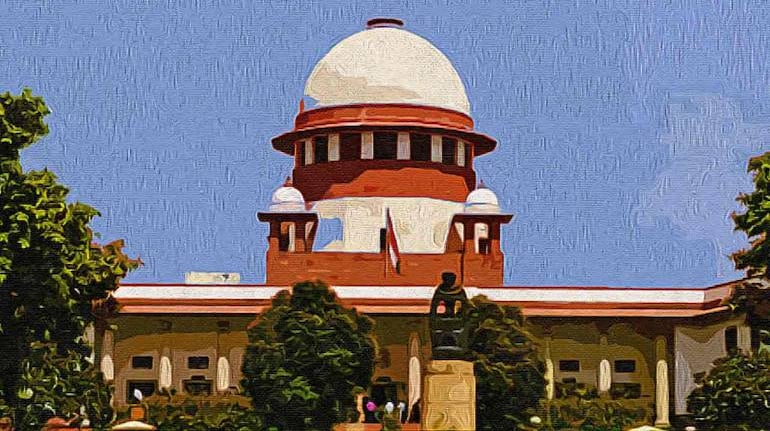
A Constitution Bench led by Justice Abdul Nazeer today held that additional restrictions on freedom of speech cannot be imposed on the Members of Parliament (MPs) and the Members of Legislative Assembly (MLAs) than what is already contemplated in Article 19 (2) of the Constitution.
The judgement has held that the right to freedom of speech and the restrictions can be exercised not only against the state but also against non-state actors. The bench has held that statements made by a minister in relation to government affairs cannot be held against the government. A mere statement by a minister which is inconsistent with the rights of a citizen does not lead to a Constitutional tort. However, if as a consequence, it leads to an offence, it is a constitutional tort.
Tort is a civil wrong which causes a person to suffer loss or harm.
Justice BV Nagarathna, who wrote a separate judgement, has noted that a minister may make a statement in personal capacity or official capacity. If the statement of the minister is in personal capacity, no vicarious liability can be attributed. However, if the statement in official capacity is disparaging and relates to the affairs of government, such statements can be attributable to the government on the principle of collective responsibility. She added that if the stray remarks by a minister are not consistent with stand of government, it could be treated as a personal remark.
Justice Nagarathna also opined that it is the responsibility of the political parties to control the speeches made by their ministers by formulating a code of conduct. The judge also urged the Parliament to come up with a law to restrain public functionaries from making disparaging remarks against other citizens.
Background of the caseIn 2016, Samajwadi Party (SP) leader Azam Khan remarked that a gang-rape of a minor and her mother in Uttar Pradesh was a political conspiracy and a publicity stunt. The father of the survivor approached the Supreme Court seeking a Central Bureau of Investigation (CBI) investigation. The father also sought for the trial to be transferred outside of the state and asked the court to take action against Khan for such comments.
In November 2016, the court ordered an unconditional apology to be submitted by Azam Khan. The court, however, identified the issue pertaining to the right to freedom of speech and expression under Article 19(1)(a) restricted by only Article 19(2), or is it also restricted by other fundamental rights. On referring the case to a Constitution Bench the following questions were framed:
Whether the Court can impose restrictions on the right to freedom of speech and expression beyond the present restrictions provided under Article 19(2) of the Constitution?
Can a Fundamental Right under Article 19 and Article 21 (that is right to life and Personal Liberty) of the Constitution, can be claimed against anyone other than the ‘State’ or its instrumentalities?
Whether the State is under a duty to affirmatively protect the right of the citizens under Article 21 of the Constitution even if it is against a threat to the liberty of the citizen by the acts or omissions of another citizen or private agency?
Whether the statement of a minister, traceable to any affairs of the State, should be attributed vicariously to the government itself for not keeping in mind the principle of collective responsibility?
Whether a statement made by a minister, which is inconsistent with the rights granted to the citizen under Part III of the Constitution, constitutes as a violation of such Fundamental Rights and is actionable as ‘Constitutional Tort’ (civil wrong)?
Discover the latest Business News, Sensex, and Nifty updates. Obtain Personal Finance insights, tax queries, and expert opinions on Moneycontrol or download the Moneycontrol App to stay updated!
Find the best of Al News in one place, specially curated for you every weekend.
Stay on top of the latest tech trends and biggest startup news.