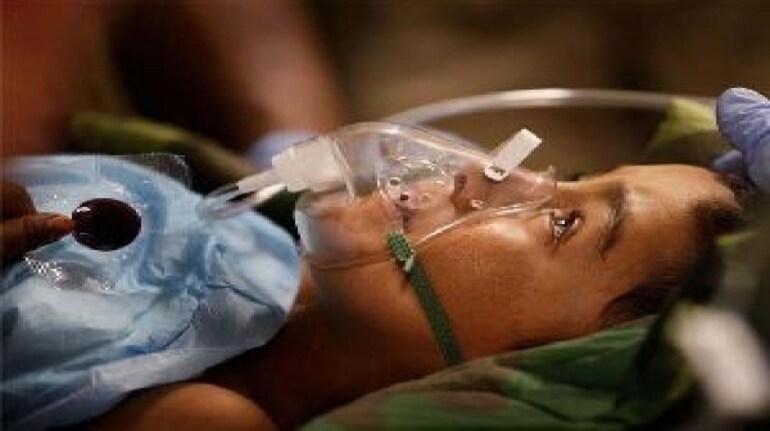
The Union government has made Aadhaar or Aadhaar enrolment number mandatory for tuberculosis (TB) patients and health providers seeking cash assistance under the Revised National Tuberculosis Control Programme.
In a notification issued by the Ministry of Health and Family Welfare (MoHFW) on June 16, the government has made it clear that those eligible to receive conditional cash assistance using Nikshay, is required to furnish proof of possession of Aadhaar number or undergo Aadhaar authentication.
Under National Health Mission, the Union government sponsors a nation-wide universal access to tuberculosis (TB) care through the government health facilities and registered private health facilities spread across the country which provide early diagnosis and regular treatment to the patients.
How Aadhaar will transform India in the futureThe scheme referred to as Revised National Tuberculosis Control Programme (RNTCP) uses a web-based application called Nikshay to register and monitor TB patients.
All government, private healthcare providers and treatment supporters are supposed to register TB patients using Nikshay.
Currently, private healthcare providers get Rs 100 for each notification and Rs 400 for each patient who completes treatment.
A directly observed treatment (DOT) provider, typically the ASHA (Accredited Social Health Activist) worker in villages, gets an honorarium of Rs 1,000 for each patient who is treated for simple TB and Rs 5,000 for each patient with multi-drug resistant tuberculosis.
These beneficiaries will now have to provide Aadhaar-linked bank accounts.
Typically, the World Health Organisation (WHO) recommends that a TB-diagnosed patient should have six months of treatment with combination of at least three antibiotics.
The major problem in India is patients' compliance to the treatment regimen. Many patients drop out of the treatment midway leading to the potential danger of developing multi-drug resistance TB.
The government, which plans to eliminate TB as part of its National Strategic Plan (NSP) for 2017-2025, is expected to spend around Rs 16,649 crore (USD 2.5 billion) on the programme.
Defending its move, the MoHFW in its notification said “the use of Aadhaar as identity document for delivery of services or benefits or subsidies simplifies the government delivery processes, brings in transparency and efficiency and enables beneficiaries to get their entitlement directly in a convenient and seamless manner and Aadhaar obviates the need for producing multiple documents to prove one’s identity.”
India has been engaged in TB control activities for more than 50 years. Yet TB continues to be India’s severest health crisis. TB kills an estimated 480,000 Indians every year and more than 1,400 every day.
India also has more than a million ‘missing’ cases every year that are not notified and most remain either undiagnosed or unaccountably and inadequately diagnosed and treated in the private sector.
Analysts say making Aadhaar mandatory brings in transparency and eliminates duplicity but it also risks making TB treatment inaccessible, as most patients suffering from TB belong to a 'marginalised' strata of the society, living in crowded urban localities and among HIV patients and tribal populations. Many of these people have no proof of identity or residence, denial of treatment could be disaster as this not only pushes the patient towards mortality but also spreads the disease to more people.
Discover the latest Business News, Sensex, and Nifty updates. Obtain Personal Finance insights, tax queries, and expert opinions on Moneycontrol or download the Moneycontrol App to stay updated!
Find the best of Al News in one place, specially curated for you every weekend.
Stay on top of the latest tech trends and biggest startup news.