




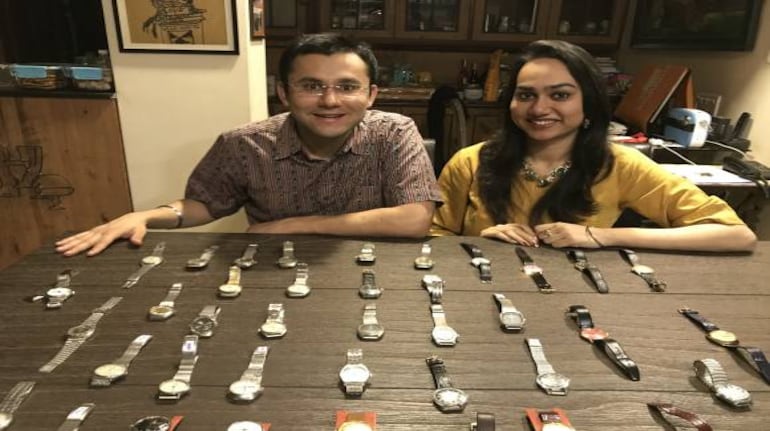
Until a decade ago, Carol Goyal was not even remotely interested in HMT watches. Then, in 2012, Goyal, who is based in Mumbai and specialises in art law, travelled to Switzerland and found herself among watch collectors and watchmakers, courtesy her watch-loving hosts in that country. Goyal visited the facilities of several storied brands, and at one of them, listened to a horologist shower praise on watches made by HMT. “He told me the hand-wound watches were of excellent quality, especially given their unbelievably low prices. He reckoned that each HMT watch was at least 20 times more valuable than the price it was sold at.”
That conversation with the horologist triggered Goyal’s curiosity about HMT watches, and by 2014 she, along with her cousin Mukul Rai Bahadur, had picked up a fair few watches (their first HMT — a Sona — was bought from the company’s official store in Cuffe Parade). Their interest intensified in September that year when the government announced the gradual shutting down of several divisions of Hindustan Machine Tools, and that included the country’s first state-owned watch company.
“You could say that it was a wrong time to get really interested in HMTs. But, even as several retailers started hoarding these watches and prices started to rise, concurrently, there were several others who wanted to offload their stock,” says Goyal. Today, four years after the company shut down, the duo ranks among the biggest HMT watch collectors in the country.
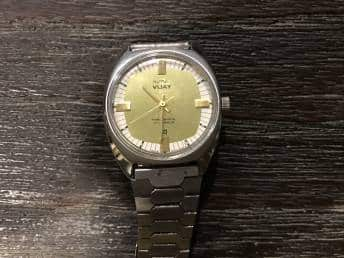
Their 971-strong collection, which consists of mostly mechanical or automatic watches, includes nearly every series made by the company. It is a journey that has taken Goyal and Bahadur, a digital media professional, to various corners of the country as well as to collectors’ meets, both online and off.
“From the Sona to Kohinoor to the Roman, HMT made hundreds of different watches, so if you are into collecting them, you wouldn’t know where to start. But after a fair bit of research, we figured that the automatics were mostly popular in the metros, while the hinterland favoured the less expensive mechanical watches. We travelled to many mofussil towns, and Punjab, for some reason, was full of treasures.” Goyal particularly enjoyed picking up watches that carried the names of her family members — ‘Sandeep’, ‘Kailash’ and so on — and close friends.

The duo’s most recent purchases include an HMT pocket watch, which is well over “40 years old”, and a Braille watch. “Even though we still get offers from both stockists and collectors, we’ve, sort of, put the brakes on our collection. We only get tempted by seriously rare stuff,” says Goyal who takes out an hour each week to tend to her collection and keep the watches running fine.
What advice would she give someone who is smitten by the now-defunct company’s wares? Does it still make sense to start thinking of building a collection, considering prices have shot up? A mechanical or automatic HMT watch is still a better buy than watches made by fashion brands, says Goyal, but building a collection will take time and won’t be cheap, since prices now range between Rs 3,000 and Rs 20,000.
And there are, however, a couple of things that need to be put in perspective before one embarks on that adventure, says Goyal. “We fell in love with HMTs because we loved what they stood for: Manual, hand-wound, hardworking, ‘common man’ watches that were designed to take a beating. Plus, here is an inexpensive Indian watch that is as accurate as Swiss watches that cost a lot of money.”
There are other reasons to justify the expense and time spent on the pursuit of these watches, says Goyal. HMT’s various series represented both a veritable timeline of India’s socialist era ambitions and achievements as well as a cultural record of sorts. Jawaharlal Nehru launched the first set of hand-wound watches in 1961; Indira Gandhi loved the Janata; and there were watches named after cricketers and movie stars.
“If you like them for some of these reasons, collecting them will be a rewarding experience,” says Goyal.
Here are some tips from her to get you started:
1. One can still find old stocks at watch shops in smaller towns. Some of these might not be brand new, but they are still in pretty good condition. Join watch collectors’ groups on social media; nearly every collector worth his salt has an HMT or two, which he might be looking to sell or trade in.
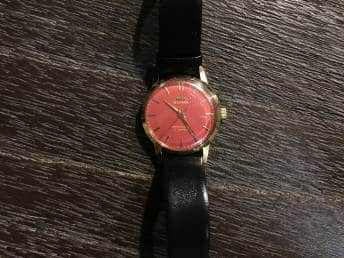
2. Collecting HMT’s mechanical watches is a lot more fun than its automatic or quartz series.
3. Start with a watch such as the Janata. The Janata series was available in different variants and with black and white options. Availability is fairly good and prices are on the lower side.
4. Once you’ve added popular watches such as the Pilot, Sona, Chirag and so on, aim for the rarer ones such as Hindu College Centenary Special.
And, lastly, there are just too many repurposed fakes around, both online and at small shops, so do your research before you put the money down.
Murali K Menon works on content strategy at HaymarketSAC.Discover the latest Business News, Sensex, and Nifty updates. Obtain Personal Finance insights, tax queries, and expert opinions on Moneycontrol or download the Moneycontrol App to stay updated!
Find the best of Al News in one place, specially curated for you every weekend.
Stay on top of the latest tech trends and biggest startup news.