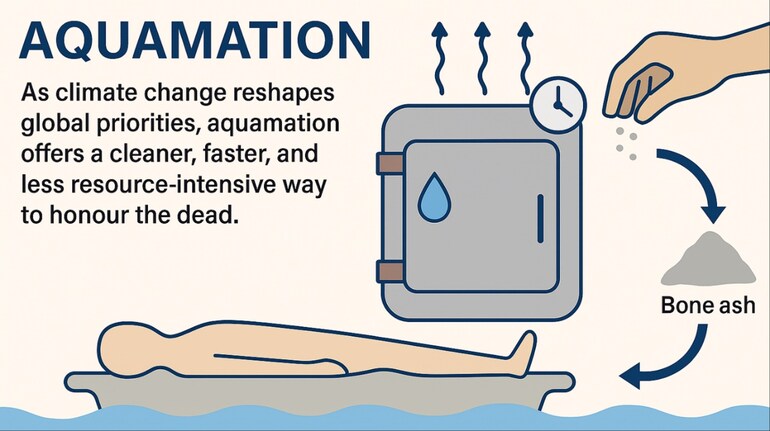
A centuries-old funeral tradition is being reimagined for a climate-conscious world. Aquamation — also known as water cremation, alkaline hydrolysis, or resomation — is gaining traction globally as an environmentally friendly alternative to conventional burial and fire cremation. Here are seven key things to know about the process, its benefits, and its challenges.
1. What is aquamation?Aquamation involves dissolving a human body in a solution of 95 percent water and 5 percent potassium hydroxide under controlled heat and pressure. The body is placed in a stainless steel vessel, heated to around 150°C, and subjected to 10–20 atmospheres of pressure. Over 3 to 16 hours, soft tissues break down into a sterile liquid, while bones are reduced to ash.
2. Lower emissions, less energyUnlike traditional cremation, which emits roughly 1.5 tons of carbon dioxide per body and consumes around 400 litres of fuel, aquamation uses only 100 litres of water and minimal electricity. The Canadian Cremation Association estimates it cuts greenhouse gas emissions by 35 percent and reduces energy use by nearly 90 percent.
3. No harmful gases, faster than burialThe process produces no harmful airborne pollutants and is significantly faster than burial, which can take years for full decomposition. The remaining liquid is sterile and safe for disposal, while the bone ash can be returned to families.
4. High-profile endorsementsSouth African Archbishop Desmond Tutu chose aquamation in 2022, citing its environmental benefits. The method is legally recognised in 28 US states and is increasingly adopted in the UK, Canada, and Australia.
5. Booming pet aquamation marketThe pet aquamation industry is growing rapidly, valued at $845 million in 2024 and projected to double by 2033. The trend reflects broader acceptance of the method among environmentally conscious consumers.
6. Cultural resistance in IndiaIn India, aquamation remains legally prohibited. Traditional Hindu cremation practices dominate, with fire seen as essential for soul liberation. Delhi alone burns around 20,000 tonnes of wood annually for cremations. Burial remains preferred among Muslims and Christians, further complicating adoption.
7. Early signs of changeDespite cultural barriers, environmental bodies and government agencies are exploring alternatives. The Ministry of Environment discussed “green burial” methods, including aquamation, in 2023. Pilot projects are reportedly under review in Kerala and Maharashtra.
Discover the latest Business News, Sensex, and Nifty updates. Obtain Personal Finance insights, tax queries, and expert opinions on Moneycontrol or download the Moneycontrol App to stay updated!
Find the best of Al News in one place, specially curated for you every weekend.
Stay on top of the latest tech trends and biggest startup news.