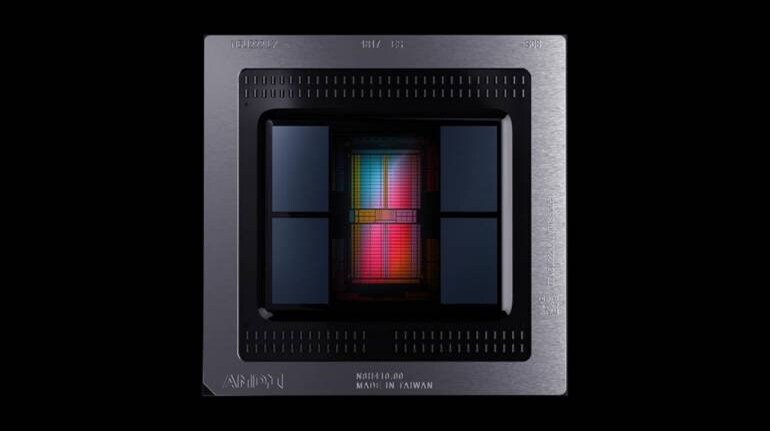
The AMD Radeon VII graphics card turned quite a few heads at CES 2019. And, it won’t be long before Indian gamers get their hands of this powerful GPU. The tech giant promises that the world’s first 7nm graphics card will deliver exceptional gaming performances. The card is also engineered to give creative professionals in the VR, game, and video industries an edge in executing compute-heavy workloads.
The primary objective of launching the Radeon VII was to disrupt an Nvidia dominated high-end GPU market. Radeon VII is set to go head-to-head with the Nvidia’s RTX 2080, both in terms of price and performance. The Radeon VII is a direct successor to AMD’s 14nm Vega 64 GPU, and if you think about it, the name (Radeon Vega II) essentially points to the next generation Vega GPUs.
While the previous generation Vega 64 used a blower design, the Radeon VII sports three cooling fans on a large vapour chamber cooler, similar to its RTX competitors.
| GPU | AMD Radeon VII | Nvidia RTX 2080 |
| Architecture | Vega 20 | Turing |
| Node process | 7nm | 12nm |
| Die size | 331mm² | 545mm² |
| Processor Cores | 3,840 stream processors | 2,944 CUDA cores |
| Transistor count | 13.2 billion | 13.6 billion |
| Base clock | 1,400MHz | 1,515MHz |
| Boost clock | 1,750MHz | 1,710MHz |
| Memory | 16GB HBM2 | 8GB GDDR6 |
| Memory interface | 4,096-bit | 256-bit |
| Memory interface | 1,000GB/s | 448GB/s |
| TDP | 300w | 250w |
| Price (Rs) | 54,990 | 68,990 |
AMD’s Radeon VII GPU features substantially more video memory than any of the RTX cards. And, while that may not offer a significant performance bump in gaming, it will undoubtedly come in handy for memory intensive programs like Premiere or Da Vinci Resolve that often gobble-up 8GB of video memory when working with 4K footage.
When it comes to traditional gaming, there are multiple reasons to go with the RTX 2080. Because even if you don’t care about Real-time Ray Tracing, Deep Learning Super Sampling (DLSS) or Superior H.264 Encoder, you’re bound to care of at least one of those features, which is where the Radeon VII is severely lacking.
If we had to guess rather than re-engineering a gaming tuned-card with 8 or 12 gigabytes of memory and maybe more stream processors; AMD recycled the Radeon Instinct MI50 for gaming, which explains the excellent productivity numbers. And this is just us speculating. But whatever the real reason, the Radeon VII is ideal for users that are content creators by day and gamers by night.
The value proposition for the Radeon VII against team Green’s RTX 2080 is just about okay, and that’s not at all bad, but it certainly isn’t the price or performance disruptor gamers were hoping for in the wake of Nvidia’s stiff RTX tax. While the Radeon VII will be priced at 54,990 in Indian markets, little over its $699 price tag in US markets. This is one advantage for Indian gamers and content creators, as the Radeon VII's direct competitor, the RTX 2080 is priced at approx. Rs 65,000 in Indian markets. While both cards are similarly priced at $699 in US markets, the almost $200 difference in Indian markets puts the Radeon VII on the front foot. However, there isn't much information as to whether or not the Rs 54,990 valuation accounts for GST or other taxes.


Discover the latest Business News, Sensex, and Nifty updates. Obtain Personal Finance insights, tax queries, and expert opinions on Moneycontrol or download the Moneycontrol App to stay updated!
Find the best of Al News in one place, specially curated for you every weekend.
Stay on top of the latest tech trends and biggest startup news.