






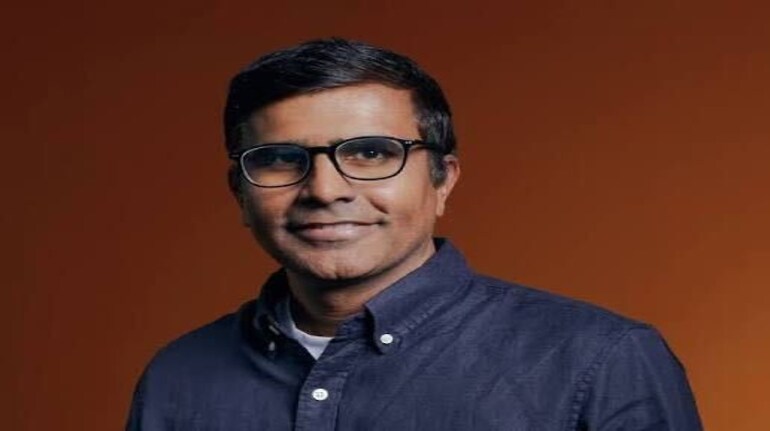

Taara, a laser-based connectivity company spun out of Google’s X moonshot factory, is looking to deepen partnerships with Indian telecom operators. CEO Mahesh Krishnaswamy has told Moneycontrol that its scaling technology to deliver high-speed data in areas where fibre networks are difficult to deploy.
Taara, which counts Google parent Alphabet as its investor, made its India debut in Andhra Pradesh with Bharti Airtel and has since expanded to multiple cities. It is also active in 20 countries across Africa, Europe, West Asia, and Latin America and also the US.
Speaking to Moneycontrol at the Mobile World Congress in Barcelona, Krishnaswamy said the company talking to more Indian players. Taara aims to act as an infrastructure accelerator for telecom operators, as data demand surges, Krishnaswamy said. The company aims to build a light-based network enabling ultra-high-speed connectivity across cities and remote regions, he said. Edited excerpts of the interview:
Taara originated from Google’s Project Loon. How did that happen?
Project Loon was trying to solve the connectivity problem using stratospheric balloons. Those balloons were effectively floating cell phones transmitting data from about 20 kilometers in the sky — roughly twice the height of commercial airplanes.
These balloons would float but at the same time, they needed to talk to each other. That’s where the technology called free-space optics came in. The idea behind Taara was very simple — instead of having balloons floating overhead, what if we took that piece of technology and brought it down to the ground to start connecting places?
It was a lesson in many ways because we were trying to solve global connectivity on a very large scale but sometimes solutions can be found in a much simpler way. We call it “moonshot compost” — effectively recycling technology from a moonshot and bringing it down to the ground.
Since then, we’ve been deploying this technology in various parts of the world. We started in India, in Andhra Pradesh and today we are live in about 20 countries.
Along the way we’ve learned many lessons — from compensating for tower sway to dealing with monkeys in India and weather patterns. Each link we deploy teaches us something new and we keep improving and refining the technology. Failure is not something we frown upon, we use it as an opportunity to learn.
Does being associated with Alphabet help in reaching telecom operators globally?
The synergies are both with Alphabet and with telecom operators.
With operators, we are helping them reach places they otherwise couldn’t. With Alphabet, they have played a quintessential role in Taara’s journey.
Much like Waymo or Wing, Taara graduated from Google’s moonshot factory after proving enough technological milestones. Alphabet continues to support us and is also an investor.
They play a pivotal role in helping Taara succeed in delivering connectivity for operators and consumers worldwide.
Is Taara a complementary last-mile solution or will it eventually replace fibre?
Today, the product we have can cover up to 20 kilometers and transmit data at speeds of up to 20 gigabits per second. So, it’s effectively fibre-like speed transmitted over the air.
This technology can augment and fill gaps where fibre cannot go. It can also serve as redundancy for fibre networks. If a fibre cut happens and service becomes unreliable, operators can switch over to a Taara link.
It can also cross difficult terrain — railroad crossings, rivers, mountains and forests — or places where right-of-way permits make it difficult to dig in cities. In that sense it becomes a complement to fibre.
Right now we are primarily a middle-mile product but we recently launched the Taara Photonics platform, which will allow us to go closer and closer to the last mile. Even though the current product can already be used for last mile, we will introduce products more tailored for that purpose.
Could Taara compete with LEO satellite players such as Starlink, Kuiper and OneWeb for rural connectivity?
This is a very massive problem — connecting billions of people. LEO satellite solutions certainly have a place.
A satellite transmits data in a cone, which means the spectrum is shared. If you and I are on the same satellite network and more users come online, speeds drop because that capacity is being shared across a large area. That works well in very remote areas with relatively few users who can afford the cost.
What we do instead is bring very concentrated capacity. Think of it as a big water pipe bringing bandwidth into a remote village. From there, the bandwidth can be distributed locally.
Each Taara link can bring about 20 gigabits per second — roughly the throughput of an entire satellite — but concentrated into one location. For example, you could deliver that entire capacity to a single building or enterprise.
So, in many ways, it is complementary; just like mobile networks are used for lighter applications, while heavier tasks are handled by home Wi-Fi. In fact, 70–80 percent of the internet traffic goes through Wi-Fi networks.
We help fill the gaps by providing high-capacity backhaul to cellular networks and delivering large amounts of data closer to homes and enterprises.
Could Taara become a disruptive player in telecom infrastructure?
I would say we are augmenting and accelerating telecom infrastructure.
As the world moves toward faster connectivity, especially with AI driving data demand, we cannot simply dig our way to meet those infrastructure needs. In that sense, we act as an accelerant.
Telecom operators can use our technology to deliver high-capacity bandwidth quickly. We partner with operators to provide backhaul services, reach areas where fibre cannot and help fiberise towers that rely on microwave links.
In many ways we are helping telecom operators realise the full potential of data connectivity.
Which markets have shown the strongest adoption for Taara’s technology?
We actually started in India where we deployed rural connectivity in Andhra Pradesh and partnered with telecom operators like Bharti Airtel.
We also saw strong demand in Africa, where fibre networks run from Cape to Cairo but many communities remain unconnected. Taara has helped plug those gaps.
More recently, we’ve seen traction in developed markets like the US, Europe and the Middle East. Latin America is also picking up.
Today we are live in about 20 countries and each link we deploy benefits thousands of people.
In India, Airtel has deployed Taara. Are you in discussions with other telecom operators such as BSNL?
Yes, we’ve had early conversations with other operators as well. Airtel has been among the faster adopters of this technology but discussions with others are ongoing.
With 5G densification underway and 6G discussions beginning, what role could Taara play?
The advantages of our technology go far beyond 5G. Historically, every decade we moved from 2G to 3G to 4G and now 5G in search of higher speeds and bandwidth. But we are approaching limits in traditional radio spectrum because it is congested and prone to interference.
There is what we call the “terahertz gap”. We believe we can leapfrog that by operating in the light domain.
So our applications extend beyond 4G, 5G, and even 6G, potentially into future generations of connectivity. We’re essentially building for a future where connectivity is abundant and affordable.
What new technologies can we expect from Taara in the coming months?
The Taara Photonics platform is something I’m incredibly proud of. We are essentially shrinking core connectivity components into a tiny chip roughly the size of a fingernail. That chip will be able to transmit, receive, and steer data at tens of gigabits per second.
This breakthrough could unlock a wide range of new connectivity applications.
Where are your R&D teams based?
Our R&D teams are based in Sunnyvale, California.
What long-term trends do you see shaping connectivity?
Data consumption will continue to grow rapidly and AI will only accelerate that growth. Cities will become larger and more connected.
What we’re building is foundational technology that rethinks connectivity beyond cables and traditional spectrum. Imagine a network of light-based connectivity modules creating a mesh of lasers across cities, effectively like dark fibre in the sky.
In that world, you would never be more than a few hundred feet away from an ultra-high-speed connectivity point.
The vision is an end-to-end light-based network — starting with subsea fibre and extending all the way to the end user — using light without any speed breaks in between.
Do you need to engage with regulators given the spectrum considerations?
Yes, we work closely with regulators in the countries where we operate. What we’re using is light, which is abundant. The ITU mandates regulation up to about 3 terahertz, while our systems operate around 193 terahertz — far beyond regulated spectrum. So in many cases, we help educate regulators about the advantages of this technology.



Discover the latest Business News, Sensex, and Nifty updates. Obtain Personal Finance insights, tax queries, and expert opinions on Moneycontrol or download the Moneycontrol App to stay updated!
Find the best of Al News in one place, specially curated for you every weekend.
Stay on top of the latest tech trends and biggest startup news.







