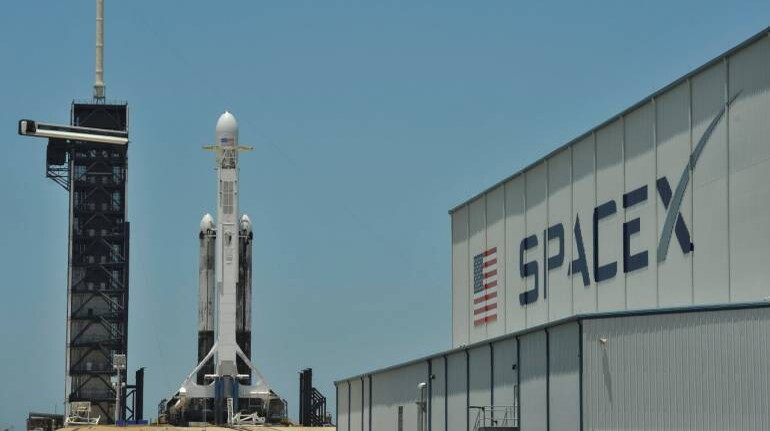
Elon Musk was inspired to revolutionize the auto industry to help save the planet from climate change. This week, his rocket company, Space Exploration Technologies Corp, may have done more to fight climate change than all the Teslas on the road. That’s taking nothing away from Tesla Inc., which has been a powerful and essential force for progress in reducing carbon emissions. It’s a reflection of the incredible potential of a new satellite that will detect global methane leaks, part of an effort I’ve been glad to support.
On Monday, the Environmental Defense Fund launched a satellite on a SpaceX rocket that will bring a new level of detail and accuracy to the measurement of global methane emissions. Methane is one of the biggest drivers of global warming. In the first 20 years after it is released, methane traps around 80 times as much heat as carbon dioxide. By some estimates, methane emissions from human activities account for nearly a third of the atmospheric warming that is causing climate change. Cutting those emissions is one of the most effective ways to slow climate change, and it’s the most urgently needed step we can take right now.
It’s also one of the simplest. Much of the world’s methane emissions come from preventable leaks in oil and gas wells and pipelines. This past year has seen important new commitments made by governments and oil and gas companies to tackle those emissions. The US adopted new regulations penalizing gas and oil producers for methane leaks, while the European Union imposed new limits on methane emissions from gas and oil imports. Meanwhile, at COP28 in Dubai, 50 major oil and gas companies pledged to slash their methane emissions by the end of the decade.
The problem is we can’t manage what we can’t measure, and up to now, our ability to accurately measure methane emissions has been limited. Methane is invisible and odourless, leaks often go undetected, and even when oil and gas companies are aware of leaks, it has been difficult for governments to force companies to act or to monitor progress when they do. The new satellite, called MethaneSAT, will help change all that, by locating and measuring methane emissions around the world and making the data publicly available.
That data — both wider in geographic sweep and more precise in measurement than existing data — will give oil and gas companies more of the information they need to target leaks. It will also allow investors to compare different companies and make more informed decisions, and it will enable regulators and the public to see who is responsible for methane leaks and hold them accountable for taking action. To help ensure all of that happens, Google, another partner in the project, will employ its AI tools to analyse the large quantities of data captured by the satellite and make it as useful as possible for businesses and policymakers.
The satellite launch illustrates the critical role that the private sector can play in pushing us forward on climate change, and it would not have been possible if SpaceX hadn’t challenged NASA, to Musk’s great credit. It’s also thanks to leadership from EDF President Fred Krupp, who conceived of the idea and has consistently looked for ways to engage industry in the fight against climate change.
MethaneSAT is the first of a planned series of satellite launches in the months ahead that together will dramatically improve our ability to measure methane emissions and take action to stop them. It complements efforts that EDF is leading, with support from Bloomberg Philanthropies, to help countries identify and stop leaks — including developing countries that often lack resources to dedicate to the problem. It’s an extremely promising step forward in harnessing one of the most powerful tools we have in the battle against climate change: data.
The more data that’s available, the more leverage the public has, the more insight investors have, and the more effective regulators and lawmakers can be. That’s true not only for reducing methane, but also for so many other key fronts in the climate battle: from helping cities craft policies to cut emissions, to cracking down on illegal deforestation, to helping companies better understand the financial risks they face from climate change.
Of course, data is only valuable if it’s put to good use. It’s up to all of us to make sure that this new effort yields the powerful results it should — by following the data where it leads, demanding action and rewarding those who lead the way.
Michael R Bloomberg is the founder and majority owner of Bloomberg LP, the parent company of Bloomberg News, and UN Special Envoy on Climate Ambition and Solutions. Views are personal and do not represent the stand of this publication.Credit: Bloomberg

Discover the latest Business News, Sensex, and Nifty updates. Obtain Personal Finance insights, tax queries, and expert opinions on Moneycontrol or download the Moneycontrol App to stay updated!
Find the best of Al News in one place, specially curated for you every weekend.
Stay on top of the latest tech trends and biggest startup news.