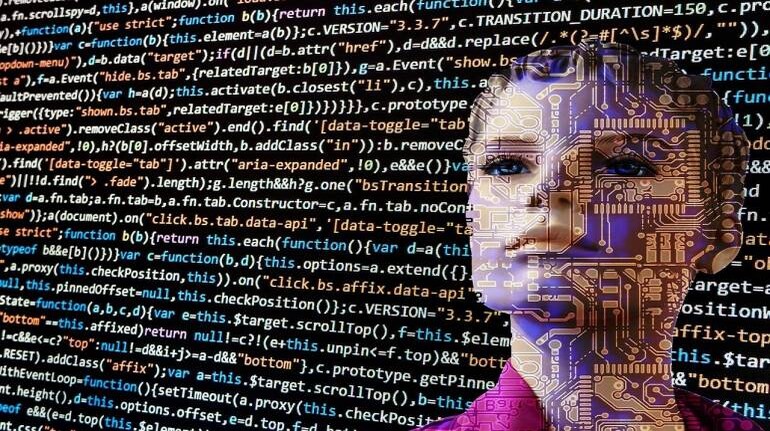
This year has brought a lot of innovation in artificial intelligence, which I have tried to keep up with, but too many people still do not appreciate the import of what is to come. I commonly hear comments such as, “Those are cool images, graphic designers will work with that,” or, “GPT-3 is cool, it will be easier to cheat on term papers.” And then they end by saying: “But it won’t change my life.”
This view is likely to be proven wrong — and soon, as AI is about to revolutionize our entire information architecture. You will have to learn how to use the internet all over again.
The core architecture of the consumer internet hasn’t changed much over the last 10 years.
Facebook, Google and Twitter remain recognizable versions of their earlier selves. The browser retains its central role. Video has risen in importance, but that hardly represents a major shift in how things work.
Change is coming. Consider Twitter, which I use each morning to gather information about the world. Less than two years from now, maybe I will speak into my computer, outline my topics of interest, and somebody’s version of AI will spit back to me a kind of Twitter remix, in a readable format and tailored to my needs.
The AI also will be not only responsive but active. Maybe it will tell me, “Today you really do need to read about Russia and changes in the UK government.” Or I might say, “More serendipity today, please,” and that wish would be granted.
I also could ask, “What are my friends up to?” and I would receive a useful digest of web and social media services. Or I could ask the AI for content in a variety of foreign languages, all impeccably translated. Very often you won’t use Google, you will just ask your question to the AI and receive an answer, in audio form for your commute if you like. If your friends were especially interested in some video clips or passages from news stories, those might be more likely to be sent to you.
In short, many of the current core internet services will be intermediated by AI. This will create a fundamentally new kind of user experience.
It is unlikely that the underlying services will vanish. People will still Google things, and people will still read and write on their Facebook pages. But more will move directly to the AI aggregator. This dynamic is already happening: When was the last time you asked Google for directions? They exist online, of course, but if you’re like me, you just use Google maps and GPS directly. You have in effect moved to the information aggregator.
Or consider blogs, which arguably peaked between 2001 and 2012. Then Twitter and Facebook became aggregators of blog content. Blogs are still numerous, but many people get access to them directly through aggregators. Now that process is going to take another step — because the current aggregators will themselves be aggregated and organized, by super-smart forms of machine intelligence.
The world of ideas will be turned upside down. Many public intellectuals excel at promoting themselves on Twitter and other social media, and those opportunities may diminish. There will be a new skill — promoting oneself to the AI — of a still unknown nature.
It remains to be seen how the AIs will choose and credit underlying content, and which kinds of packages users will prefer (with or without author photos?). To the extent users just want an answer, yet additional intermediaries will be displaced. Why should a think tank bother to produce a policy report, if it will be added to what are essentially briefing notes with no explicit sourcing? Overall, those who are happy to produce content with little credit, such as Wikipedia editors, may gain influence.
And what about competition within AI itself? A dominant AI is more likely to cite underlying sources, to ensure that content generation continues and to preserve a healthy information ecosystem for it to harvest. In a more competitive AI sector, by contrast, there is a danger of cannibalizing content but not refreshing it with due credit, as a free-rider problem could kick in.
Another question is who will reap the benefits from these innovations — the new AI companies, the old major tech companies, or internet users? It is too soon to know, but some analysts are bullish about the new AI companies.
Of course all this is just one man’s opinion. If you disagree, in a few years you will be able to ask the new AI engines what they think.


Discover the latest Business News, Sensex, and Nifty updates. Obtain Personal Finance insights, tax queries, and expert opinions on Moneycontrol or download the Moneycontrol App to stay updated!
Find the best of Al News in one place, specially curated for you every weekend.
Stay on top of the latest tech trends and biggest startup news.