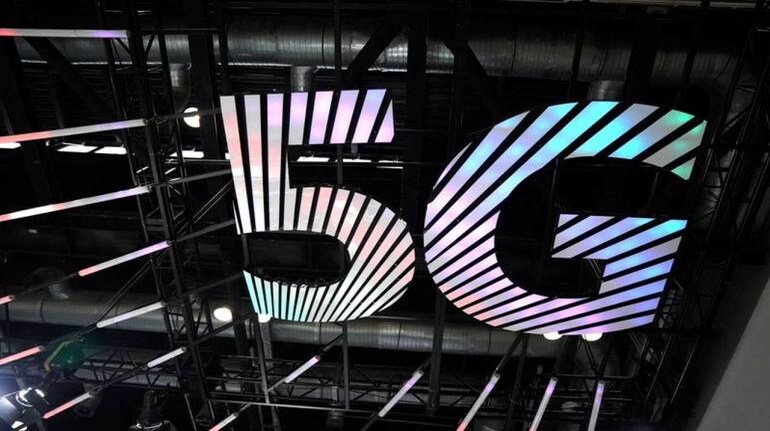
5G is an impossible word to escape these days. The 5th generation network, referred to as 5G is our future mobile network and represents a big leap in performance from 4G but not without inheriting some headaches.
What is 5G?
In the simplest terms, 5G is a mobile network. It's the network that powers all connectivity and communication tasks on your phone or any device that supports it. The biggest improvement is the amount of data that can be transmitted using 5G compared to 4G, which is India's current network.
5G will also allow a lot more devices to be connected to a single source. The data is also received and sent at significantly higher speeds compared to 4G.
5G isn't without its flaws though, for starters, a 5G signal does not nearly travel as far as the 4G networks can. It is also susceptible to certain weather conditions like rain. The solution so far is to build lots of small base stations in place of large mobile network towers.
The major drawback to this is the increased infrastructure costs. When 4G first rolled around, a lot of mobile operators invested heavily into the technology building new towers. Now they are staring down the barrel of a completely new technology, which has been unproven so far in the market.
This is one of the reasons why adoption for 5G has been a little slower than 4G, with many operators opting to use advanced features on their 4G networks before completely going big on 5G.
Alright, so why is it the next big thing?
In an evolving technological world the one common thing that has been proven to be a problem - transmission of data. Whether its super fast solid state drives or lag-free 1ms monitors, they all depend on data. The more data you can efficiently pump in faster, the better the technology performs.
It's no secret that we are heading towards an increasingly online world with apps that depend on connectivity and portable devices that require better handling of data. 5G was developed keeping all of this in mind.
5G is being looked at as a great enabler for the future IoT experience. It's the first baby steps into a fully online world, where augmented and virtual reality co-exist together. Okay, maybe that's a little far fetched but we are slowly inching towards that society and because of 5G, its the first time that a lot of these technologies finally have some leeway in how much data they can send and receive data in real-time.
Think about the autonomous cars we are already seeing on roads now, what do they rely on? There needs to be fast exchange of large amounts of data, so that the car can predict and maintain its route without any accidents.
The world of online gaming would change too. With console quality graphics already a reality on mobile phones, 5G will help fill the hole of data enabling multi-platform experiences. Imagine starting a game at home on your PC, picking it up again in the metro on the way to work and finally closing out the day in front of large screen TV with friends. As cheesy as that sounds, it isn't that far away from the truth.
This could have huge impacts in the world of medicine as well, enabling doctors to reach out remotely to people for check-ups and even allowing doctors to perform remote surgeries using robots. Yeah, that's a thing!
There are financial benefits to this as well, since a 5G network can host a larger number of devices than 4G, it brings the account acquisition costs for telecom down. This in turn, will trickle down to customers making plans even cheaper than they already are.


Discover the latest Business News, Sensex, and Nifty updates. Obtain Personal Finance insights, tax queries, and expert opinions on Moneycontrol or download the Moneycontrol App to stay updated!
Find the best of Al News in one place, specially curated for you every weekend.
Stay on top of the latest tech trends and biggest startup news.