Top 3 stories
India's data protection law a step closer to reality

At long last, India is set to get its much-awaited data privacy law, as the Cabinet has approved the draft Digital Personal Data Protection bill.
- This has cleared the path for the government to table the bill in the upcoming Monsoon Session of Parliament
The bill was designed after a lengthy consultative process, during which the government received over 23,000 suggestions from various stakeholders.
No major changes
While the bill has not undergone any major changes beyond the version published last year, it is expected to have been fine-tuned in some respects.
- Sources say that a departmental standing committee of the Parliament has also consulted on the bill
Tell me more
The draft bill requires a data fiduciary, which is an entity that processes user data, to give an itemised notice to users about the data that is being collected, in clear and plain language.
- The bill also mandates that users should be allowed to give, manage, and withdraw consent to share their information
Although the industry made strong representations to the government to water down a provision that restricts the use of children's data to target ads at them, the government has not budged.
Find out more
PharmEasy’s uneasy decision
Unicorns facing markdowns have been making headlines lately, but their valuations have remained unscathed as they have avoided raising funds at lower values.
However, a twist is unfolding in India as PharmEasy, a unicorn, is gearing up for a funding round at a massive haircut.
Driving the news
Pharmeasy is looking to raise about Rs 2,500 crore in a new funding round, a much-needed infusion for the health-tech unicorn.
- The company is under pressure to repay a debt of Rs 2,500 crore that it raised from Goldman Sachs
Manipal Group will be leading the round with a Rs 1,000 crore fund infusion for an 18% stake in the healthtech unicorn, according to sources.
- PharmEasy's existing investors, including TPG and Singapore's Temasek, will also invest about Rs 1,500 crore as part of the funding round
PharmEasy’s conundrum
PharmEasy has had a difficult time since last year. The company shelved its plans to go public in August 2022, citing market conditions and strategic decisions. It was then seeking to raise Rs 500-600 crore internally.
It also reportedly raised a near-$300 million loan from Goldman Sachs to repay its previous loan from Kotak Mahindra Bank, which it had raised to acquire Thyrocare.
PharmEasy’s fair value has been marked down multiple times by US-based asset management companies. According to the latest filings, Janus Henderson values Pharmeasy at $2.7 billion, while Neuberger Berman has pegged its valuation at $4.4 billion.
Go deeper
Why Zomato is eating into Swiggy's market share

As the two food delivery giants continue to fight it out, Zomato has slowly emerged as the leader, gaining market share at Swiggy’s expense.
Tell me more
Swiggy reigned supreme with a 52% market share in 2020, but that share has fallen to 45% in the past three years.
- Meanwhile, Zomato’s market share has increased to 55%
- Zomato’s GMV was at $3.2 billion in FY23, while Swiggy’s was at $2.6 billion
What’s helping Zomato?
The Gurugram-based company has penetrated deeper into Tier-2 cities and beyond, and has also developed a more pan-India focus.
- Swiggy, on the other hand, replicated the success it achieved in Bengaluru but lacked localisation
Additionally, Swiggy is only present in 580 cities, while Zomato serves in over 750 cities.
“With Tier 2 cities and beyond, there will be questions on revenue today versus medium-term revenue. If habit creation is not denting overall profitability, a company must chase it… where else will they get the next wave of users from?” an analyst asked.
Quick commerce wars
Given that Swiggy’s losses are about 5X higher than Zomato’s, experts say the Bengaluru-based firm should have grown much bigger, but the two companies have a roughly similar topline.
Swiggy chose to build its quick commerce business, Instamart, from the ground up, while Zomato acquired Blinkit.
“A bulk of the money Swiggy raised…went into building Instamart and a lot of the management bandwidth was also focused on making Instamart huge. Zomato got the same capabilities by acquiring Blinkit (earlier Grofers),” an analyst said when asked why Zomato had an edge over its peer.
Take a larger bite
MC Special: Funding winter chills unicorn hiring
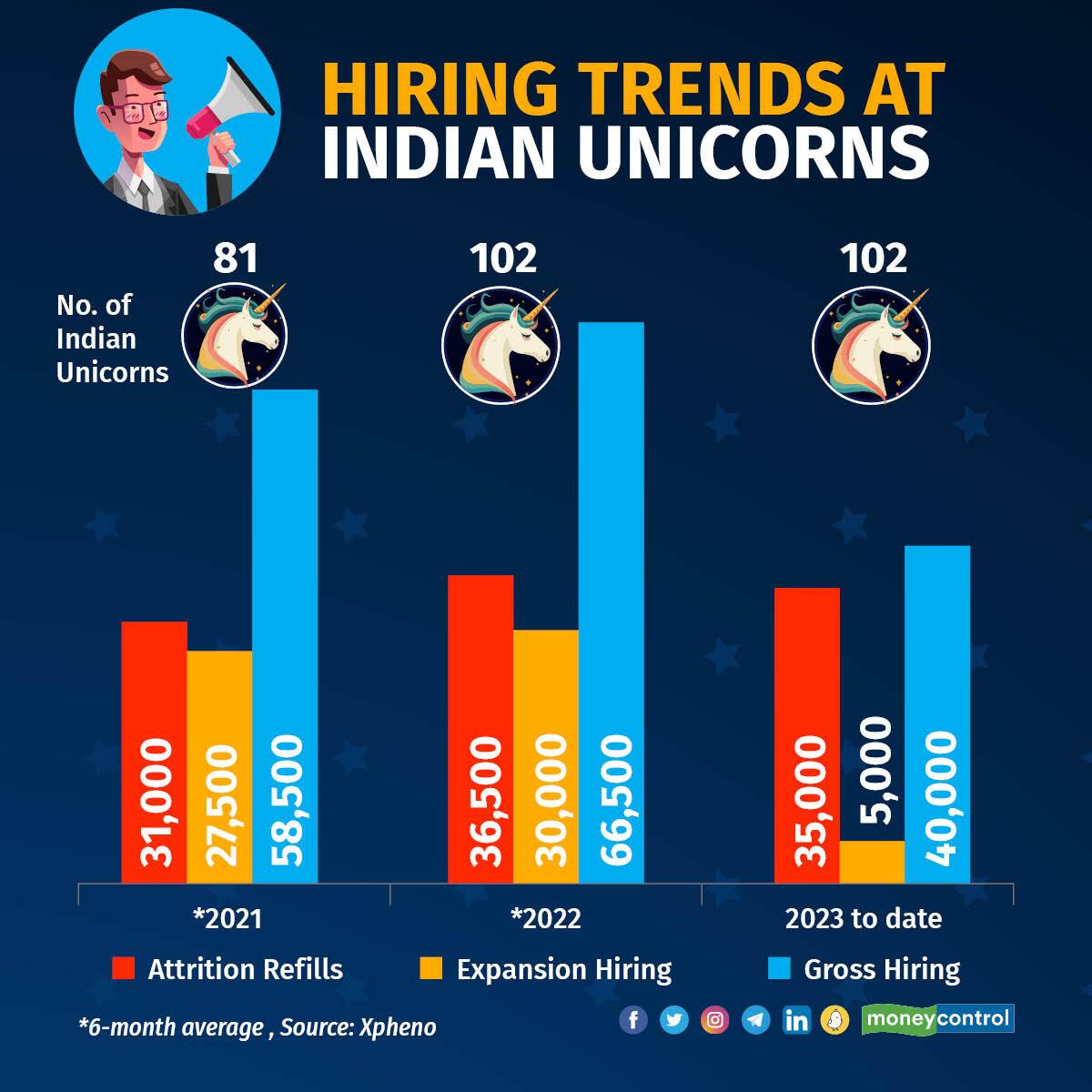
With growth taking a backseat, net employee addition at Indian unicorns fell to a fifth in the first half of 2023 from the year-ago period.
- Amid cost cuts and a worsening fund scarcity, Indian unicorns added only 5,000 employees in 2023 so far, down 83% from the six-month average of 30,000 last year, data from Xpheno showed
Read our special story
Today in tech history: Amazon was founded
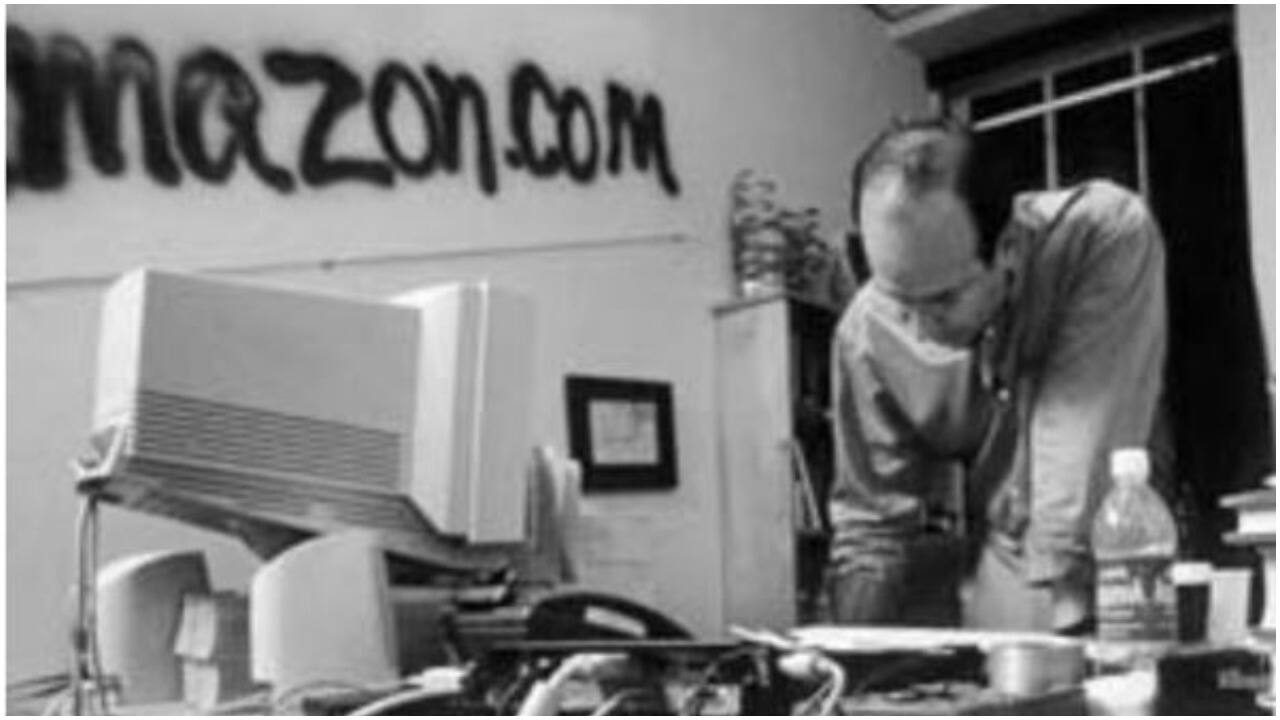
On July 5, 1994, Jeff Bezos founded Amazon from his garage in Bellevue, Washington. The company began as an online marketplace for books, but it eventually expanded into a multitude of product categories, earning it the moniker "The Everything Store."
27 years later, on the same day in 2021, Bezos stepped down as CEO of Amazon and turned the helm over to cloud-computing boss Andy Jassy.



 PREVIOUS
 QUICK HITS
 GLOBAL PICKS