Top 3 stories
Funding is back, with a catch

From Meesho to Lenskart and Purplle to Rebel Foods—what do all these companies have in common?
- Over $100 million funding rounds each. But there’s another trend that unites them
Tell me more
Gone are the days when fundraising rounds were predominantly primary in nature. All of these startups, along with others raising huge capital, are also seeing significant secondary transactions, which has led to increased total round sizes.
- This new trend of combining primary and secondary components signals a shift in fundraising style compared to 2021
Since secondaries happen at a steep discount in valuation, the entry price for investors is now more attractive.
“In 2021, deals were mostly fully primary in nature but now the default is…a portion of primary capital infusion…but also a secondaries component. This creates exit opportunities for early backers and delivers a better blended price for the incoming investor,” Rahul Taneja, Partner, Lightspeed, told us.
For instance, take Rebel Foods.
- It had a valuation of $1.3 billion in the primary market but was valued at $700-800 million during secondary transactions, sources told us. That meant Rebel had a blended valuation of $1 billion
Secondaries are also happening because investors need to return capital to their limited partners, the ones that sponsor venture funds. The market is really hot right now!
Not everyone is investing
While investors say the quality of companies has improved, they believe more needs to be done.
“We’re still looking for the next Harsha (Swiggy chief Sriharsha Majety), the next Sahil (Delhivery chief Sahil Barua)...we’re looking hard, but have not found them and that’s why we haven’t started reinvesting yet…we need a lot of that (founder) pipeline to come through,” Sumer Juneja at SoftBank Investment Advisers had said earlier.
Dig deeper
GCCs outpay IT firms for tech talent
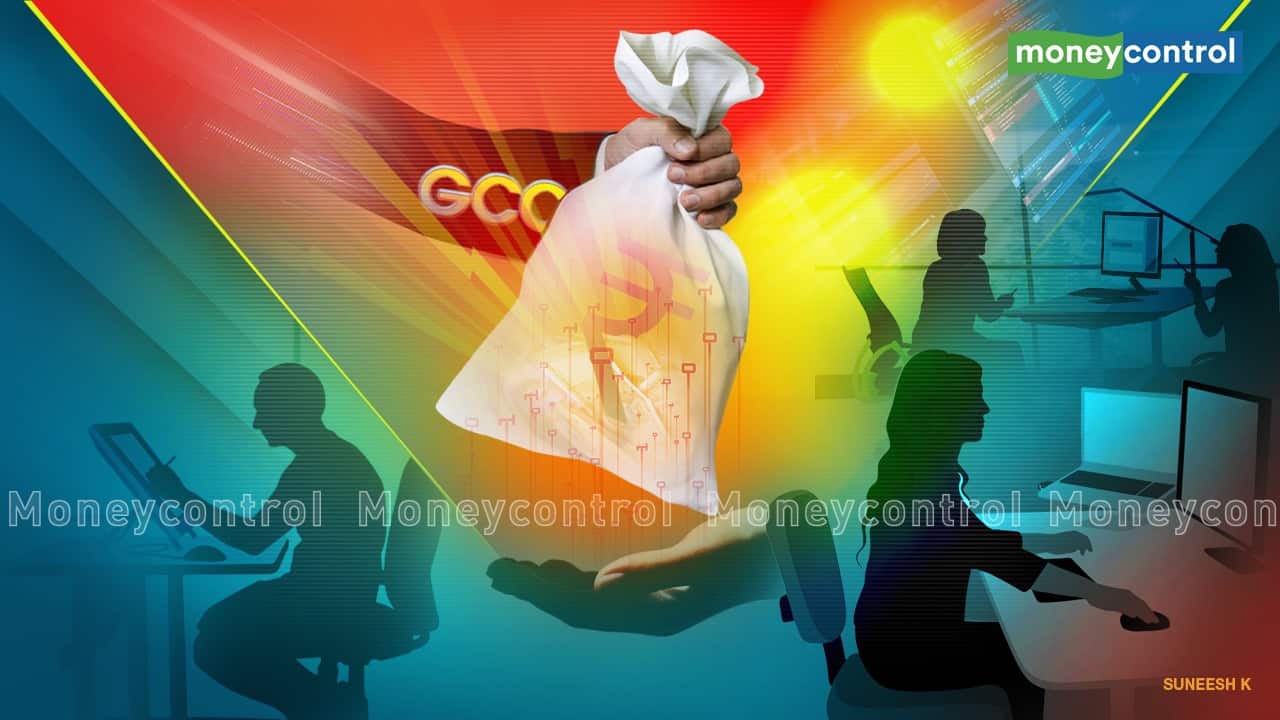
Global Capability Centers (GCCs) of foreign conglomerates are on a hiring spree amid rapid expansion in India, which is great news for Indian techies!
Tell me more
800 new GCCs are set to enter India in the next five-six years driving demand for tech talent, according to a TeamLease Digital report.
- For software developer roles, IT products and services companies are paying around Rs 5.7 lakh per annum (LPA) for entry-level positions and about Rs 17.9 LPA for those with over eight years of experience
- In comparison, GCCs are offering Rs 9.7 LPA for entry-level roles and Rs 43 LPA for senior-level employees
A continued challenge
Despite these promising developments, a concerning trend persists. The gender pay gap in the tech sector remains significant.
- According to the report, women continue to earn 22-30% less than their male counterparts, even in 2024
Find out more
Space incentives linked to state policies

A new scheme currently under consideration by the Central government could potentially further unlock the space manufacturing ecosystem.
Driving the news
Telangana in the lead
Telangana, which already has a space policy in place, has extended its policy's incentives to startups such as Skyroot Aerospace and Dhruva Space.
"The incentives announced by IN-SPACe is part of the same structure,” Jayesh Ranjan, the State’s IT and Industries secretary said.
Telangana's policy offers support through grants, subsidies, and tax incentives.
- Startups are also exempt from stamp duty and other taxes, while investors enjoy tax breaks
Catching up
Meanwhile, other states are set to introduce their own space tech policies.
- Tamil Nadu has released a draft space policy aimed at establishing space parks near Kulasekarapattinam and attracting global investments
- Karnataka is also in the process of formulating its own policy
Go deeper
MC Special | DK Shivakumar's vanity projects: Bengaluru pays the price

Bengaluru's infrastructure is creaking like an overworked server, yet Deputy CM and Bengaluru development minister DK Shivakumar seems to have a different playbook.
- Shivakumar is pitching tunnel roads, skydecks, double-decker flyovers, Metro lines to the outskirts, and—wait for it—an amusement park near the KRS dam in Mandya
Go deeper



 PREVIOUS
 QUICK HITS
 GLOBAL PICKS