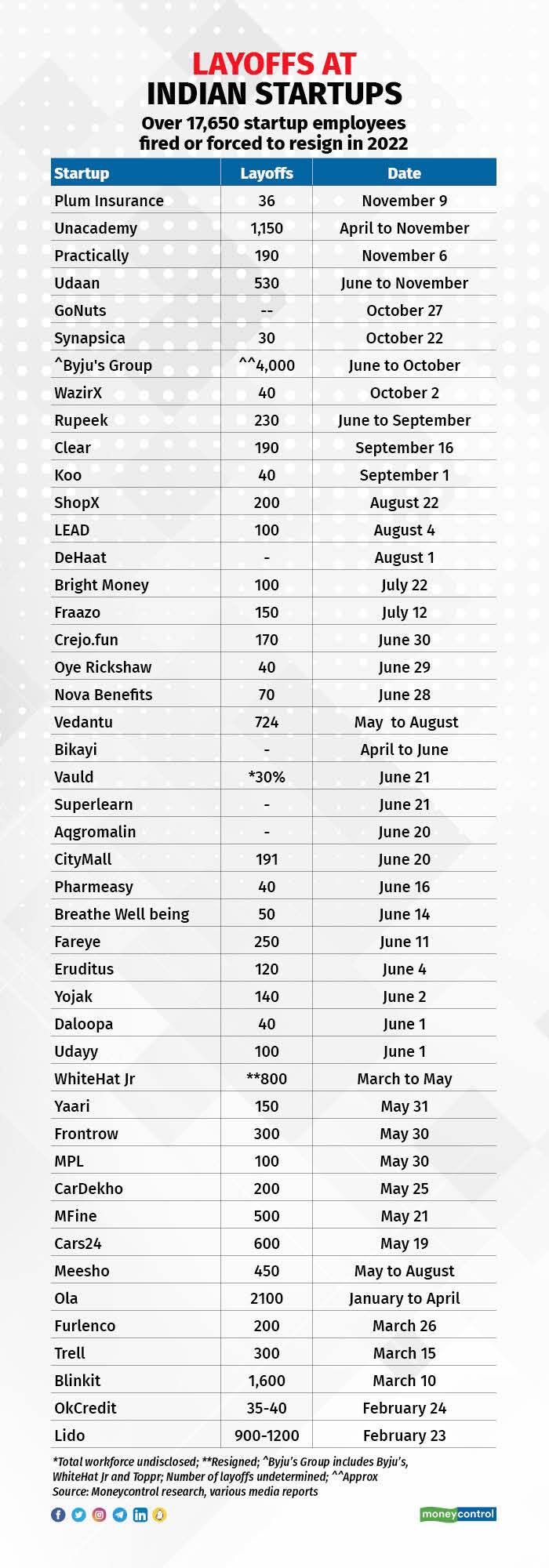
One important thing: Large deals of over $100 million and mega deals of over $400 million have begun to slow down over the past few quarters for the top four Indian IT services companies.
In today’s newsletter:
- Mega layoffs at Meta
- How Binance-FTX saga will impact India
- Mumbai takes startup war to Bengaluru
Was this newsletter forwarded to you? You can sign up for Tech3 here.
 Top 3 stories
Mega layoffs at Meta
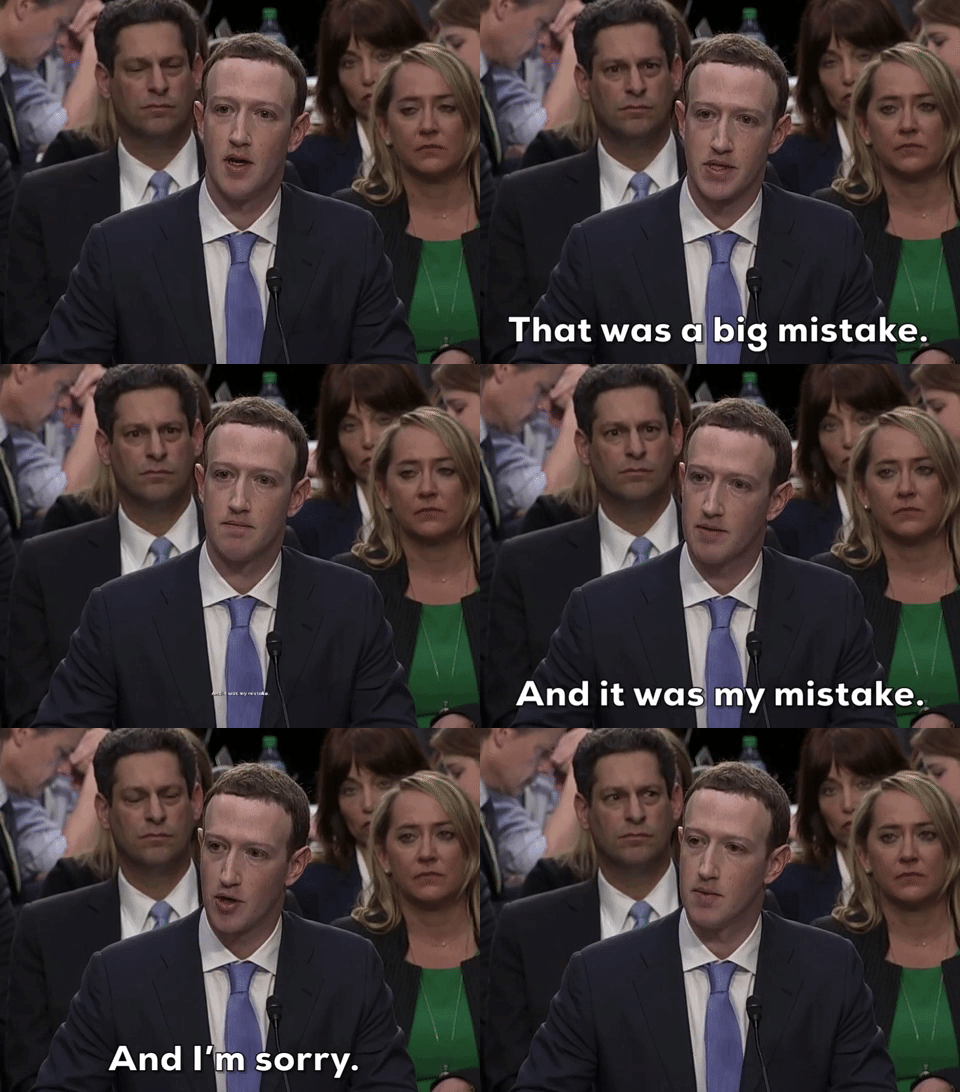
"I got this wrong, and I take responsibility for that"
That's what Meta CEO Mark Zuckerberg told employees as the Facebook parent firm announced its first major round of layoffs in the company's 18-year history.
Driving the news
Meta will lay off 11,000 employees or about 13% of its workforce, Zuckerberg said in a blog post. Meta had 87,314 employees at the end of September 30, 2022.
The company is also extending its hiring freeze through Q1 (March 2023) and cutting discretionary spending including shrinking its real estate footprint, scaling back budgets, and reducing employee perks.
"In this new environment, we need to become more capital efficient," Zuckerberg said.
What happened?
These layoffs come after Meta saw back-to-back quarterly revenue drops this year due to a major slowdown in the online advertising market and the impact of Apple's iOS privacy restrictions. This comes after a decade of explosive revenue growth.
- The company now anticipates another revenue decline in the current quarter.
Zuckerberg said they significantly increased their investments since he assumed that the pandemic-driven trends such as the rapid digital adoption and surge of e-commerce would be a permanent trend. Unfortunately, he admitted that things didn't play out the way they expected.
- We recently went into more detail about Meta's problems with its future growth and the different ways the company is trying to cut costs. Read here.
Who is affected?
While the reductions will happen across the company, Zuckerberg said recruiting will be disproportionately affected since they plan to hire fewer people next year. Its business teams will be restructured "more substantially".
Season of tech layoffs
Meta joins a slew of other IT companies in announcing layoffs and hiring freezes in response to rising inflation and macroeconomic headwinds. Stripe, Amazon, Lyft, Coinbase, Apple, and Snap are just a few examples.
How Binance-FTX saga will impact India

In an unexpected turn of events last night that rattled the entire crypto community, Binance CEO Changpeng Zhao (CZ) and FTX CEO Sam Bankman-Fried (SBF) revealed that Binance will acquire FTX to rescue it from a liquidity crunch, in one of the largest takeovers in the space.
From India’s lens
To understand the broader ramifications of this acquisition, we consulted with industry experts to decipher its significance for India. Some of the rippling consequences, according to the experts, will be stricter regulations, worsening of the hiring situation and shaken confidence in the cryptocurrency industry.
Despite the industry's disappointment, many are happy that ordinary investors' funds will be safe and that there won't be a repeat of the Luna crash.
“This event will have a ripple effect and more skeletons will tumble out of the closet. More things are yet to come out. This is going to push the bear market even further,” said Sharan Nair, co-founder of Web3 firm Pyor.
But the industry is now looking for more answers. Who is accountable for the money of retail investors, how can they be assured that their funds are safe, and how transparent are these central exchanges which have been brought into question by this episode in a bear market.
Go deeper
Crypto VCs in re-think mode?
FTX counts some of the biggest PE/VCs among its investors – Sequoia, Tiger Global, Temasek, Lightspeed et al – who invested at a $32 billion valuation.
As the company readies itself for a fire sale, crypto start-up investors say it is time to focus attention on Web3 native and decentralised finance companies.
Here’s the lowdown
Mumbai takes startup war to Bengaluru

Bengaluru is, of course, the first Indian city that comes to mind when we talk about tech and entrepreneurship. However, everyone who loves Mumbai and has to relocate (despite promises of better weather) for a tech job will tell you how much they wish they could stay back.
Driving the news
Over 30 prominent startup founders based out of Mumbai have come together to form an organisation to build a 'brand Mumbai' for startups, in an effort to promote and nurture startup and entrepreneurship culture in the country's financial capital.
- The initiative is the brainchild of Haptik founder Aakrit Vaish and Dream11 co-founder Harsh Jain. The organisation is most likely to be called TEAM (Tech Entrepreneurs Association of Mumbai).
Brand Mumbai takes on Brand Bengaluru
The organization's goal would be to establish 'brand Mumbai' as a startup hub and a place where founders would want to base their businesses.
"The good tech talent from Mumbai is going to other places which are marketed well. The ultimate pinnacle is Bengaluru. That is what we want to change considering so many unicorns are in Mumbai. It is the financial capital of the country, but it needs to be marketed well," said a Mumbai-based entrepreneur.
More deets here!
MC Interview: PB Fintech founders’ message to investors

One of the most asked questions for newly listed Indian startups has been - when will you be profitable? Yashish Dahiya and Alok Bansal, founders of PB Fintech, have long maintained that investors need to view the stock as a long-term bet and that profits will follow.
A year after listing, Dahiya says that he has finally made peace with analysts and investors only focusing on short-term profitability and the company’s large ESOP costs.
In an interview with us following their results for the second quarter of FY23, Dahiya and Bansal said that investors should see PB Fintech as a boring company that will keep growing.
Read more



 PREVIOUS
 Tweet of the day
 QUICK HITS
 DEALS OF THE DAY
 GLOBAL PICKS