In 2018, India witnessed a landmark judgment in favour of the LGBTQIA+ community. Half a decade down the line, the queer community on life before and after the judgment, when the Supreme Court read down parts of Section 377 of the IPC.
On the one hand, clamour for civil and political rights have emboldened the closeted and initiated behavioral change in the society; but on the other, the social change is yet not backed by legislative change
The beginning of the end of his term as Chief Justice of India was marked by the much-awaited judgment that read down the draconian Section 377 of the Indian Penal Code and decriminalised gay sex.
The Supreme Court delivered a historic judgment on September 6, decriminlising consensual sex in the LGBTQ community
The only exception has been BJP Rajya Sabha MP Subramanian Swamy who told news channels that “homosexuality is a genetic flaw” and that "this verdict will give rise to issues like increase in gay bars and number of HIV cases”
Another crucial recommendation which has not been dealt with in the revised bill is that of civil rights like marriage, divorce and adoption
The study suggests that sexual minorities are vulnerable to multiple forms of interpersonal violence committed against them by family members, neighbours and even intimate partners
Justice Nariman pointed out how Alan Turing, the popular English Mathematician and computer scientist, committed suicide after he was chemically castrated
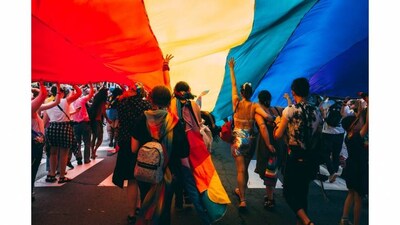
The next time the rainbow flag unfurls at a Pride parade, you'll know exactly what it means
The bench had emphasized that the LGBTQ community should not be denied their rights and be discriminated against because their “views, beliefs or way of life does not accord with the mainstream”
Justice Indu Malhotra made an observation that members of the LGBTQ community are discriminated against and hence are hesitant to even seek healthcare
A five-judge bench of the Supreme Court headed by Chief Justice Deepak Misra is hearing curative pleas to quash Section 377 of the IPC
In January 2018, a three-judge bench of the Supreme Court decided to revisit the 2013 judgment “because of the constitutional issues involved” and concurred that it was “appropriate to send this to a larger bench”
A bench of justices GS Singhvi and SJ Mukhopadhaya set aside the 2009 Delhi High Court judgement which had decriminalised gay sex.