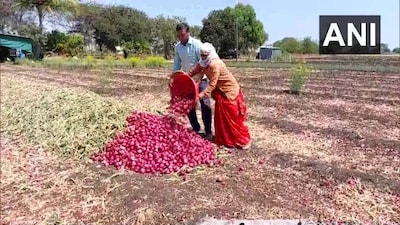
Onion prices in Chandigarh surged to Rs 100 per kilogram on Sunday as limited supply continued to impact the market.
The removal of the MEP is expected to benefit Indian farmers by allowing them to tap into the international market amidst an onion surplus. The move is also seen as strategic, coming ahead of assembly elections in Maharashtra, a major onion-producing state.
Despite a good harvest this year, onion supplies remain low, possibly due to farmers holding stocks in anticipation of higher prices in the September-October period, as reported by an onion trader at the Azadpur market.
This decision comes following a notification issued last Friday by the government, which lifted the export ban, albeit with a 40% export duty in place. The move has been met with relief by Nashik traders, who perceive it as a significant alleviation.
Additionally, the government has authorised the export of 2000 metric tons of white onions specifically for markets in the Middle East and some European countries, as per the Ministry.
It can be noted that on December 7, the government banned onion exports till March 2024 to cool down the prices of politically sensitive onions.
The government said that the step will help maintain sufficient availability of onion to domestic consumers at affordable prices as the quantity of stored Rabi 2023 onion is declining.
In October, the higher onion prices had capped a decline in the thali prices as the prices of the politically sensitive commodity increased to Rs 40 per kilogramme from Rs 34 per kg in the second half of the month.
On Saturday, the Centre imposed a Minimum Export Price (MEP) of USD 800 per tonne on onion exports till December 31 to boost the availability of the vegetable in the domestic market.
The current retail prices in Delhi NCR stand at Rs 60 per kg, up from Rs 40 per kg a fortnight ago, due to delayed arrivals of harvests from key producing states such as Maharashtra and Madhya Pradesh, as per an official of the Ministry of Consumer Affairs.
The stocks are now to strengthen further, with the government deciding to build up their buffer to 7 lakh tonnes as it aims to keep onion prices under control.
Kharif produce is likely to be lower by 7 percent and come in with a delay of 15-20 days
National Cooperative Consumer's Federation of India Ltd (NCCF) and National Agricultural Cooperative Marketing Federation of India Ltd (NAFED) have been mandated to sell buffer onion in wholesale and retail markets.
If India is to emerge as the growth engine for the rest of the world even as the Chinese economy is faltering, it must be ready to play host as a destination for both global exports and investments
Speaking at an event in Purandar tehsil of Pune district, the former Union agriculture minister said it was the government's responsibility to ensure a fair price for onons.
During the day, auctions of onions in APMCs in Nashik were halted in protest and several farmers and traders held protests across the district seeking a rollback of the export duty.
Our specially curated package of the most interesting articles to help you stay at the top of your game.
The government has already started distributing onions from the buffer, with a focus on major markets within states and union territories where retail prices exceed the national average
The move comes in order to improve the domestic availability of onions, the government said in a notification