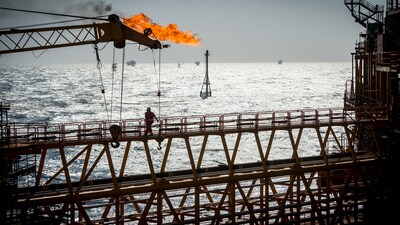
Brent crude jumped more than 13% following the attacks, which targeted Iran’s nuclear program and military capabilities, in a major escalation in tensions between two major military powers that risks spiraling into a regional war.
President Masoud Pezeshkian's announcement late Tuesday regarding Mohammad Javad Zarif comes as Iran prepares for a second round of negotiations with the United States over its rapidly advancing nuclear program
Those discussions, the first since the U.S. election, came after Tehran was angered by a European-backed resolution that accused Iran of poor cooperation with the U.N. nuclear watchdog.
Tehran’s strategy of deliberately violating the deal is seen as an attempt to put pressure particularly on Europe to provide it with incentives to offset crippling American sanctions re-imposed after the U.S. pullout.
The talks are aimed at determining which sanctions the United States should lift and the measures Iran has to take to come into compliance with the accord.
The step was one of many mentioned in a law passed by Iran's parliament last month in response to the killing of the country's top nuclear scientist, which Tehran has blamed on Israel.
Google CEO Eric Schmidt has labelled China "the most dangerous superpower on Earth" in an upcoming book The New Digital Age, co-written by Jared
Iran's deputy negotiator said world powers were unprepared for the next round of talks over the Islamic Republic's disputed nuclear programme and had failed to honour agreements reached in previous negotiations, Iranian media said on Sunday.
The United States and European Union expressed cautious optimism on Friday over prospects that Iran may be willing to engage major powers in new talks, but underscored any new negotiations must be sustained and focus on the nuclear issue.
Even though political worries persist, Peter Hickson, Global Head of Commodity Research at UBS finds that the crude market is a safe bet because at some stage these issues will get addressed.