


co-presented by
ASSOCIATE SPONSORS
co-presented by


ASSOCIATE SPONSORS


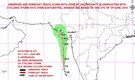
The IMD statement informed that the cyclone moved westwards with a speed of about 6 km per hour overnight before positioning itself around 275 kilometres west-southwest of Porbandar and 330 kilometres west-southwest of Veraval on Saturday morning.

The intensity of the cyclone is likely to get reduced, Rajeevan said, adding that it may hit the coast as a cyclonic storm or a deep depression.

State authorities have already evacuated three lakh people from low-lying areas near the coast to safer places, an official said.
All India Fishermen Association president Veljibhai Masani president appreciated the state government for issuing a timely warning to fishermen against venturing into the sea.

The cancellations were made as a precaution even though the cyclone changed its course and is unlikely to make landfall in Gujarat.

However, under the influence of cyclone Vayu, the monsoon has covered just the southern tip of the Indian peninsula, including most of Kerala and parts of Tamil Nadu and a bit of Manipur and Mizoram in the east, till date.
The state government, as a precautionary measure, has evacuated over three lakh people living in low-lying areas and thatched houses in the coastal districts.
Operations at ports and airports in these regions have been suspended as precautionary measure, officials said.

ONGC produces bulk of India's oil and gas from fields off the west coast, with several of its installations on these housing its operational personnel.

Cyclonic storm "Vayu" has intensified into a severe cyclonic storm, the IMD had said on June 11.

Chief Minister Vijay Rupani on June 11 appealed to people to cooperate in the evacuation process so that no life is lost due to the cyclone.


