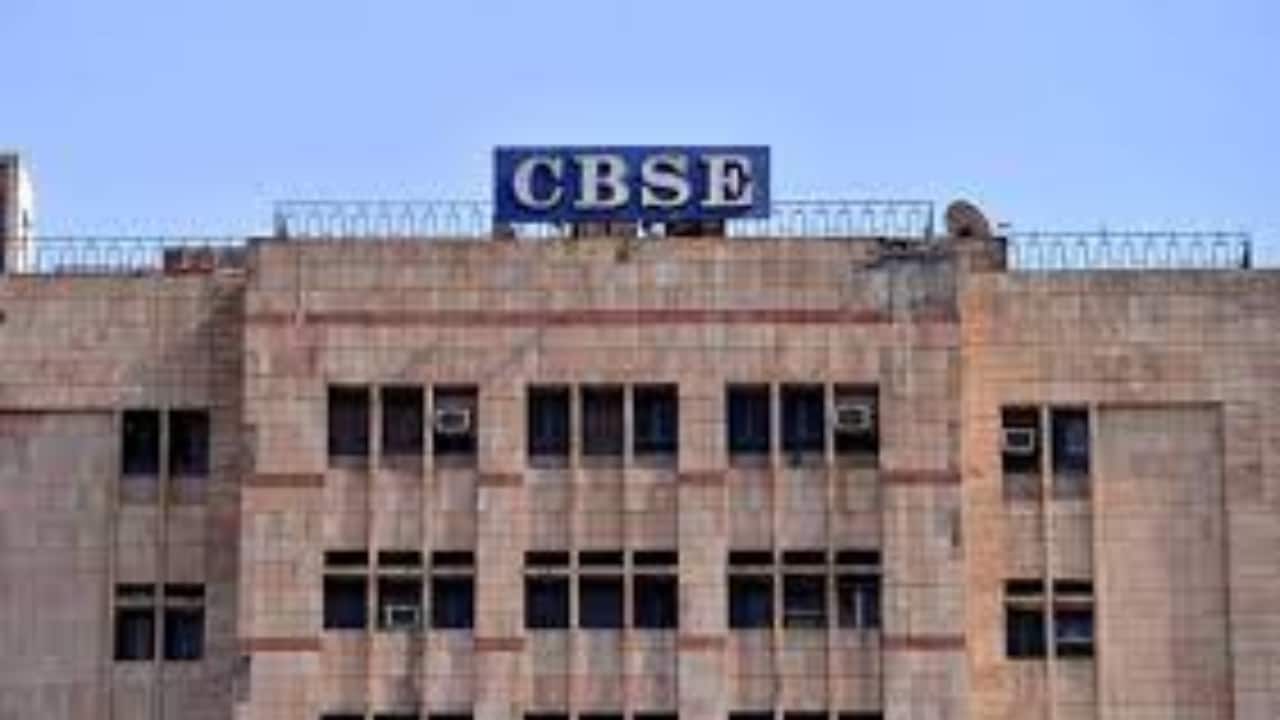
India’s premier educational body, the Central Board of Secondary Education (CBSE) is a national level board of education for both public and private schools and is controlled and managed by the Government of India. It was established in 1929 as an attempt to integrate secondary education across states in the country. In 1952 the constitution of the board was amended to give its present name- CBSE. A decade later, it was reconstituted again to make its services available to students and various educational institutions in the entire country. At present there are approximately 26,054 schools in India and 240 schools in 28 foreign countries affiliated to the CBSE. It is headquartered in New Delhi with offices in most cities of the country. English and Hindi are both considered to be the board’s official languages. All schools affiliated to CBSE follow the NCERT curriculum. CBSE used to be incharge of various competitive examinations like AIEEE Examination, AIPMT etc. But in 2017, the Union Cabinet chaired by Prime Minister Narendra Modi, gave a go ahead for the creation of a National Testing Agency (NTA) that would serve as an autonomous body responsible for conducting competitive entrance examinations across the country. Post that, beginning 2018, various exams previously conducted by the CBSE were transferred to the NTA including National Eligibility cum Entrance Test (Undergraduate), Joint Entrance Examination – Main, National Eligibility Test, Central Universities Common Entrance Test and others. More
Zerodha co-founder and CEO Nithin Kamath is a fitness enthusiast and is father to a school-going nine-year-old boy.
After 24 years of perseverance, Druk Padma Karpo School, famously known as "Rancho's School" from 3 Idiots, has finally achieved CBSE affiliation. Located in Ladakh's cold desert, the school has long been praised for its innovative teaching methods, ahead of their time, even before the National Education Policy (NEP) advocated such reforms.
CBSE clarifies that all existing Class X languages, including Punjabi, will continue in 2025-26 amid concerns over exclusion.
The draft norms will now be put in the public domain and the stakeholders can submit their feedback till March 9 following which the policy will be finalised, they said
This reform is consistent with the National Education Policy (NEP 2020), which promotes flexibility and a student-centered approach.
With the CBSE Board Exams 2025 approaching, students have various questions about eligibility, exam materials, and procedures. The Central Board of Secondary Education (CBSE) has clarified key concerns:
CBSE has issued a warning to students and parents about fake syllabus and sample question papers circulating online. The board urges reliance on official sources to avoid confusion and misinformation.
The Central Board of Secondary Education (CBSE) has issued an advisory cautioning students and parents against misleading information about syllabus, resources and sample question papers for 2024-25 session. The Board has warned students against falling prey to online portals spreading unverified news.
The board said it used advanced artificial intelligence (AI) tools to arrive at the conclusion.
The Central Board of Secondary Education (CBSE) has issued 6-digit DigiLocker Access Codes, for students of Class 10 and 12 to access their upcoming CBSE Board Results 2024. Read below to get more details about the same.
Once the CBSE results are declared, students can head to either cbse.gov.in or results.cbse.nic.in to access and download their respective results.
CBSE Result Date 2024: The CBSE is set to announce the Class 10 and 12 results for 2024 after May 20th on the official websites - - cbse.gov.in or results.cbse.nic.in. Students are advised to stay connected with us for the latest updates.
The results are expected to be announced in May, on the official website cbse.nic.in and cbse.gov.in.
The ministry’s initial plan was to introduce biannual board exams from the 2024-25 academic session, however, it has been pushed back by a year
CBSE introduces Holistic Progress Cards (HPC) for nursery to class 2, with plans for higher grades with pilot run scheduled for August-September 2024. This aligns with NEP 2020 in terms of assessing personal growth, problem-solving, critical thinking, communication, collaboration, creativity, innovation, self-reflection, and emotional intelligence.
While the percentage of competency-focused questions in the form of MCQs, case-based questions, source-based integrated questions or any other type has been increased from 40 to 50 per cent, the percentage of constructed response questions including short and long answers has been reduced from 40 to 30 per cent.
In a related post, Ankur Warikoo said, 'I studied in an English medium school and my English was good. I used to get good marks. But in 12th grade, I got 57 marks. I was one of the students with the lowest marks. And I was very shocked.'
The council is in the process of preparing new school textbooks in line with the new national curriculum framework for school education (NCF-SE) 2023 as a part of the implementation of the National Education Policy (NEP) 2020.
The board has also downgraded affiliation of three schools. The board has also downgraded affiliation of three schools
The Appointments Committee of the Cabinet (ACC) has approved the appointment of Singh, a 1996-batch Indian Administrative Service (IAS) officer of Bihar cadre, as chairperson, CBSE, an order issued by the Personnel Ministry said
For class 10, on February 15, exams for five subjects are scheduled while exams for four subjects are scheduled for class 12
“It has come to the notice of CBSE that the following handles have been found to be using the name/or logo of CBSE, with a view to mislead the general public on X,” the advisory reads with a list of “misleading” handles
As the post shared by a user named Khushi on X gained traction online, CBSE reacted to it and called it "baseless" and "incorrect".
The good news is, the same technology that created a massive disruption, is also offering new solutions to help Indians learn effectively and revolutionise access to education.