NASA’s Hubble Space Telescope has been sending pictures of various celestial bodies and cosmic phenomenon back to the Earth for scientists to revel in.
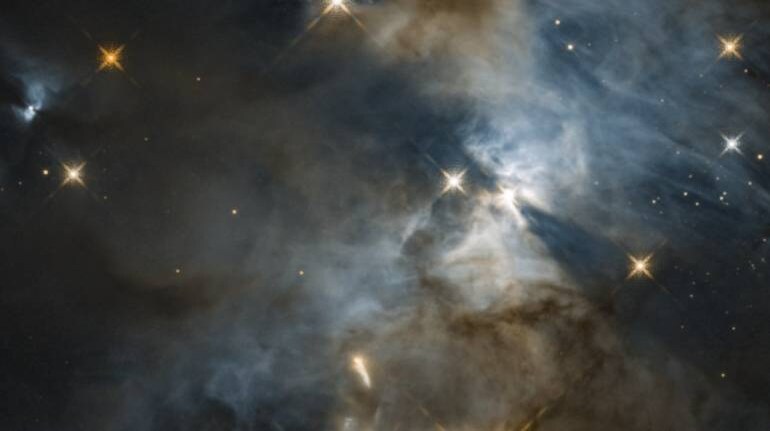
This time, the telescope has captured images that resemble a cosmic pair of flapping bat wings.
The phenomenon occurred in a stellar nursery called Serpens Nebula, about 1,400 light-years away from the Earth.
The striking image was captured when a saddle-shaped disk near an emerging star cast its shadow on a cloud of dust and gases. The star is named HBC 672 and is only one or two million years old, which is supposed to be young in cosmic terms.
The phenomenon is similar to a lampshade casting a shadow on a wall – only here, the bulb is the star; the lamp shade is saddle-shaped disc; and the wall is the cloud.
Also, the shadow of the disk is enormous – about 200 times the length of our solar system.
Klaus Pontoppidan, the lead author of the study, while explaining the phenomenon said, “You have a star that is surrounded by a disk, and the disk is not like Saturn’s rings—it’s not flat. It’s puffed up. That means, if the light from the star goes straight up, it can continue straight up—it’s not blocked by anything. But, if it tries to go along the plane of the disk, it doesn’t get out, and it casts a shadow.”
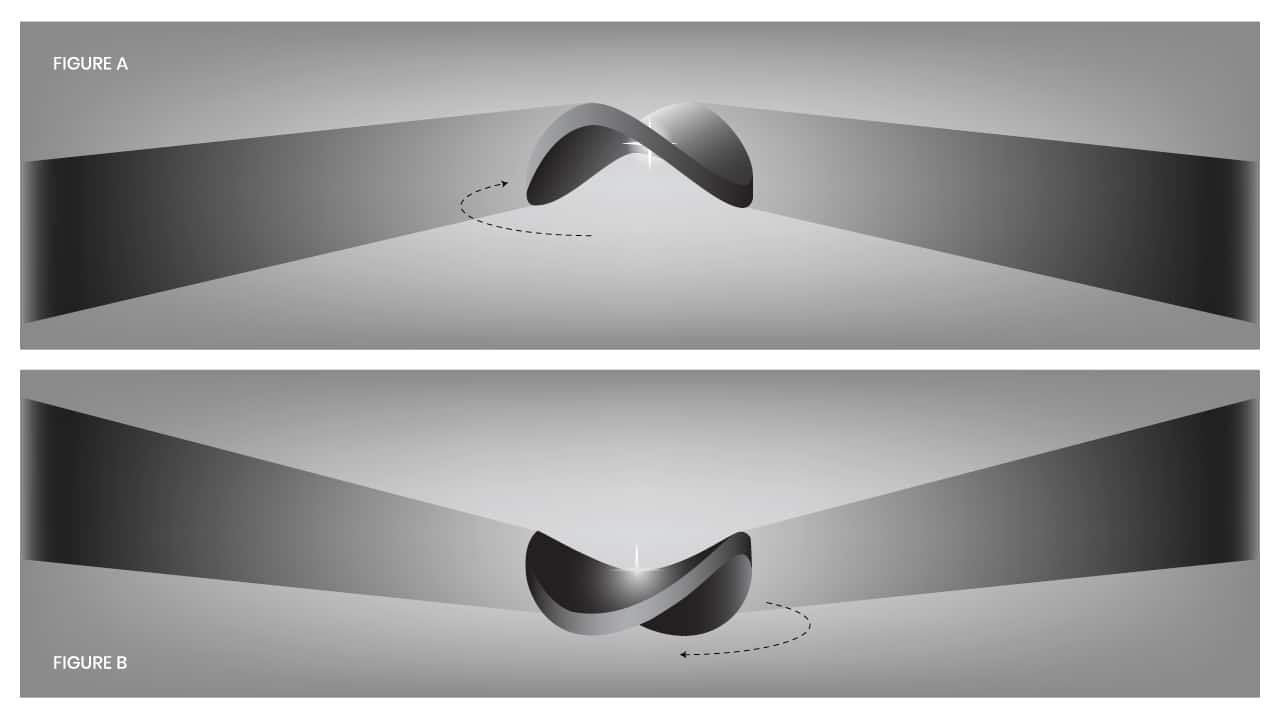 This illustration shows a fledgling star surrounded by a warped, saddle-shaped disk with two peaks and two dips. A planet embedded in the disk, inclined to the disk's plane, may be causing the warping. As the disk rotates around the young star, it is thought to block the light from that star and cast a varying, flapping shadow on a distant cloud. (Image: NASA)
Pontoppidan and his team have observed the phenomenon over a span of 404 days. He believes that it is being caused by a planet, which is embedded in the disk and its gravity is pulling and warping the disk.
According to the team, the said planet is as far from the star, as the Earth is from the Sun, and takes no more than 180 days to orbit around the star.
Discover the latest Business News, Sensex, and Nifty updates. Obtain Personal Finance insights, tax queries, and expert opinions on Moneycontrol or download the Moneycontrol App to stay updated!
Find the best of Al News in one place, specially curated for you every weekend.
Stay on top of the latest tech trends and biggest startup news.