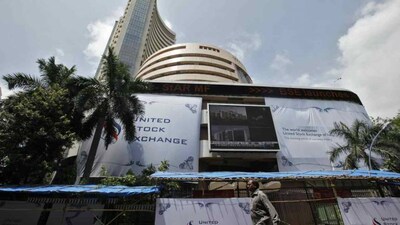
Stock analysis is used by traders to make buy and sell call. It’s an approach to make informed decisions while investing in stocks. Stock analysis can be categorised into – fundamental analysis and technical analysis. Fundamental analysis is evaluation of data from sources, including financial records, economic reports, company assets, and market share. Analysts typically study the company’s financial statements – balance sheet, income statement, cash flow statement, and footnotes. These statements are made available to the investors in the form of quarterly earnings, disclosures to stock exchanges in compliance with the Securities and Exchange Board of India (Sebi) norms. In fundamental analysis, the analysts particularly check for a company's core income, income from other sources, profitability, guidance, assets and liabilities and debt ratio among other parameters. The other method, i.e. the technical analysis focuses purely on statistical data. It works on two assumptions; one, the stock price reflects the fundamentals. Second, the study of past and present movement in prices can help determine the future price trends. Technical analysis primarily deals with price, volume, demand and supply factors. This method is effective only when supply and demand forces influence the market. However, when outside factors are involved in a price movement, technical analysis may not be successful. More
For the week, we expect Bank Nifty to trade in the range of 30,400-29,400 with mixed bias.
It would be advisable to remain light on positions and stock-specific.
There is no doubt that the market looks a bit depressing, but investors should not lose heart and remain stock specific which have their own growth stories
Earnings growth for FY20 will get better by H2FY20 led by positive lag-effect of reforms,” says Vinod Nair, Head Of Research at Geojit Financial Services
Price growth in Nifty will mostly come through earnings growth while valuation multiple will see continued contraction, said Vineeta Sharma of Narnolia Financial Advisors
"We couldn't see major downfall due to improvement in trade deficit & rupee appreciation. However volatility may persist in the market," Manali Bhatia of Rudra Shares & Stock Brokers said.
Despite the current correction, the Nifty50 is still up 8.6 percent and the Sensex 11.3 percent year-to-date, which indicated that the market has been managing to climb all wall of worries very easily, experts said.
We recommend a 'Buy' with a target price of Rs 800 by FY19 end implying an upside of 20 percent, says Akash Jain of Ajcon Global.
With challenges on the macro front and increasing political headwinds faced by the BJP heading into the 2019 general elections, Prabhudas Lilladher believes traders are likely to remain cautious
Here is a list of top 10 stocks handpicked by Emkay Global that could return 13-85 percent over the next 12-18 months
Mitessh Thakkar of mitesshthakkar.com is of the view that one can sell DCB Bank with a stop loss of Rs 181.50 and target of Rs 172 and buy Hindustan ZInc with a stop loss of Rs 295 and target of Rs 317 and United Breweries with a stop loss of Rs 1249 and target of Rs 1310.
Here is a list of top five stocks which could give up to 15% return in the short term.
Rajesh Agarwal of AUM Capital recommends buying Container Corporation of India with stop loss at Rs 1300 and target at Rs 1357, a buy in EIH with stop loss at Rs 182 and target at Rs 200 and a buy also in Kansai Nerolac Paints with stop loss at Rs 493 and target at Rs 520.
"We believe at current market price, there is no margin of safety and it has already discounted FY18-20 earnings growth. No doubt, the fundamentals of this Company are robust," says Akash Jain, Vice-president, Equity Research at Ajcon Global Services.
Here is a list of top three stocks which could give up to 12% return in short term.
Rajesh Agarwal of AUM Capital recommends buying Jindal Steel & Power with target of Rs 263 and stop loss at Rs 245 and CESC with target of Rs 1078 and stop loss at Rs 1028.
A rate cut or a rate hike, investors are advised to stick to quality rate sensitive stocks which can outperform benchmark indices, suggest experts.
All these three insurance companies HDFC Standard Life, SBI Life and ICICI Prudential listed on exchanges in the last 16 months.
Almost 52 percent of IPOs listed on the bourses in the last 10 years has given a negative return and only 48 percent survived the bull and the bear cycles. Out of 48 percent, nearly 100 companies gave a return ranging from 100 percent to 6000 percent.
The brokerage house said franchise strengths would drive robust growth. It expects 200 basis points improvement in value of new business margin by March 2020.