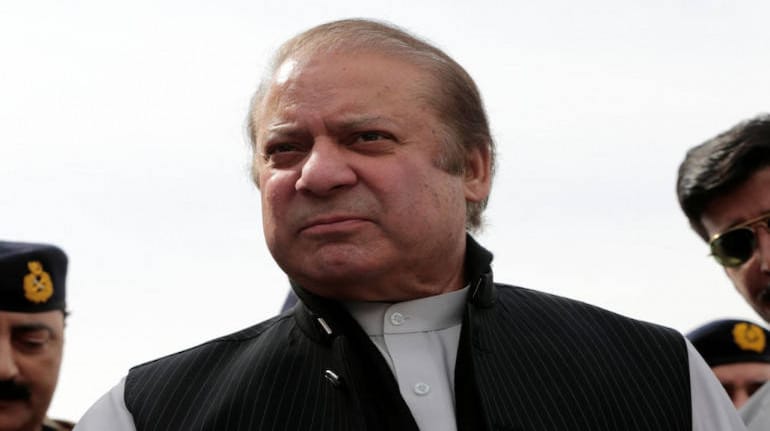
Prime Minister Shehbaz Sharif’s assertion that if his party, the Pakistan Muslim League, won the forthcoming parliamentary elections then the party chairman Nawaz Sharif will be the next prime minister of the country may be unusual but not a surprising decision.
Nawaz Sharif had remained the de facto leader of the PML (N) and the Pakistani Prime Minister had rushed to London on several occasions to consult him on crucial issues.
Traditionally, a sitting prime minister seeks a fresh term if his party wins the election.
The Nawaz Sharif factorTo announce Nawaz Sharif as the next prime minister is not surprising. It is the logical culmination of a process that began months back to pave the way for Nawaz’s return.
Nawaz Sharif, a three-time former prime minister and Shehbaz Sharif’s elder brother, has been in self-exile in London since 2019.
It is also a candid acknowledgement on Shehbaz Sharif’s part that he is not a vote-catcher and to make the PML (N) win Nawaz has to be projected as the future prime minister.
Imran Khan’s Pakistan Tehreek-e-Insaaf (PTI) party has made heavy inroads in the Punjab province, the traditional stronghold of the Sharifs, in recent years.
Punjab is politically the most significant province in the country as it is not only the most populous but also has 50 percent of the parliamentary seats.
Imran Khan has been able to spread his influence in Punjab and the bulk of the youngsters who throng his rallies have been from the province.
Nawaz Sharif, who rose to political prominence as chief minister of Punjab in 1985 before becoming the Prime Minister, was an extremely popular leader in the province before his government’s ouster in 2017 on a corruption charge.
He was prime minister twice before that but like most Pakistani prime ministers was unable to complete his full five-year terms.
In 2018, the Supreme Court barred him from contesting the election and later that year Imran Khan’s PTI won a massive mandate to rule in the parliamentary election.
Nawaz Sharif was convicted for seven years and after spending some time in jail, he was released for treatment.
He left for London in 2019 and has lived there in self-exile since.
Efforts to get Nawaz Sharif backFrantic efforts have been made by the Shehbaz Sharif government in past months to get him back to the country to counter Imran Khan politically.
An Act was passed by Pakistan some months back which allowed Nawaz to get the earlier decision of the Supreme Court that barred him from contesting elections reviewed.
The Pakistani Prime Minister said Nawaz Sharif will return to Pakistan in the next few weeks and indications suggest that he will also take charge of the PML (N) election campaign.
Shehbaz Sharif also clarified recently that the parliamentary elections will be held under a caretaker government, which will be headed by a neutral person and not a political leader to ensure non-partisan and free and fair elections.
Once Nawaz Sharif returns, he will certainly be able to motivate and rejuvenate the cadres and supporters of the PML (N). But he could still face a tough challenge from Imran Khan’s PTI.
Imran Khan the most popular leaderImran Khan is currently the most popular leader in Pakistan.
A Gallup poll survey in March showed Imran Khan’s popularity rating to be 61 percent while that of Nawaz Sharif was around 36 percent.
The huge gap in their popularity could be because Imran Khan was present in the country and Nawaz Sharif was away in London in self-exile at the time the Gallup survey was conducted.
Over the past years, Imran Khan’s popularity has also grown in Punjab.
In the Punjab provincial by-elections held in July 2022, Imran’s PTI had won 15 of the 20 seats.
He repeated this feat during the by-election of the National Assembly Seats from Punjab in October last year by winning six out of seven of them.
But now Nawaz Sharif is being brought back to change the opinion in the ruling PML (N)’s favour.
Nawaz and the armyNawaz Sharif’s political rise had begun with the army’s patronage and support. In 1990 when the army wanted to counter Benazir Bhutto’s Pakistan People’s Party clout, it propped up Nawaz Sharif and he became Prime Minister.
But in subsequent years Nawaz’s independent streak ran against the army’s interest and proclivity to keep civilian leaders in check.
The difference between Nawaz Sharif and the army establishment became sharper when the Pakistani Prime Minister responded warmly to his Indian counterpart Narendra Modi’s overtures to normalise bilateral relations.
The top military echelon got worried that Nawaz Sharif was building ties with India without keeping them in the loop.
This became evident when Modi made an impromptu visit to Lahore in December 2015 for a brief meeting with Sharif. The subsequent ouster of Sharif as prime minister in 2017 was the army’s way of showing that it is the generals who call the shots in Pakistan and not the civilian head of government.
However, the current army chief Asim Munir was nominated by Shehbaz Sharif with Nawaz Sharif’s approval.
The decision to bring him back to the country is also being done with the army’s blessings as the military establishment in the country is looking for a strong and popular civilian leader who can challenge Imran Khan.
But there is no doubt that Nawaz Sharif’s popularity and influence will be seriously contested if Imran Khan is allowed to participate in the forthcoming parliamentary elections.

Discover the latest Business News, Sensex, and Nifty updates. Obtain Personal Finance insights, tax queries, and expert opinions on Moneycontrol or download the Moneycontrol App to stay updated!
Find the best of Al News in one place, specially curated for you every weekend.
Stay on top of the latest tech trends and biggest startup news.