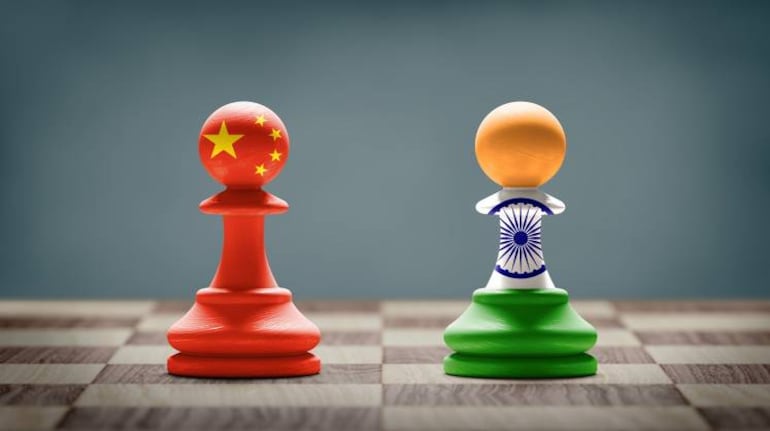
Rebel groups that operate on India’s border with Pakistan and those that have shown their hand in the past in the country’s North East are qualitatively different.
Pakistan’s backing of rebels is an official policy, announced as `moral’ support for Kashmiris fighting for independence and even secession from India.
The groups christened `hostiles' in the North East, were no longer in vogue, principally because Sino-Indian bilateral relations were looking up. With bilateral relations between India and China improving post Mao, in the 1980s, and Beijing seeking a larger role for itself has decided to forgo their regional status for a global one, the result was a tranquil border.
To be sure, there are militant groups operating principally as extortionists but lacking any real international – read Chinese – support.
Now suddenly, peace in the densely forested and sylvan North East has been shattered. A deadly ambush near the Myanmar border in Manipur that killed five soldiers, including a colonel, his wife and their eight-year-old son, has brought back images of China’s possible support to insurgencies in India’s North East.
Chinese-border tensions restartCould India’s mighty neighbour be plotting to foment trouble in the region amid border tensions, with bilateral relations going into a tailspin since Chinese transgressions in eastern Ladakh in mid-2020?
In the first week of December, at least 11 civilians were gunned down by security forces in Mon district of Nagaland, the Indian Army confirming it as unfortunate. The incident took place between Oting and Tiru villages when some daily-wage labourers were returning home in a pick-up van from a coal mine in the evening.
The vehicle was allegedly fired upon by Indian Army personnel, who were conducting an operation in the area after receiving inputs on the movement of militants of Yung Aung faction of proscribed outfit NSCN (K), an official said.
Former Director General of Military Operations (DGMO), Lt Gen Vinod Bhatia, does not see these two incidents, ghastly as they were, as Chinese handiwork. ``These two are highly unfortunate incidents. If you look at the levels of violence of the last few years, the situation is in the law-and-order domain and not the public order domain. I have no doubt about China’s potential to foment trouble, but that is not happening now,” he told Moneycontrol.
While the current turmoil in the region may not be linked with China directly, the fact of Beijing’s covert aid to separatist outfits in the Northeast is hardly a state secret.
Insurgent outfits in the region, including Manipur, have links with armed groups such as Arakan Army and United Wa State Army in Myanmar from where Chinese weapons are finding their way into the Northeast.
Says one official, requesting anonymity: ``This aid has been among the many factors behind sustained insurgency in the frontier region for several decades. The consequence of the armed insurrection has been large-scale violence and disturbance in the frontier region, and massive loss of lives and depletion of resources.”
China was most active in the North East between 1990-2010, when virtually hundreds of rebel groups of various sizes were backed by Beijing. This period lasted for nearly 15 years, which began when a batch of the Naga National Council led by Thuingaleng Muivah and Thinoselie M Keyho reached China’s south western province of Yunnan.
The Nagas were followed by the Mizo National Front (MNF), who then inspired a squad of 18 functionaries from the People’s Liberation Army (PLA) in Manipur, who were trained for a longer duration in Tibet. China’s contacts with the PLA remain strong.
As does the United Liberation Front of Asom, better known as ULFA. By 2011, the ULFA Chief of Staff, Paresh Baruah, was already living in Yunnan, which would not have been possible without the knowledge of higher authorities.
Payback for Taiwan trade?If needed, China is not above baring its fangs. As late as October 2020, China’s propaganda machinery warned India against a trade pact with Taiwan, saying Beijing could retaliate by supporting North East separatists and stop recognising Sikkim as a part of India.
Says Rajiv Bhatia, former Indian envoy to Myanmar and currently Distinguished Fellow, Gateway House: ``There is certainly evidence of trouble in Manipur and Mizoram. Manipur has the backing of guerrillas from Myanmar and not so long ago, both (Gen) Rawat and (NSA) Doval, had gone to Myanmar to put things in order.’’
China had stopped backing rebels in the 1960s and 1980s. ``But the situation is not the same. Subsequently, there was an easing of ties between the two countries. Bilateral relations have changed now and the message from Beijing is clear: if India meddles in Tibet and Taiwan, then expect trouble in your backyard in the North East,” the former Indian diplomat told Moneycontrol.
While it is true that the government of India has not done anything outwardly to provoke China by taking positions on Tibet and Taiwan, Indian academics and scholars have been urging the government to take a harder and more independent line on these countries, which China regards as its internal matter.
There seems little doubt that the waters are muddied in one of India’s most sensitive regions.
Discover the latest Business News, Sensex, and Nifty updates. Obtain Personal Finance insights, tax queries, and expert opinions on Moneycontrol or download the Moneycontrol App to stay updated!
Find the best of Al News in one place, specially curated for you every weekend.
Stay on top of the latest tech trends and biggest startup news.