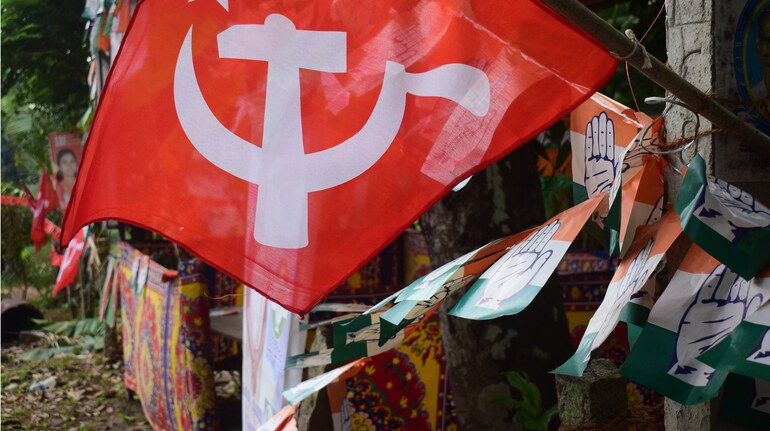
As the 2026 West Bengal assembly election approaches, the political landscape is charged with unprecedented dynamics. This contest unfolds against the backdrop of neighbouring Bangladesh's recent parliamentary polls, where the Bangladesh Nationalist Party secured a commanding victory with 209 seats. Yet, the Jamaat-e-Islami Bangladesh alliance claimed 68 seats, marking its strongest showing ever, particularly dominating border regions.
This surge in Islamist influence across the porous frontier raises alarms for West Bengal, where Muslim-majority districts like Murshidabad and Malda are vulnerable to cross-border radicalisation and infiltration.
Smaller parties have stepped on the gas
In recent months, since January 2026, far-right and hardliner Muslim politics has intensified in West Bengal, propelled by organisations blending hardline ideologies with electoral ambitions.
The Social Democratic Party of India (SDPI), the political wing of the banned Popular Front of India (PFI), has ramped up activities in border areas. Similarly, the Welfare Party of India (WPI), backed by Jamaat-e-Islami Hind, is expanding grassroots networks mirroring its Bangladeshi counterpart's tactics.
More alarmingly, the Communist Party of India (Marxist)-led Left is engaging these groups, directly or through intermediaries, granting them mainstream legitimacy in a state where Muslims have historically leaned liberal rather than hardline.
TMC is vulnerable to shifts in loyalty
This outreach risks deepening Bengal's polarisation, already at a peak. If alliances form, they could fragment Muslim votes, primarily hurting the Trinamool Congress (TMC), which swept 28 of 34 Muslim-dominated seats in 2021, while the Bharatiya Janata Party (BJP) claimed only six.
BJP’s short-sighted silence
The BJP remains notably silent, calculating that such splits would erode TMC's base without affecting theirs. Yet, this calculus overlooks broader dangers: legitimising far-right Muslim groups could exacerbate communal divides, invite external influences, and erode Bengal's syncretic cultural heritage, potentially leading to long-term instability in a state already grappling with economic stagnation and demographic shifts.
CPM's strategic alliances with fringe groups
Mohammad Salim, the CPM state secretary, initiated a pivotal meeting with Humayun Kabir, founder of the Janata Unnayan Party (JUP), in January 2026. Kabir, a former TMC member expelled for dissent, has courted controversy by advocating for a replica of the Babri Masjid in Murshidabad, a move that stokes historical grievances and polarises communities.
Positioning JUP as a Muslim-focused platform, Kabir aims to contest 182 seats statewide, though his influence remains geographically limited.
His past electoral foray—in the 2019 Lok Sabha polls on a BJP ticket—underscores ideological flexibility, raising suspicions about opportunistic shifts. Nonetheless, Kabir's role as a conduit between the CPM and far-right Muslim entities is increasingly evident, facilitating dialogues that could reshape alliances.
The 34 assembly seats at stake
Kabir's stronghold lies in border districts like Murshidabad, with its 67% Muslim population, and Malda at 55%, alongside enclaves such as Bhangar. These areas, encompassing roughly 34 assembly segments, are electoral battlegrounds where economic vulnerabilities—high unemployment, agrarian distress, and flood-prone terrains—intersect with identity politics.
In 2021, TMC's politics cemented their hold, winning 28 seats here, while BJP scraped six amid anti-CAA sentiments. A surge in support for outfits like JUP could siphon 10-15% of Muslim votes, per local analyses, crippling TMC and indirectly aiding BJP's polarisation strategy.
CPM's endorsement of such figures not only dilutes its anti-communal legacy—forged during decades of Left rule—but also risks alienating progressive allies, as it appears to prioritise short-term gains over ideological purity in a bid to revive from electoral oblivion.
Welfare Party of India and its Jamaat links
The Welfare Party of India (WPI), deeply intertwined with Jamaat-e-Islami Hind, has escalated its activities through targeted rallies in West Bengal's border districts since early 2026. Intelligence assessments highlight how WPI's organizational model—focusing on education, charity, and youth mobilisation—parallels Jamaat Bangladesh's tactics, which propelled their 68-seat victory by capitalising on disillusionment with secular parties.
This mirroring heightens risks of ideological infiltration, especially along the frontier where cross-border family ties and smuggling routes facilitate radical exchanges.
Historically marginal in Bengal, WPI gained visibility during the 2019-2020 CAA-NRC protests, when its national president, Syed Qasim Rasool Ilyas, contested the Jangipur Lok Sabha seat in Murshidabad. Ilyas, father of Umar Khalid the jailed JNU activist and a former member of the banned Students Islamic Movement of India (SIMI), serves on the All India Muslim Personal Law Board, which has faced scrutiny for defending regressive practices like child marriage and opposing judicial interventions in triple talaq or the Ram Mandir case.
Jamaat-e-Islami Hind, prohibited twice in India for alleged extremist ties, established WPI in 2011 to pursue electoral avenues while adhering to the same revivalist ideology as its Bangladeshi counterpart, emphasising Sharia-compliant governance and pan-Islamic solidarity.
CPM reaches out to WPI
CPM's engagement deepened when Mohammad Salim convened with WPI's Bengal leadership, including vice president Sarwar Hasan, at the party's Alimuddin Street headquarters.
This interaction signals a tactical pivot, potentially integrating WPI's networks into Left campaigns. This move demands serious scrutiny. With stretches of the Bangladesh border under Jamaat influence, legitimising its Indian offshoot in West Bengal could pose risks to internal security while deepening communal fault lines and political polarisation in the state.
SDPI's surge and Left outreach
The Social Democratic Party of India (SDPI), serving as the political arm of the banned Popular Front of India (PFI), is also witnessing a resurgence in West Bengal, particularly in Malda and Murshidabad. Reports detail CPM functionaries participating in SDPI gatherings, a move that inadvertently validates an organisation linked to extremism probes, including allegations of training camps and communal incitement.
Once peripheral, SDPI now leverages digital platforms like Facebook for outreach, amplifying messages on Muslim empowerment amid perceived marginalisation.
CPM’s Bengal line contradicts its Kerala stance
This alliance contradicts CPIM's national ethos; in Kerala, Chief Minister Pinarayi Vijayan has repeatedly denounced SDPI as an extremist entity, accusing it of hijacking CAA protests to sow division. Vijayan's statements, such as warning against groups that "deviate attention from main issues," highlight internal party inconsistencies, with Bengal's unit seemingly prioritising electoral arithmetic over principles.
SDPI taps into youth disillusionment
In Bengal, where communal harmony is fragile—evidenced by post-2021 poll violence—such outreach could legitimise hardline rhetoric, eroding the Left's credibility as a secular bulwark.
Deeper analysis reveals a pattern: SDPI's growth taps into youth disillusionment, offering alternatives to TMC's patronage politics, but at the cost of heightening sectarian tensions that could spiral into broader unrest.
Mega meetings and failed invites
Following the Salim-Kabir discussions, SDPI orchestrated a high-profile Kolkata conclave in early 2026, convening WPI, JUP, and entities like the All India Majlis-e-Ittehadul Muslimeen (AIMIM). Invitations extended to CPM and its ally, the Indian Secular Front (ISF), but both declined amid fierce internal backlash, underscoring fractures within the Left ecosystem.
Left partners, caught off-guard by CPM's Kabir engagement, voiced strong objections, cautioning against entanglements with far-right outfits like WPI or SDPI, which could tarnish the alliance's image. Although CPM abstained from direct participation, Kabir's public optimism about future convergence keeps the door ajar. This dynamic accelerates hardline coalescence, potentially creating a bloc that challenges TMC's Muslim monopoly but invites accusations of communal engineering. Historically, such mega meets echo pre-Partition mobilisations, raising fears of replicated divisions in modern Bengal.
Congress' solo stance
In February 2026, the Congress decisively cut ties with the Left, announcing plans to contest all 294 seats independently, attributing the split to demoralised cadres and strategic divergences. This move isolates the Left further, amplifying concerns over its fringe flirtations in a security-sensitive landscape.
Recalling 2021, Congress resisted direct alliance with Abbas Siddiqui's ISF, a party hastily formed before elections. Siddiqui, the Pirzada of Furfura Sharif shrine, wielded clerical influence; his brother Naushad Siddiqui's Bhangar victory marked the alliance's lone success. Congress clarified its linkage was indirect, via Left seat-sharing, to avoid hardline associations.
(Sayantan Ghosh teaches journalism at St. Xavier’s College (Autonomous), Kolkata, and is the author of The Aam Aadmi Party: The Untold Story of a Political Uprising and Its Undoing. He is on X as @sayantan_gh.)
Views are personal, and do not represent the stand of this publication.
Discover the latest Business News, Sensex, and Nifty updates. Obtain Personal Finance insights, tax queries, and expert opinions on Moneycontrol or download the Moneycontrol App to stay updated!
Find the best of Al News in one place, specially curated for you every weekend.
Stay on top of the latest tech trends and biggest startup news.