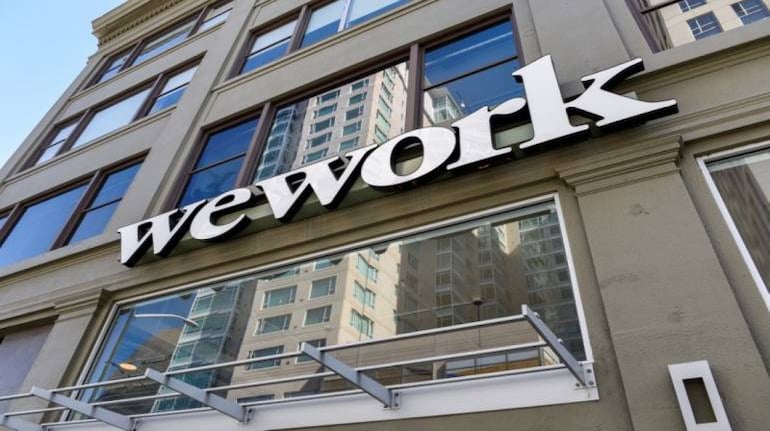
WeWork Inc has filed for bankruptcy in a fitting coda to the free money era. But once shorn of the liabilities amassed during its go-go years, might the flexible workspace provider actually succeed this time?
Just asking the question makes me sound hopelessly naive. Having once boasted a $47 billion valuation, WeWork crashed to earth in 2019 prior to a planned initial public offering amid widespread horror at its financials and corporate governance. It has since tried to start over on at least two occasions: first when it appointed new management and went public via a special purchase acquisition company in 2021, and again when creditors
equitised some of the billions of dollars owed to them earlier this year. Both attempts failed.
On Monday, co-founder Adam Neumann called the bankruptcy
“disappointing,” neglecting to mention how he doomed a good idea to failure by saddling the startup with tens of billions of dollars in lease liabilities (at near top-of-the-market rates) while splashing cash on corporate fripperies such as a Gulfstream jet. Japanese benefactor SoftBank Group Corp. was left to pick up the check.
WeWork failed because it doesn’t make money — it has lost almost $17 billion since 2010 — but since Neumann’s departure in 2019 it has dramatically slimmed down, while amending hundreds of rental contracts. It must now cut even deeper.
The bankruptcy filing paves the way to cancel US leases that management
thinks have little chance of profitability. The proceedings will also swap a further $3 billion of debts for equity, meaning WeWork should emerge from bankruptcy protection with a much less ugly balance sheet. And having filed for creditor protection it now has more leverage to persuade other landlords to cut rents at locations it wishes to keep.
WeWork’s bankruptcy is bad news for an already depressed urban office market. The reluctance of workers to return to offices — particularly in the US — has created a surfeit of downtown commercial property. WeWork has a large footprint in New York, Boston, San Francisco and London. Dozens of properties currently occupied by WeWork may be vacated, and a recession could yet worsen the real estate bloodbath.
There’s a risk clients continue to abandon WeWork following such a high-profile failure or press for fee discounts or deferrals. But demand for hybrid working is stronger than ever. Just look at rival IWG Plc, which reported a 7 percent increase in quarterly revenue and falling net debt, according to figures published on Tuesday.
“The reality is large corporations globally are moving to a much more flexible approach to how they support their people,” IWG Chief Executive Officer Mark Dixon told investors in August. “They are moving towards hybrid working. And it's universal, and it's gathering pace.”
Regus-owner IWG has some advantages compared with WeWork. It has more suburban locations — an advantage in an era when workers are looking to shorten their commutes. And lately it has prioritized franchising and partnership agreements that reduce its outlay on rent.
IWG’s valuation is also sobering — though the British firm generates a similar amount of revenue, its market capitalisation is just £1.4 billion ($1.7 billion).
If you were starting a business to profit from the hybrid working boom, you certainly wouldn’t set it up like WeWork. But flexible working isn’t going away. Gutted and reformed, WeWork might just work this time.
Chris Bryant is A Bloomberg Opinion columnist. Views do not represent the stand of this publication.Credit: BloombergDiscover the latest Business News, Sensex, and Nifty updates. Obtain Personal Finance insights, tax queries, and expert opinions on Moneycontrol or download the Moneycontrol App to stay updated!
Find the best of Al News in one place, specially curated for you every weekend.
Stay on top of the latest tech trends and biggest startup news.