






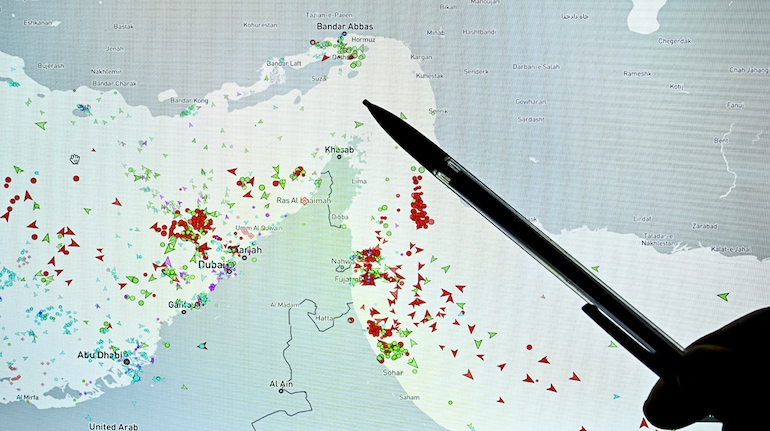

Few events move global markets as quickly as disruptions in energy supply. Today, that risk sits in a narrow 33-kilometre waterway called the Strait of Hormuz. For decades, this maritime chokepoint has quietly carried nearly 20 million barrels of oil per day, accounting for about one-fifth of global oil trade. But recent disruptions in the region have revealed just how fragile this artery of global energy supply truly is.
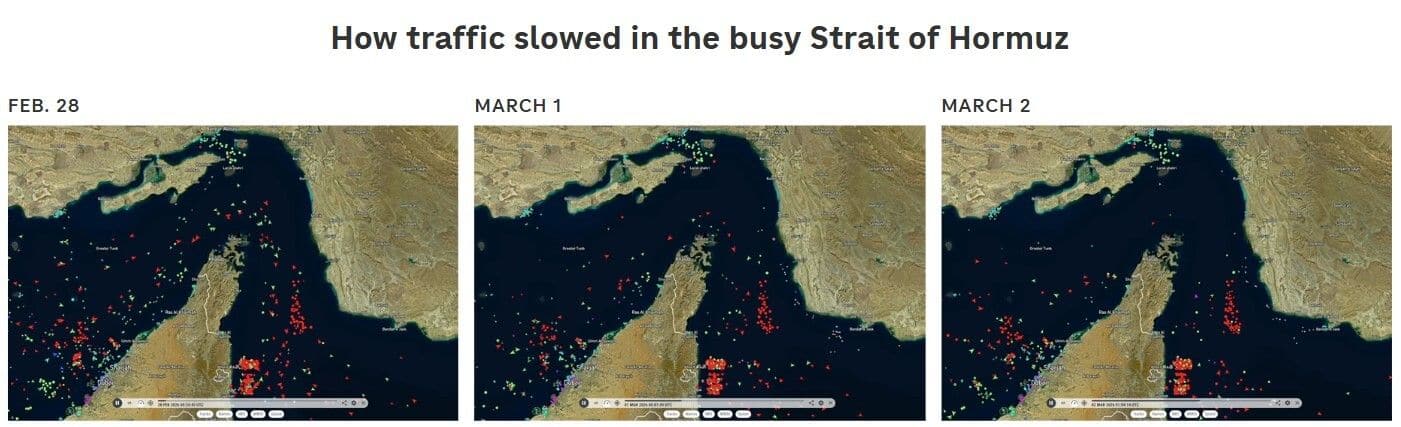 Source: npr.org, marinetraffic.com
On March 1, shipping data showed a dramatic collapse in traffic through the strait. Traffic through the normally busy Strait of Hormuz slowed drastically in the first days of the conflict after Iran declared the waterway closed and targeted vessels attempting to pass through it. The escalation quickly spilled into global energy markets. Crude oil prices, already elevated due to geopolitical tensions, surged more than 27 percent following the attacks involving the US, Israel and Iran. For India, the implications are particularly serious.
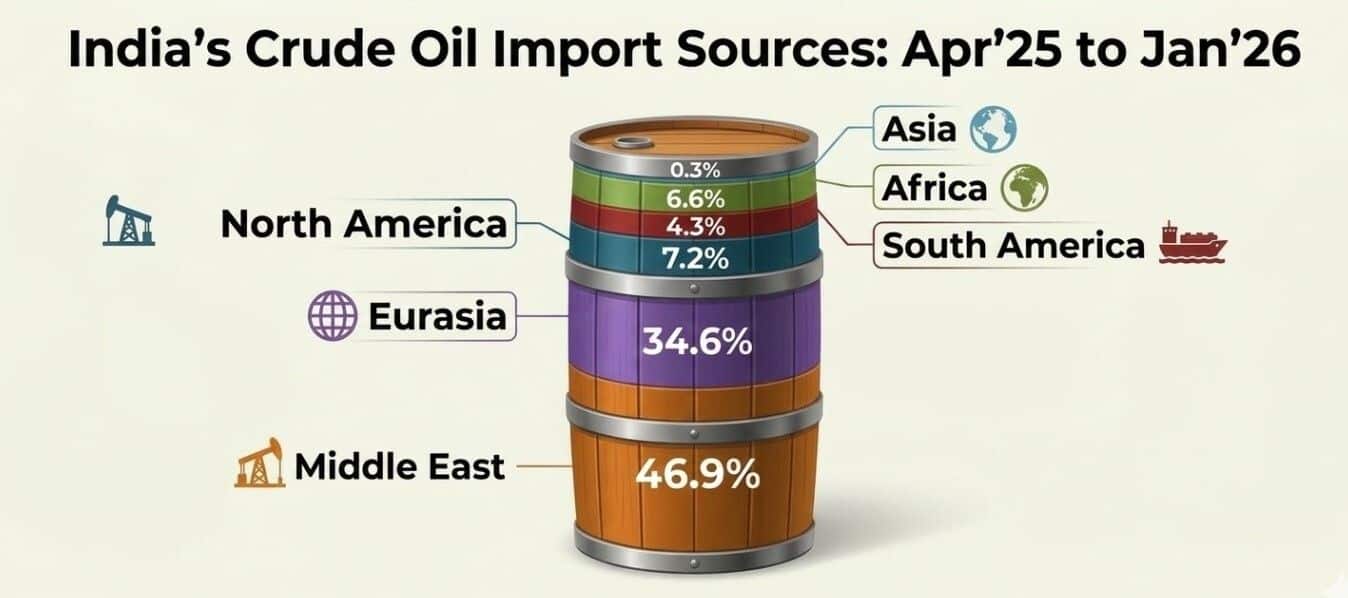
India imports roughly 5 million barrels of crude oil every day, and nearly 50-52 percent of these imports pass through the Strait of Hormuz. In simple terms, more than half of the energy that powers the Indian economy flows through a single geopolitical chokepoint.
When disruptions occur there, the impact travels quickly — from global oil markets to India’s inflation outlook, currency stability, and ultimately equity market valuations.
Brent crude prices have risen from around $61 per barrel at the start of the year to nearly $95, a surge of roughly 55% year-to-date. While this move may appear modest compared to past oil shocks, the pace of the rise is what matters. For an energy-importing country like India, even small changes in crude prices have large economic consequences.
 Source: Ministry of Petroleum & Natural Gas
According to estimates from global investment banks, every $10 per barrel increase in crude oil prices widens India’s current account deficit by roughly 50 basis points of GDP. It also raises the country’s annual import bill by approximately $20 billion.
That pressure eventually flows through the economy in several ways.
Higher crude prices raise fuel costs. Rising fuel costs push up transport and logistics expenses. These costs then feed into broader inflation across food, manufacturing and services.
The ripple effects extend further.
Higher inflation reduces the flexibility of central banks to cut interest rates. For the Reserve Bank of India (RBI), an extended oil shock could delay the expected easing cycle. That in turn affects borrowing costs, corporate earnings and market valuations.
In other words, what begins as a disruption in global shipping lanes can ultimately influence equity markets on Dalal Street.
Another structural challenge India faces in such situations is limited strategic petroleum reserves. India’s strategic petroleum reserves currently provide about 9.5 days of crude oil import cover. Including additional storage held by state-run oil companies, the country’s total oil stockpile covers roughly 74 days of net imports. While this provides a meaningful buffer during supply disruptions, it still falls short of the International Energy Agency’s recommended benchmark of 90 days maintained by member countries. Countries like Japan and South Korea maintain reserves exceeding 200 days, giving them a much larger buffer during supply disruptions.
This means India has less room to absorb prolonged shocks.
Historically, oil spikes have often triggered periods of volatility in global markets.
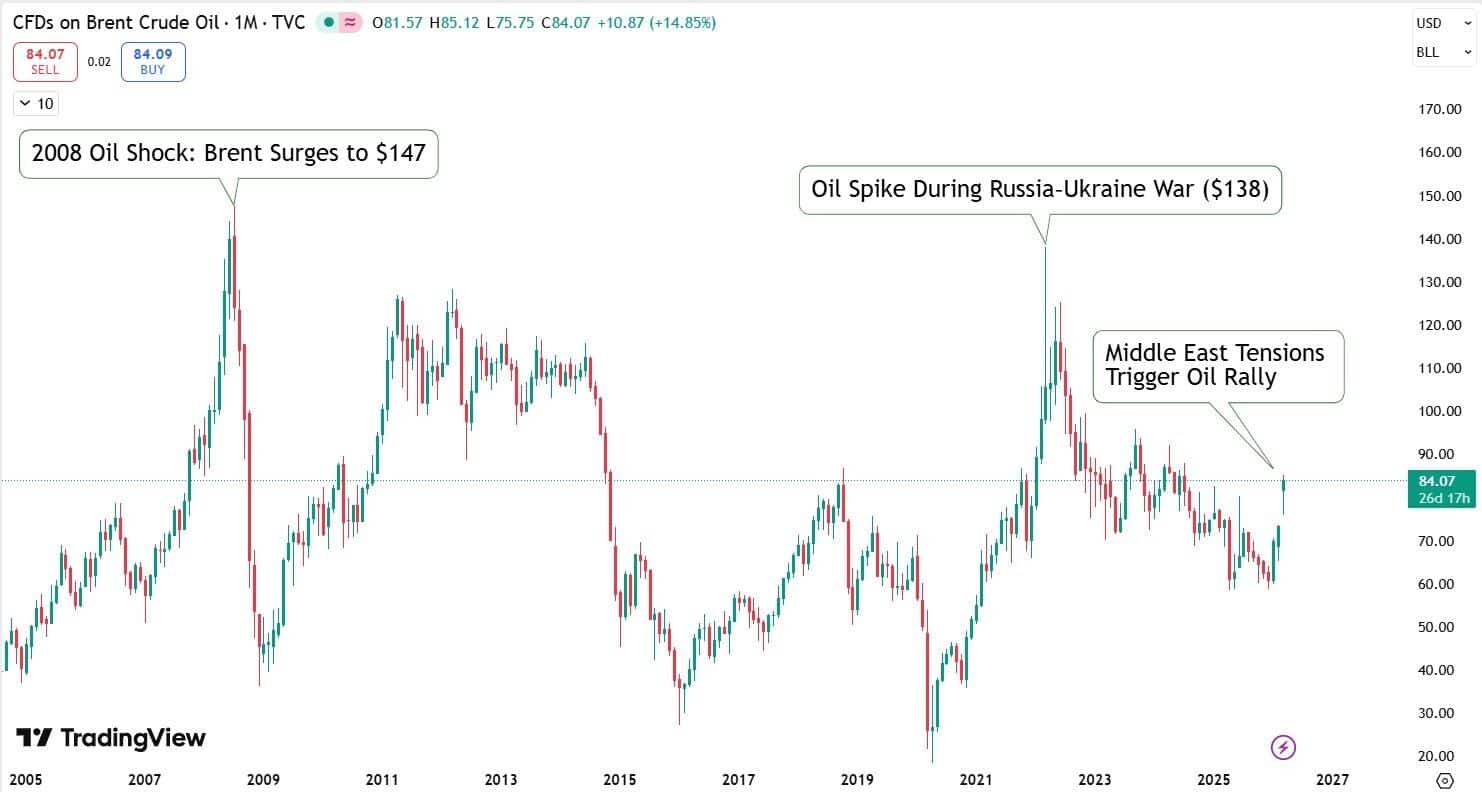
During the 2008 oil surge, crude briefly touched $147 per barrel, coinciding with one of the sharpest corrections in Indian equities. Even during the 2022 Russia-Ukraine conflict, oil jumping to around $138 per barrel triggered meaningful pressure on emerging market currencies and equities.
The current Hormuz disruption is different in one key way.
It is not primarily a demand shock or a cyclical event. Instead, it represents a supply chokepoint risk, where logistics and geopolitics intersect with energy markets.
For investors, the lesson from the current episode is straightforward: in an interconnected global economy, geopolitical chokepoints can quickly translate into market risks.
If Brent crude sustains above the $90 per barrel mark, the implications for India could extend well beyond higher fuel prices. A widening current account deficit, pressure on the rupee, and a potential delay in interest-rate easing could begin to weigh on corporate earnings and market valuations.
In such an environment, investors would do well to track a few critical indicators closely — Brent crude prices, movements in the USD-INR exchange rate, and shipping activity through the Strait of Hormuz. These variables will determine whether the current disruption remains a temporary shock or evolves into a broader macro headwind for the Indian economy.
For a country that imports the majority of its energy needs, oil prices are not just another commodity variable. They remain a key driver of India’s macro stability, policy direction, and ultimately the direction of its financial markets.
Disclaimer: The views and investment tips expressed by experts on Moneycontrol are their own and not those of the website or its management. Moneycontrol advises users to check with certified experts before taking any investment decisions.
Discover the latest Business News, Sensex, and Nifty updates. Obtain Personal Finance insights, tax queries, and expert opinions on Moneycontrol or download the Moneycontrol App to stay updated!
Find the best of Al News in one place, specially curated for you every weekend.
Stay on top of the latest tech trends and biggest startup news.





