






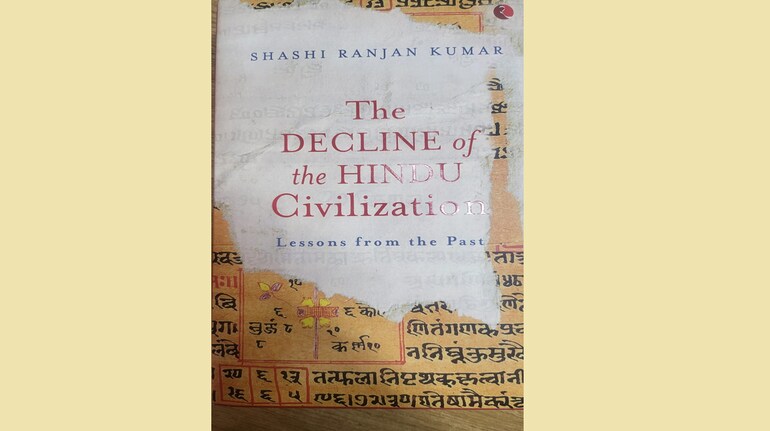

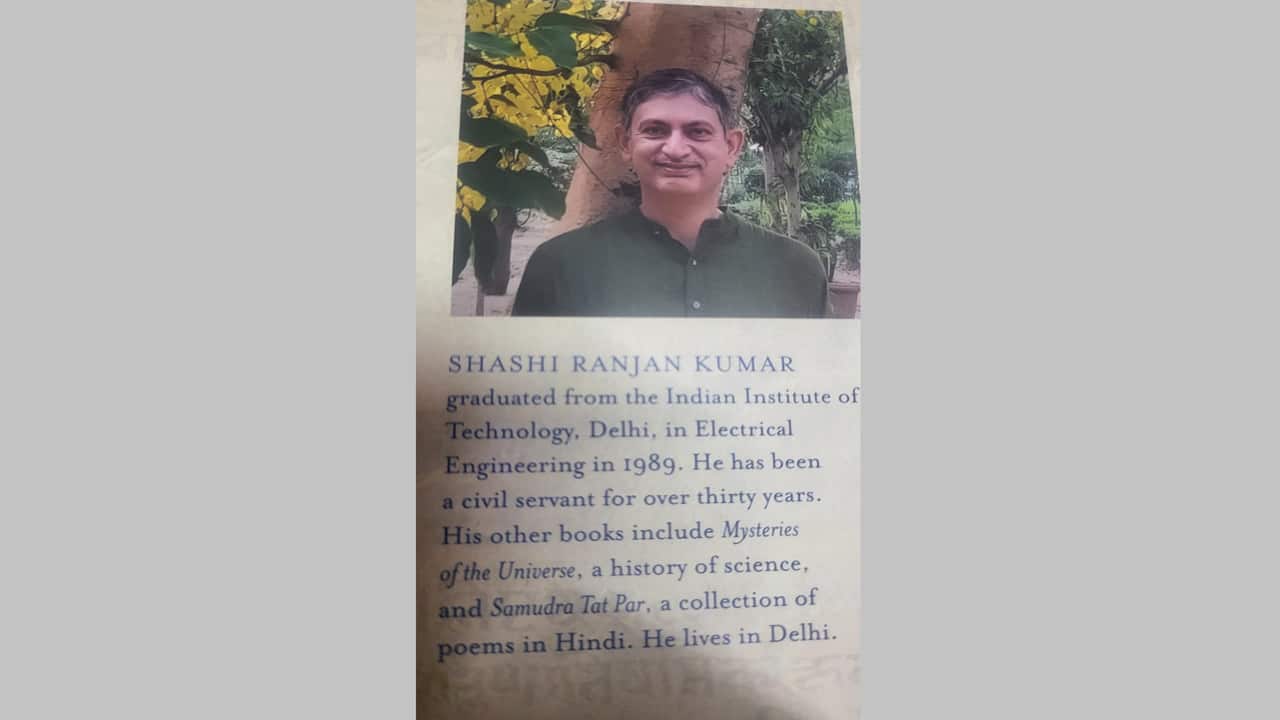
It's a fact that very few writers and scholars have examined the deeper reasons behind the decline of Hindu civilisation. But a new book that has hit the stands reconstructs our memory of the past. It delves into the fact that how a civilisation once known for its intellectual brilliance and spiritual depth declined over a period of time. The new book titled " The decline of the Hindu civilisation" by Shashi Ranjan Kumar, has reconstructed the lost grandeur of ancient India and traces the decline that followed. Shashi Ranjan Kumar is a senior serving civil servant and an Electrical engineering graduate from IIT Delhi.
Shashi Ranjan Kumar mentions that when he first read VS Naipaul's book A Wounded Civilisation, it shattered his innocent world view of understanding Hindu Civilisation. But as he started reading primary sources, Shashi Ranjan Kumar realised that what Naipaul meant is a wound that refuses to heal. As a seasoned historian, kumar after going through deep research and comparative approach to other civilisations tries to solve the question whether the decline of Hindu civilisation was due to its rigidity, internal fissures or a failure to withstand the external forces.
The book "The Decline of the Hindu Civilization" is a scholarly work that seeks to re-evaluate Indian history from an indigenous perspective, challenging colonial and Marxist narratives. The book contains 4 parts and 16 chapters. the first part presents a comparative study of ancient civilisations—-Indian, Greco-Roman and Chinese. The first part has 8 chapters . They talk about University of Nalanda and Alexandria, and three chapters dedicated to Astronomy, mathematics and medicine. The author dedicated to the "sciences of the Hindus," comparing Indian models of the universe with Greek models. The book highlights early Indian advancements in astronomy (Aryabhata), the concept of zero, and the foundational elements of calculus developed by the Kerala school.
Kumar suggests that India’s history is marked by wounds that refuse to heal, characterized by a "stubborn denial" of past humiliations and a periodic "delight in defeats." Kumar makes it simple by saying that "Bharat" or the "Idea of India" is not a modern 19th-century invention. The author argues that the roots of Indian nationhood, defined by specific geography and cultural unity, are clearly present in ancient texts like the Puranas. The book refutes the claim that "Hinduism" was a construct of the British era.
The book analyses five key battles (from the Battle of Hydaspes to the Battle of Assaye) to understand why India often suffered military defeats. It points to "tactical inflexibility," a lack of political unity, and a failure to adapt to new military technologies. A significant attempt made in the book is refuting Sheldon Pollock’s thesis on the "death of Sanskrit." Shashi Ranjan Kumar argues that Sanskrit culture remained vibrant in various regions (like the Sena and Gahadavala kingdoms) right up until the point of foreign invasions.
The author draws parallels and contrasts with the Roman, Greco-Roman, and Chinese civilizations. Kumar notes that while other great empires collapsed or were entirely replaced, the Hindu civilization maintained a "flame of resistance" that prevented total extinguishment. The book concludes by saying that the glorious past only provides an inspiration so that we can create a future—a future which generations to come will look at with pride.

Discover the latest Business News, Sensex, and Nifty updates. Obtain Personal Finance insights, tax queries, and expert opinions on Moneycontrol or download the Moneycontrol App to stay updated!
Find the best of Al News in one place, specially curated for you every weekend.
Stay on top of the latest tech trends and biggest startup news.





